
Nausibius
Nausibius
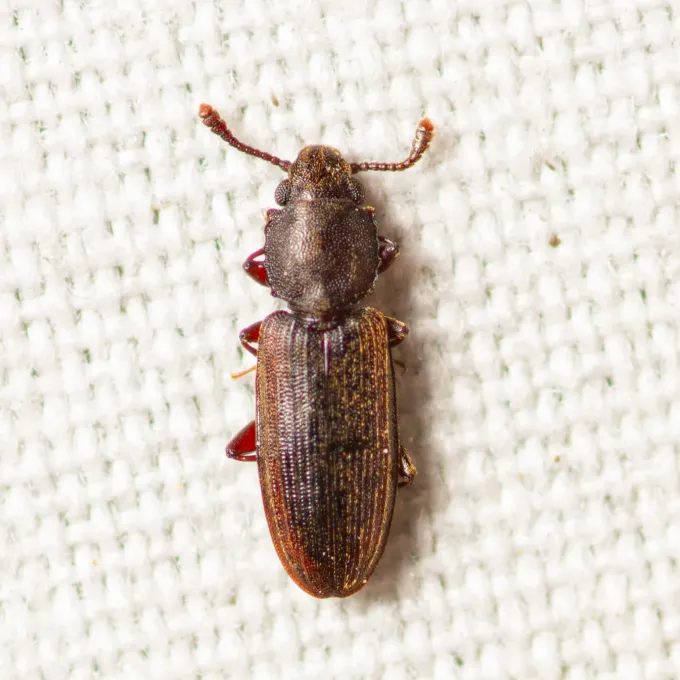
Description
How to identify
Nausibius is a genus of beetles belonging to the family Silvanidae. These small insects are known as significant pests of stored products and grains. Adult beetles typically reach 2.5 to 3.5 mm in length and possess a flattened, elongated body shape, which allows them to hide in narrow crevices.
The defining feature of the genus is the presence of distinct angular projections on the lateral margins of the pronotum, which gives them a unique appearance. They have a relatively large head equipped with strong mouthparts, and their antennae end in a clear three-segmented club.
The larvae are typically creamy-white and feed directly within the stored material. The duration of their lifecycle depends heavily on the surrounding temperature and humidity, with development accelerating in warm, moist storage conditions.
Adult beetles are capable of active flight, which enables them to spread rapidly throughout warehouse facilities. This mobility makes it challenging to contain an infestation once it has started in a large storage area.
Due to their small size, these beetles can easily be confused with other common grain pests like the Sawtoothed Grain Beetle. Professional identification often requires magnification to examine the specific structure of the pronotum.
What it damages
Nausibius primarily attacks various stored plant-based commodities. They are frequently found in wheat, rye, barley, and processed cereal products such as flour, bran, and various types of meal or semolina.
The beetles cause significant damage by feeding on the grain germ, which destroys the viability of seeds intended for planting. Furthermore, heavy infestation leads to a substantial loss in the weight and quality of the stored goods.
In addition to cereals, they can infest dried fruits, nuts, spices, and starch-rich confectionery products. Their presence is often associated with the degradation of food products, rendering them unsuitable for human consumption or processing.
Their feeding activity results in the accumulation of frass and cast larval skins within the product. This leads to contamination, which can introduce secondary molds and bacteria, further accelerating the spoilage of the stored batch.
When infestation levels become high, the texture and organoleptic properties of the food are completely compromised. The material often becomes clumpy and musty, making it economically unviable for sale or industrial use.
Signs of infestation
The presence of fine dust, often called "flour dust," on the surface of storage bags or containers is a primary indicator of activity. Larval feeding and movement create this characteristic fine debris that accumulates over time.
A musty or slightly acidic odor emanating from the grain piles often signals a severe infestation. This odor is caused by the metabolic processes of the beetles and the secondary fungal growth that follows their damage.
Localized heating of grain or flour, known as "hot spots," is a classic sign of active pest infestation. If the temperature in a grain mass increases without external factors, it is almost certainly due to the metabolic activity of pests.
Monitoring using adhesive traps placed strategically around the storage facility can reveal the presence of adult beetles long before damage becomes widespread. These traps act as an early warning system for facility managers.
Visual inspections of storage crevices, cracks in walls, and undersides of pallets often reveal adult beetles congregating in protected areas. Finding larvae or empty skins in product samples confirms that the population is actively reproducing on-site.
Control measures
The most effective strategy for managing Nausibius is to maintain optimal storage conditions. Keeping grain moisture below 13-14% significantly inhibits the reproductive capacity of these beetles, as they thrive in humid environments.
Strict sanitation protocols, including the thorough removal of dust and old grain residues before bringing in new shipments, are essential. Regular cleaning of machinery, conveyers, and empty storage bins prevents carry-over infestations.
When severe infestations are detected, fumigation with approved chemicals, such as phosphine-based products, is required to eliminate all life stages of the pest. This process must be conducted by certified professionals under controlled safety standards.
Physical exclusion through the use of sealed, insect-proof containers and fine-mesh screens on ventilation systems helps keep populations out. Ensuring the integrity of packaging is a key step in preventing cross-contamination.
Ongoing monitoring is vital. By utilizing pheromone or sticky traps and conducting periodic laboratory testing of samples, management can catch infestations at an early stage, minimizing economic losses and the need for large-scale chemical intervention.
Taxonomy
- Latin name
- Nausibius
- Order
- Coleoptera (beetles)
- Family
- Cucujidae
- EPPO code
- NAUSSP
Discussion
No discussions yet — be the first.