
Little brown bat
Myotis lucifugus
Description
How to identify
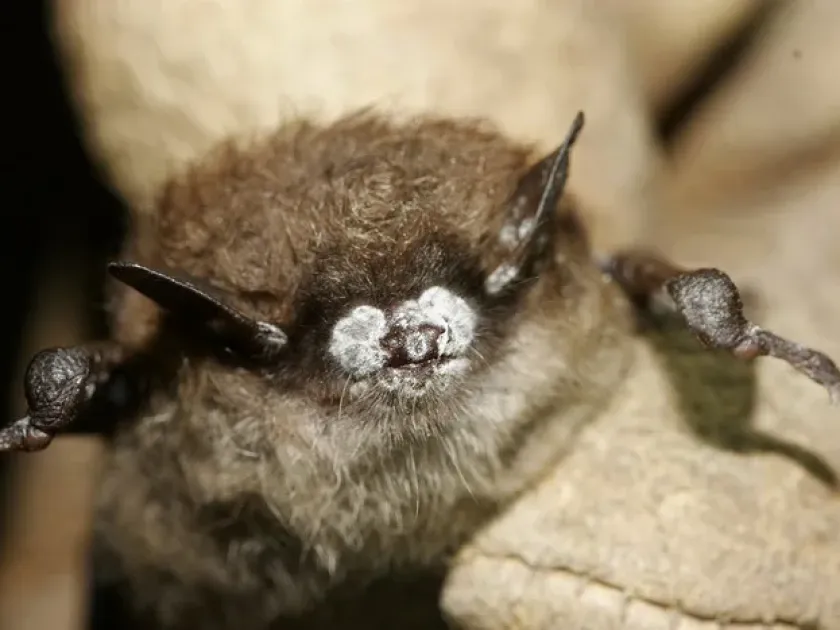
The little brown bat (Myotis lucifugus) is a species of vesper bat belonging to the family Vespertilionidae. It is a small mammal that typically weighs between 5 and 14 grams, with a wingspan of approximately 22 to 27 centimeters.
The physical appearance of this species includes glossy, brown fur on the dorsal side and lighter hair on the underbelly. The wings are characterized by dark, leathery membranes, which provide the necessary lift and agility for aerial hunting.
Taxonomically, the species is placed within the order Chiroptera. Their life cycle involves high activity during the warmer months and hibernation during the winter, usually in caves or mines with stable temperatures.
These bats are highly social creatures, often forming maternity colonies in dark, secluded places such as tree hollows, rock crevices, or man-made structures that mimic natural roosting conditions.
They are famous for their sophisticated echolocation, which they use to navigate through dense vegetation and detect airborne prey with high precision in complete darkness.
What it damages
It is essential to clarify that the little brown bat is not a plant pest. There is no evidence that this species feeds on crops, seeds, roots, or any other part of agricultural vegetation, as they are strict insectivores.
In fact, their impact on agriculture is considered highly beneficial. They hunt a vast number of flying insects, including agricultural pests like moths, beetles, and midges, which are known to damage crops in various stages of growth.
Some farmers may perceive them as a nuisance if they roost in agricultural buildings or storage units, but this is a structural management issue rather than a crop protection threat.
The misconception of them being pests often arises from lack of knowledge regarding their ecological niche. As they are predators of insects, they help maintain a balance that prevents outbreaks of harmful crop pests.
Since they are not phytophagous, no botanical damage can be attributed to them. Farmers do not suffer financial losses from the little brown bat; on the contrary, they gain a natural pest control service.
Control measures
There are no control measures for the little brown bat as an agricultural pest because it does not pose a threat to plant cultivation. Conservation programs are often encouraged to maintain their populations.
If roosting in agricultural outbuildings is unwanted, it is recommended to implement humane exclusion methods. This involves identifying entry points and sealing them after the bats have left for the night, ensuring they cannot return.
Agricultural operators should avoid using broad-spectrum insecticides on their fields. Chemicals can accumulate in the insects the bats consume, leading to secondary poisoning and the decline of local bat colonies.
Farmers can encourage the presence of these bats by installing bat boxes around the farm, which provide safe daytime roosts and help ensure the bats remain in the vicinity to hunt harmful insect species.
The focus of agricultural management regarding this species should be on promoting a symbiotic relationship, where the bats provide biological suppression of insect pests without the need for additional human intervention.
Taxonomy
- Latin name
- Myotis lucifugus
- Family
- Vespertilionidae
- EPPO code
- MYOTLU
Discussion
No discussions yet — be the first.