
Geoffroy's bat
Myotis emarginatus
Description
How to identify
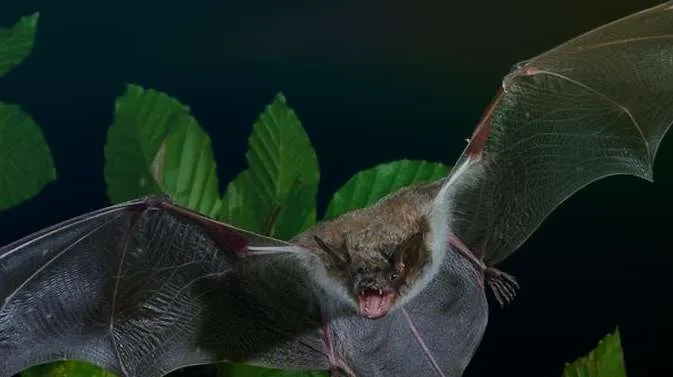
Geoffroy's bat (Myotis emarginatus) is a species of the Vespertilionidae family, easily recognizable by a distinct notch on the outer edge of its ears.
The fur color is typically a reddish-brown or yellowish-tan, which distinguishes it from many other species within the Myotis genus.
It is classified under the order Chiroptera. These are small animals, with a forearm length ranging from 37 to 41 mm, well-adapted for agile flight.
The species relies on sophisticated echolocation to navigate and hunt, making them highly efficient predators of nocturnal insects.
They naturally roost in tree cavities, rock crevices, or buildings, which sometimes brings them into close proximity with agricultural infrastructure.
What it damages
Geoffroy's bat is not a direct pest to agricultural crops; it is exclusively an insectivore that feeds on arthropods, not plant tissues.
The main concern regarding this species in an agricultural context relates to sanitary issues, such as the accumulation of waste in storage sheds or attics.
However, from a pest management perspective, their presence is highly beneficial as they consume large quantities of agricultural pests, including moths and flies.
By preying on adult forms of various insects that damage crops, they provide a valuable service in biological pest suppression.
There is no economic damage associated with the feeding habits of this bat; instead, they serve as natural allies in Integrated Pest Management (IPM).
When it appears
The active season begins in early spring when temperatures allow for the sustained presence of insect populations that form the basis of the bat's diet.
Reproductive activity peaks during the summer months, with females forming nursery colonies in warm, sheltered locations.
During autumn, individuals focus on accumulating fat reserves to survive the harsh winter conditions through hibernation.
Wintering occurs in caves, mines, or specialized underground structures that provide stable temperatures necessary for successful hibernation.
There is no interaction with agricultural production during the winter months, as the bats remain in a state of torpor.
Control measures
If management is required to prevent colonization of farm buildings, non-lethal exclusion methods are the standard recommended approach.
Installing exclusion netting or screens on vents and windows is highly effective at preventing entry without harming the animals.
The use of chemical deterrents or poisons is strictly prohibited as this species is often protected by conservation legislation due to its ecological role.
Regular building maintenance and sealing of gaps before the spring arrival is the most proactive way to manage their nesting locations.
Providing designated bat boxes away from main storage areas can encourage them to remain in the vicinity, leveraging their insect-eating capacity while keeping them out of buildings.
Taxonomy
- Latin name
- Myotis emarginatus
- Family
- Vespertilionidae
- EPPO code
- MYOTEM
Discussion
No discussions yet — be the first.