
Pond bat
Myotis dasycneme
Description
How to identify
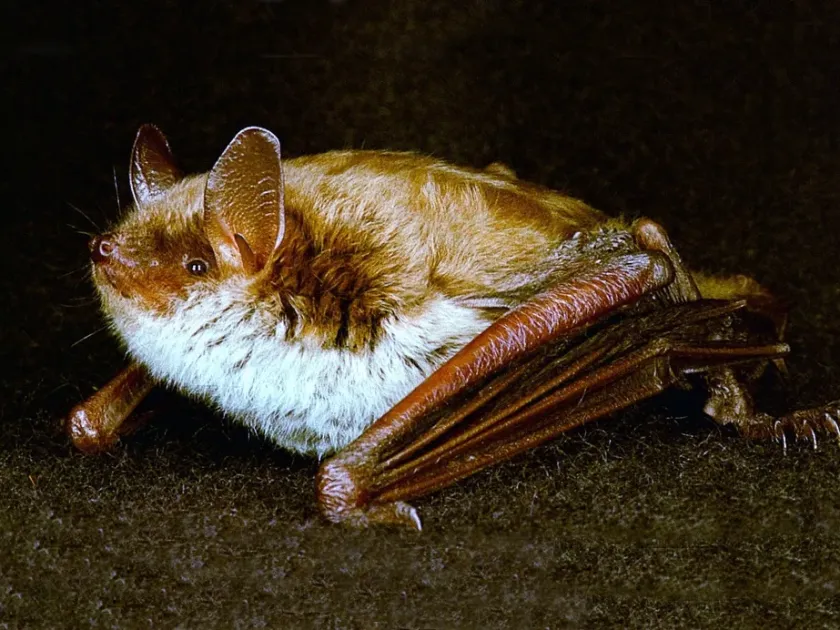
The Pond bat is a member of the Vespertilionidae family. It is a medium-sized bat characterized by its long, pointed ears and disproportionately large feet, which enable it to catch insects close to the water surface with remarkable agility and speed.
Its fur is typically dark grey or brownish on the dorsal side, while the underside appears lighter. These bats rely on echolocation to navigate and hunt in complete darkness, which is a key adaptation for their survival in diverse aquatic environments.
The biological cycle of this species involves hibernation during winter months, often in caves or tunnels. During the summer, females form maternity colonies in hollow trees or roof spaces where they rear their single offspring annually.
Pond bats are strictly insectivorous, feeding on a variety of aerial insects. They are not plant pests and have no impact on the health or development of agricultural crops; they are strictly predatory towards invertebrate populations in their vicinity.
As a protected species under international law, the Pond bat serves as an important ecological indicator. Their presence in an agricultural area is beneficial to the farmer as they naturally suppress populations of nuisance insects like mosquitoes.
Control measures
There are no control measures for the Pond bat as an agricultural pest because it does not damage crops. Efforts should be focused on the preservation and protection of this species, which is vital for maintaining a healthy and balanced ecosystem on the farm.
Farmers are encouraged to avoid the excessive use of broad-spectrum insecticides, which can indirectly harm bat colonies by reducing their food supply or through bioaccumulation of toxins. Implementing integrated pest management helps keep bat populations healthy.
Habitat preservation is the primary method for supporting the Pond bat. This involves maintaining riparian zones, protecting mature trees with potential roosting hollows, and ensuring that water bodies remain clean to support the insect population.
Installing bat boxes near fields can be a beneficial practice to encourage natural pest control. By providing safe roosting sites, farmers can attract these insectivorous mammals to keep insect numbers low throughout the growing season.
Promoting awareness about the role of the Pond bat is essential for sustainable agriculture. These bats act as natural pest controllers, and protecting them contributes to the overall stability and health of the agricultural landscape without requiring chemical inputs.
Taxonomy
- Latin name
- Myotis dasycneme
- Family
- Vespertilionidae
- EPPO code
- MYOTDA
Discussion
No discussions yet — be the first.