
Long-fingered bat
Myotis capaccinii
Description
How to identify
The long-fingered bat is a small insectivorous mammal belonging to the order Chiroptera and the family Vespertilionidae.
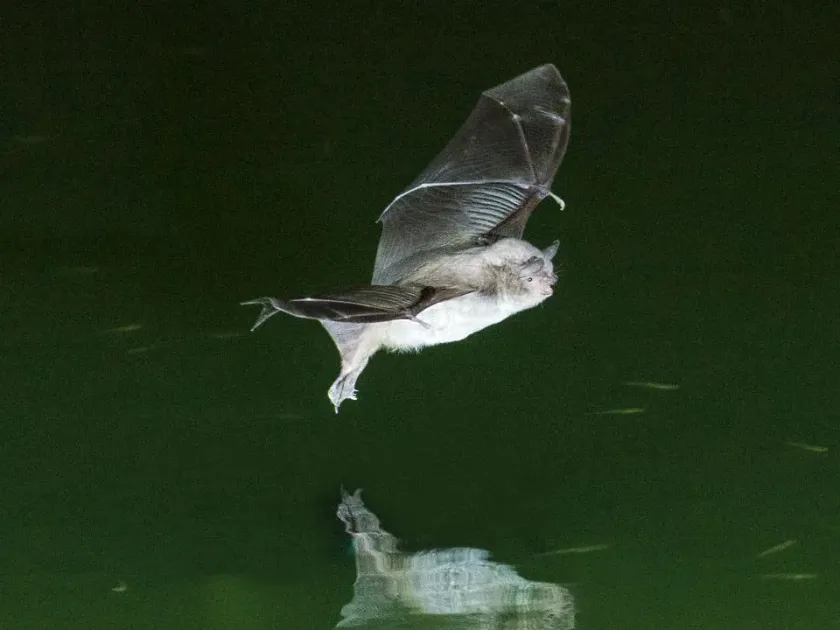
It is distinctively characterized by its elongated toes and feet, which are adapted for specialized foraging behavior near water surfaces.
The fur color typically ranges from greyish-brown to ash-grey, with a notably lighter-colored underside compared to its back.
These bats are cave-dwellers, often found in karst landscapes where they utilize caves or abandoned tunnels for roosting and hibernation.
Their flight is agile and precise, allowing them to capture insects in mid-flight or directly from the water's surface using their tail membrane or claws.
What it damages
The long-fingered bat is strictly an insectivore and does not damage crops, vegetables, or any agricultural plant species.
It is scientifically recognized as a beneficial animal that contributes to the natural regulation of insect populations in agricultural landscapes.
There is no evidence of feeding on vegetation, and their biological needs are solely met through the consumption of flies, midges, and other insects.
Describing this species as a pest is scientifically inaccurate and contradicts established ecological facts regarding the species' diet.
In modern agriculture, these bats are considered allies, as they help reduce the density of certain insect pests without the need for human intervention.
Control measures
As an endangered species under protection, the long-fingered bat must not be targeted, disturbed, or controlled through any lethal means.
Conservation efforts should focus on protecting riparian zones and water bodies, which are vital foraging habitats for these bats.
Reduction in the excessive use of broad-spectrum insecticides is encouraged, as these chemicals negatively impact the bat's food supply and overall health.
Preservation of underground roosting sites, including caves and man-made structures, is essential for maintaining local populations.
Adopting integrated pest management practices that accommodate wildlife helps maintain ecological stability and improves long-term crop health.
Taxonomy
- Latin name
- Myotis capaccinii
- Family
- Vespertilionidae
- EPPO code
- MYOTCA
Discussion
No discussions yet — be the first.