
Lesser mouse-eared bat
Myotis blythii
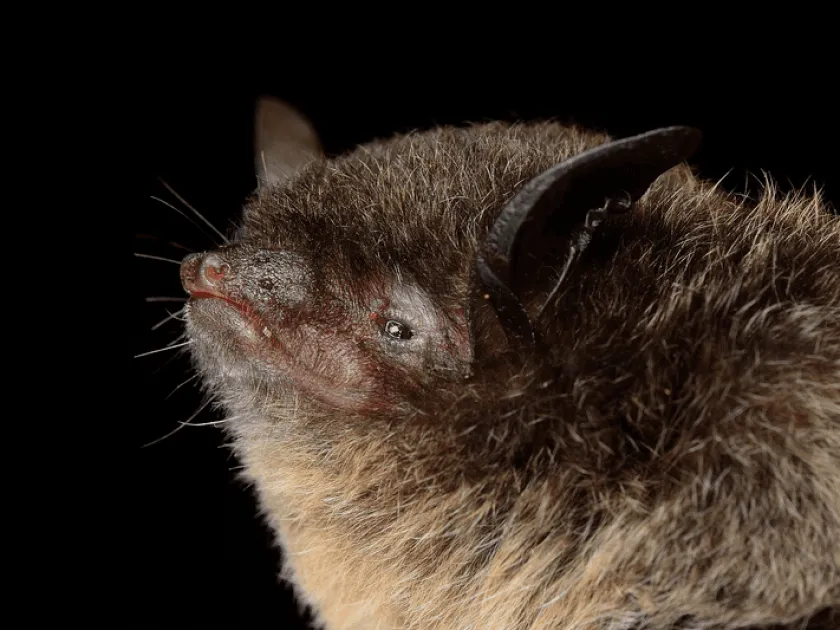
Description
How to identify
The lesser mouse-eared bat (Myotis blythii) is a member of the Vespertilionidae family, characterized by its medium size and distinct physical features such as elongated ears.
These bats have a grayish-brown fur on their dorsal side and a lighter, whitish-gray ventral side. Their wingspan typically ranges from 35 to 40 centimeters, enabling agile and sustained flight.
Identification is confirmed by the presence of a specific notch on the outer margin of the tragus and the structure of their dental apparatus, which is adapted for an insectivorous diet.
As nocturnal animals, they spend their daylight hours in colonies, often utilizing the rafters of agricultural barns, abandoned buildings, or rocky caves.
Unlike pests that damage crops, this species is a predator of nocturnal insects, making it a critical component of the natural ecosystem surrounding farms.
What it damages
It is scientifically inaccurate to classify the lesser mouse-eared bat as a crop pest, as they do not feed on plant tissues, fruits, or roots under any circumstances.
On the contrary, these bats perform a vital service by consuming large quantities of insects, including agricultural pests like moths and beetles that threaten grain and fruit yields.
Potential nuisance issues are strictly limited to the sanitation of storage areas where large colonies may leave droppings (guano) that can compromise the cleanliness of stored produce.
This guano is highly nitrogenous and can promote mold growth if allowed to accumulate on equipment or raw commodities, posing a secondary risk to storage sanitation.
Farmers should focus on managing the location of roosting sites rather than attempting to control the bat population itself, which provides free biological pest suppression.
When it appears
Activity levels follow the seasonal availability of insect prey, beginning in early spring as temperatures rise and nocturnal insect populations become active.
During the summer months, maternal colonies are formed, and the bats are most active in hunting over fields and orchards to support their rapid growth and reproductive cycles.
As autumn progresses and temperatures drop, the bats transition into a period of pre-hibernation, reducing their activity and metabolic rate as food sources dwindle.
Winter is characterized by hibernation, where the bats retreat into deep, temperature-stable underground environments to survive the cold months in a state of torpor.
Their entire biological calendar is perfectly aligned with the growth cycles of insects, making them essential allies for sustainable agricultural practices throughout the year.
Signs of infestation
The primary indication of a colony's presence is the accumulation of guano beneath their roosting areas, which consists of small, dark, granular pellets that crumble easily.
Auditory signs include high-pitched chattering or scratching sounds heard near roofing structures, eaves, or attic spaces during the dusk and dawn hours.
Visual verification can be performed by monitoring building exits at dusk, when the bats emerge in groups to begin their nightly foraging flights.
The presence of insect wing remnants or other chitinous debris under their roosts serves as a clear indicator of their role as an insect predator.
The complete absence of bite marks, wilting, or physical damage to crops is the most definitive sign that no herbivorous pest species are involved.
Control measures
Since the lesser mouse-eared bat is a protected and highly beneficial species, lethal control methods are strongly discouraged and often prohibited by wildlife conservation laws.
For scenarios where their presence in storage buildings is problematic, exclusion is the best approach, involving the sealing of cracks and entry points with exclusion netting.
The use of ultrasonic deterrent devices can create an uncomfortable environment for the bats, encouraging them to relocate to natural roosts without the need for harmful chemicals.
Regular cleaning of roosting areas should be performed using appropriate personal protective equipment to prevent the inhalation of dust or fungal spores from accumulated droppings.
Promoting the presence of bats in dedicated boxes installed away from sensitive storage areas allows farmers to reap the benefits of natural pest control while keeping facilities clean.
Taxonomy
- Latin name
- Myotis blythii
- Family
- Vespertilionidae
- EPPO code
- MYOTBL
Discussion
No discussions yet — be the first.