
Bechstein's bat
Myotis bechsteinii
Description
How to identify
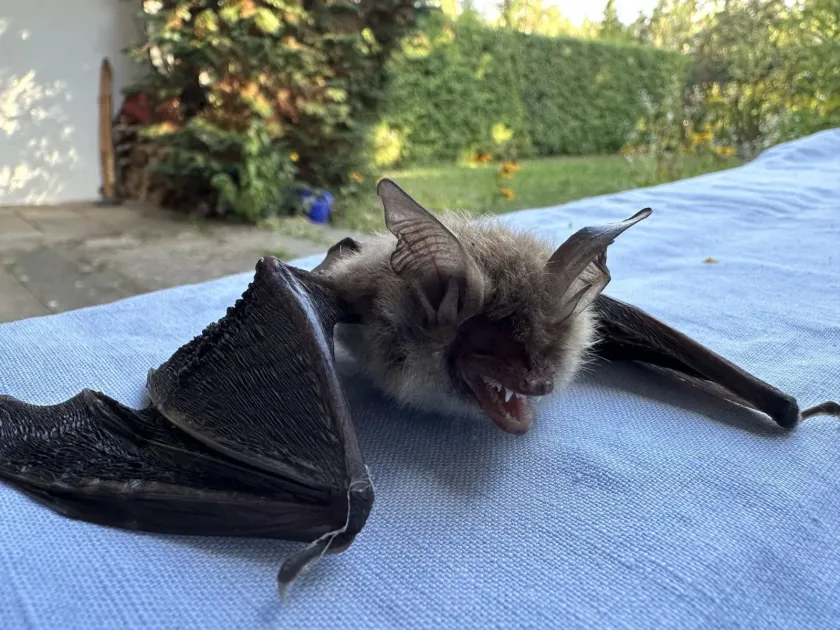
Bechstein's bat (Myotis bechsteinii) is a species of vesper bat characterized by its medium size and distinctively long ears.
The ears of this species are notable for their length, typically measuring between 21 and 26 millimeters, which is a key diagnostic feature.
Its fur is brownish-grey on the dorsal side, while the ventral area is significantly lighter, often showing a whitish or light grey tone.
They are highly adapted for foraging in dense forest environments, exhibiting agile flight patterns that allow them to navigate complex canopy structures.
It is important to emphasize that this species is not an agricultural pest; rather, it is a protected species known for its role in natural ecosystems.
What it damages
Bechstein's bat does not cause damage to crops, roots, leaves, or any other part of agricultural produce.
As an insectivorous mammal, its diet consists exclusively of insects, and it has no interest in agricultural plant material.
Instead of being harmful, these bats serve as beneficial predators that help manage populations of various invertebrate species.
By consuming large numbers of insects, they actively assist in reducing the pressure of pests on both forestry and adjacent agricultural areas.
Therefore, their presence is beneficial for sustainable agriculture as they act as a natural, eco-friendly form of pest population control.
When it appears
The active season for Bechstein's bat begins in early spring, following the end of their winter hibernation period.
During the warmer months, females gather in maternity colonies to raise their young, usually in tree hollows or crevices.
Foraging activity is most intense during the summer nights when insect biomass is at its peak and food is readily available.
As autumn approaches, the bats prepare for winter by accumulating fat reserves necessary to survive the colder, inactive period.
Winter is spent in hibernation, typically in underground habitats or caves where temperature and humidity remain stable throughout the season.
Signs of infestation
Detection of Bechstein's bat in the field is challenging due to their nocturnal habits and secretive nesting preferences.
Specialized ultrasound detectors are the most reliable tool for identifying the species, as they capture the unique echolocation calls used by these bats.
Occasional observations of roosting sites, such as old tree cavities or bat boxes, can confirm their presence in a specific area.
They generally favor old-growth deciduous forests, so sighting them near agricultural land often indicates a healthy landscape nearby.
Their presence is a strong environmental indicator, reflecting high levels of biodiversity and a balanced local ecosystem.
Control measures
Control measures against Bechstein's bat are prohibited as the species is legally protected and of conservation concern across its range.
Effective management involves protecting their natural habitat, particularly by retaining old trees that provide essential roosting sites.
Minimizing the use of broad-spectrum insecticides is crucial to ensure that the bats maintain a consistent and safe supply of insect prey.
Implementing artificial roosts, such as bat boxes, is a recommended practice to support local populations and enhance biological pest management.
Promoting a landscape rich in biodiversity supports these bats, which in turn benefits agriculture by keeping harmful insect populations in check.
Taxonomy
- Latin name
- Myotis bechsteinii
- Family
- Vespertilionidae
- EPPO code
- MYOTBE
Discussion
No discussions yet — be the first.