
Mouse-eared bat
Myotis
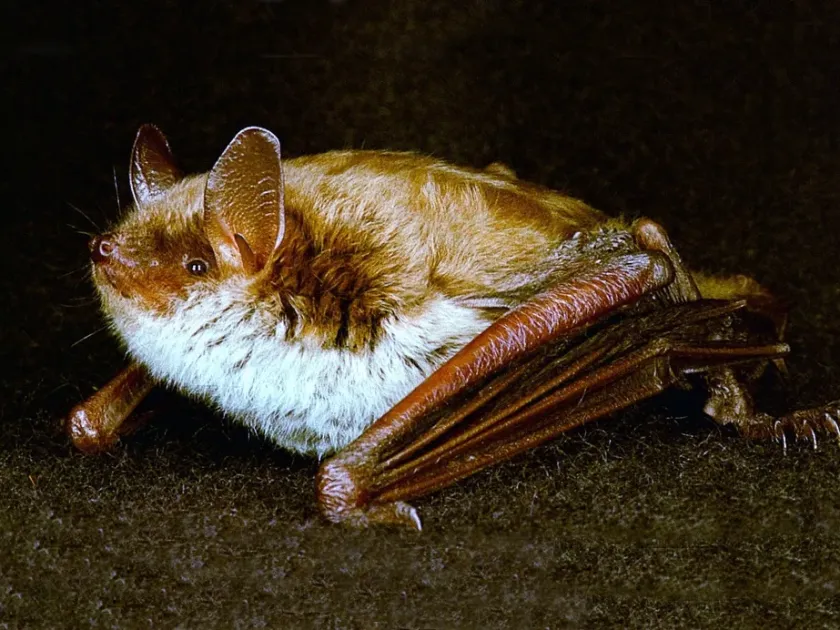
Description
How to identify
The genus Myotis, known as mouse-eared bats, belongs to the order Chiroptera and the family Vespertilionidae. These animals are strictly insectivorous and are definitely not agricultural pests.
They are characterized by their advanced echolocation systems and high metabolic rate. Physically, they have no adaptations for consuming plant material, as their dental structure is specialized for crushing insect exoskeletons.
In the context of agronomy, it is crucial to recognize these bats as essential components of the ecosystem rather than enemies of the farmer. Their presence indicates a healthy, diverse environment.
The biology of Myotis species is tied to nocturnal foraging and diurnal roosting. They play a vital role in natural ecosystems by maintaining insect populations within stable limits throughout the year.
Their life cycle includes a hibernation period in temperate regions, which confirms they have no impact on the long-term viability of crops during winter or early spring dormancy.
What it damages
Myotis bats do not cause damage to agricultural crops. They do not feed on crops, sap, foliage, or fruit, nor do they cause mechanical injury to plants during their hunting activities.
Quite the opposite, their foraging behavior directly benefits agriculture. They are known to consume large quantities of moths and beetles, which are significant pests for various commercial crops.
By consuming night-flying insects, including potential pests that lay eggs on crops, Myotis provides a valuable service in integrated pest management (IPM) strategies.
The total economic impact of bats in agriculture is positive, as they effectively lower the pest pressure, which can lead to reduced reliance on broad-spectrum chemical insecticides.
There are no recorded instances of these bats acting as pests. Labeling them as such is an agronomic misconception that contradicts basic ecological principles of food chains in agroecosystems.
Control measures
Since Myotis is a beneficial species and not a pest, there are no measures required for their control. Killing or harassing them is both counterproductive and often illegal under various conservation laws.
Farmers are encouraged to avoid the broad use of harmful insecticides that can bioaccumulate in bats, as protecting them ensures a natural barrier against massive pest outbreaks.
If there is a need to exclude bats from specific storage buildings, non-lethal deterrents or exclusion techniques should be used to prevent them from roosting in sensitive areas without causing harm.
Promoting habitat conservation, such as maintaining hedgerows and natural ponds, supports Myotis populations, enhancing the natural biological control of crop-damaging insects.
An effective agronomic strategy is to embrace these animals as natural allies. Sustainable farming relies on such biological diversity to maintain yield quality without excessive chemical intervention.
Taxonomy
- Latin name
- Myotis
- Family
- Vespertilionidae
- EPPO code
- MYOTSP
Discussion
No discussions yet — be the first.