
Four-spotted fungus beetle
Mycetophagus quadriguttatus
Description
How to identify
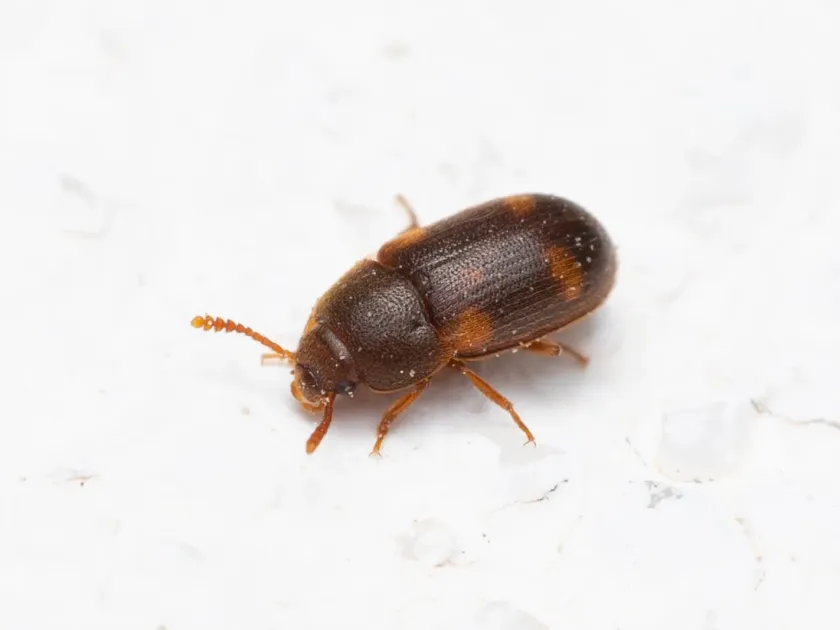
The four-spotted fungus beetle (Mycetophagus quadriguttatus) is a small beetle belonging to the Mycetophagidae family, order Coleoptera.
Adult beetles are typically between 3 and 4 mm in length, possessing an elongated, oval-shaped body.
The name of the species refers to the four distinct orange-red or yellowish spots found on their elytra against a dark brownish-black background.
The entire body of the beetle is covered with fine, dense setae (hairs), which give the insect a matte appearance under magnification.
The larvae are typically creamy-white to yellowish, active, and possess mouthparts adapted for feeding on fungal hyphae.
What it damages
This species is considered a secondary pest, meaning it usually does not attack sound, high-quality grain or stored produce.
The primary diet consists of various mold and mildew fungi that develop on plant materials stored under high-moisture conditions.
It is commonly found in grain silos, warehouses, and storage facilities where moisture management has failed.
Beyond grains and legumes, they are frequently found in root cellars, causing damage to rotting potatoes, carrots, or onions.
While the beetle itself causes minimal direct consumption of the grain, its presence signifies a high risk of mold contamination.
When it appears
The biological cycle of the beetle is highly dependent on environmental factors within the storage facility, specifically temperature and humidity.
They thrive in temperatures between 20°C and 25°C, coupled with high relative humidity levels, which favor mold growth.
In climate-controlled or heated warehouses, the beetle can maintain a continuous reproductive cycle throughout the year.
Larval activity is most pronounced during periods of high humidity when fungal sporulation provides an abundant food source.
When temperatures drop significantly, their metabolic activity slows, though they can overwinter in small cracks and crevices in the building structure.
Signs of infestation
The presence of adult beetles crawling on the surface of grain sacks or produce is a clear sign of an infestation.
Visible patches of mold growth on stored products are primary indicators of the presence of the four-spotted fungus beetle.
A musty or earthy odor in the storage area often indicates that conditions are suitable for both mold and the fungus beetle.
Detection of beetle feces and discarded larval exuviae (skins) confirms that the population has established itself within the substrate.
Evidence of larval burrowing in decaying tissues of stored root crops or damp grain clumps also confirms active infestation.
Control measures
The most effective strategy for managing the four-spotted fungus beetle is moisture control within the storage environment.
Maintaining proper ventilation and keeping the humidity levels low are essential to prevent mold, which is the beetle's food source.
Before storing new crops, all facilities must be thoroughly cleaned and sanitized to remove any residual moldy materials from previous seasons.
Regular inspection and monitoring of grain moisture content are necessary to catch early signs of spoilage and potential beetle outbreaks.
- Strict control of storage moisture levels below 13-14%.
- Removal of damaged or moldy produce from the storage area.
- Use of certified insecticides if professional fumigation is required.
Taxonomy
- Latin name
- Mycetophagus quadriguttatus
- Order
- Coleoptera (beetles)
- Family
- Mycetophagidae
- EPPO code
- MYCTQU
Discussion
No discussions yet — be the first.