
Fungus beetle
Mycetophagus
Description
How to identify
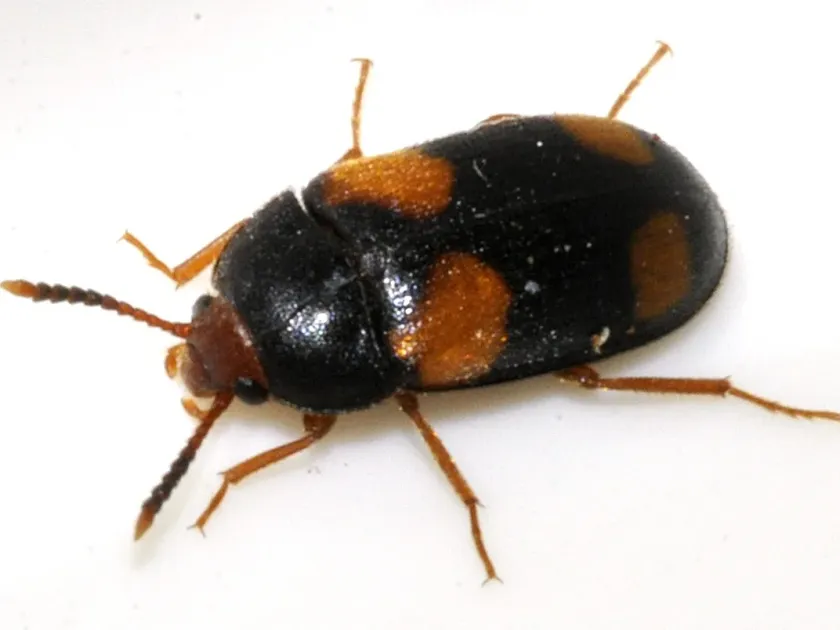
Fungus beetles of the family Mycetophagidae are small insects, typically measuring between 2 and 4 millimeters in length. Their bodies are usually oval or slightly elongated, often covered with dense, fine setae that give them a matte appearance.
The coloration of these beetles ranges from dark brown to black, with some species displaying distinct yellowish or reddish markings on their elytra. Their antennae end in a clear club-like structure, which is a key diagnostic feature.
The larvae are typically light-colored, slender, and possess three pairs of thoracic legs, enabling them to move actively through the substrate. They are commonly found in decaying organic matter or moldy stored products.
Taxonomically, they are members of the order Coleoptera. Their presence is almost always associated with the growth of micro-fungi, which serves as their primary food source in human-made environments.
These insects undergo a complete metamorphosis, passing through egg, larval, pupal, and adult stages. The entire lifecycle is completed within the environment where mold or fungus is present.
What it damages
The damage caused by fungus beetles is primarily associated with stored agricultural products, including grain, cereals, pulses, and dried fruits, provided these items have already begun to mold.
While their primary diet consists of fungal hyphae and spores, they inadvertently damage the physical structure of grains and seeds while feeding, which accelerates the deterioration of the product.
The beetle acts as a vector for fungal spores, spreading them from localized moldy spots to healthier parts of the grain mass, thereby rapidly increasing the total volume of spoiled stock.
Large populations contaminate the product with frass, larval shed skins, and dead insects, rendering the batch unsuitable for human or animal consumption due to hygiene standards.
In addition to quality loss, heavy infestations can lead to significant economic losses, especially when the grain is intended for seed, as the beetle's presence correlates with poor germination rates.
When it appears
The activity of fungus beetles is highly dependent on humidity levels. In heated or improperly ventilated storage facilities, they can continue their life cycle throughout the entire year.
Peak activity and population growth typically occur during spring and summer months, when ambient moisture levels are higher, creating ideal conditions for mold growth on stored commodities.
Adult beetles are capable of overwintering in protected areas, such as wall cracks, floor crevices, or deep within grain bulks, provided the temperature remains above freezing.
The development time from egg to adult is relatively short, often taking only a few weeks under optimal temperature and humidity conditions, which allows for multiple generations per season.
Outside of storage facilities, these insects are commonly found in nature under the bark of dead trees or within rotting wood, where they remain active during warm periods.
Signs of infestation
The first indication of a fungus beetle infestation is a characteristic musty or moldy odor emanating from the grain pile, indicating the growth of the fungi the beetles feed on.
Upon visual inspection of the storage area, one may spot small beetles crawling on surfaces, especially near bags or containers that have absorbed moisture from the environment.
The presence of fine "dust" on the surface of seeds or in the corners of storage bins is a common sign, consisting of food particles, insect excrement, and remnants of larvae.
Increased temperature within specific pockets of a grain bulk (hot spots) is often a result of fungal activity, which subsequently attracts and supports thriving populations of fungus beetles.
Finding larval exuviae (cast skins) within the product is a definitive sign of an active infestation that requires immediate attention and cleaning.
Control measures
The most effective strategy for managing fungus beetles is strict control of moisture levels during grain storage, as preventing mold growth removes the beetle's primary food source.
Good warehouse hygiene is essential; regularly cleaning floors, walls, and equipment to remove dust and spilled grain prevents the buildup of organic matter that allows beetles to persist.
Maintaining proper air circulation and ventilation within storage structures is critical to preventing condensation, which is the root cause of the dampness that triggers mold development.
For severe infestations, specialized fumigation of the warehouse and the products may be necessary, using registered pesticides applied by certified professionals to eradicate the pests.
- Dry grain to safe moisture levels (usually below 14%) before storage.
- Seal cracks and crevices in the building to deny shelter to insects.
- Deploy pheromone or sticky traps to monitor for early beetle presence.
- Dispose of or dry out any moldy batches immediately to stop the infestation spread.
Taxonomy
- Latin name
- Mycetophagus
- Order
- Coleoptera (beetles)
- Family
- Mycetophagidae
- EPPO code
- MYCTSP
Discussion
No discussions yet — be the first.