
Litargus
Litargus
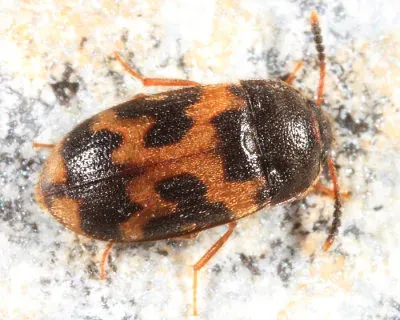
Description
How to identify
Beetles of the genus Litargus are members of the family Mycetophagidae (hairy fungus beetles) within the order Coleoptera. They are small, typically measuring 2–3 mm in length.
The body is generally oval or elongated, with a reddish-brown to blackish coloration. Many species possess distinct light-colored or yellow markings on the elytra.
The surface of the body is covered with fine hairs, which give the beetles a matte appearance and aid in their movement across various substrates.
Their mouthparts are of the chewing type, highly adapted for consuming fungal spores, mycelium, and decaying organic matter found in damp environments.
Larvae are light-colored, elongated, and possess well-developed legs, which allow them to remain mobile within the fungal substrate they inhabit.
What it damages
Litargus is classified as a secondary pest. It does not feed on healthy grain but thrives on molds and fungi that develop when storage conditions are poor.
Their presence in grain storage facilities accelerates spoilage, as they promote the spread of fungal spores throughout the bulk of the stored produce.
While they are primarily mycophagous, they are often found in association with damp and deteriorating grain, making them an indicator of substandard storage.
In forest environments, these beetles are beneficial as they feed on wood-decaying fungi, playing a role in the natural decomposition of woody debris.
The economic impact is primarily indirect, as they are part of the complex of mold-feeding insects that degrade the quality and market value of stored crops.
When it appears
The seasonal activity of Litargus is dictated by temperature and humidity levels, which control the growth of their fungal food sources.
In outdoor environments, they are most active during the spring and summer months when fungal growth on decaying plant matter is at its peak.
In controlled storage environments, they can reproduce throughout the year provided that the moisture content of the grain remains high enough for mold development.
Wintering usually occurs in the adult stage, with beetles seeking shelter in cracks, crevices, or under bark to survive colder temperatures.
The generation time is highly variable and depends on environmental conditions, with faster maturation occurring in warm and humid settings.
Signs of infestation
The most common sign of infestation is the observation of small beetles crawling on the surface of damp grain or fungal-affected materials.
Evidence of feeding includes fine frass, boreholes in fungal growths, and the presence of exuviae (larval skins) near the affected areas.
A noticeable smell of mold or fermentation in a storage unit is often associated with the presence of Litargus populations.
Overheating of grain bulk is a critical warning sign, as it creates the optimal conditions required for these insects to establish a breeding population.
Routine inspection of storage facilities often reveals these beetles alongside other mold-feeding species, indicating a need for urgent sanitation.
Control measures
The primary control measure is maintaining grain moisture content below 13-14%, which effectively prevents the growth of the mold they feed on.
Strict sanitation protocols must be followed, including the removal of residual grain, dust, and debris from storage facilities before loading new harvests.
Proper aeration and grain turning help to reduce moisture pockets and hotspots, discouraging the establishment of fungal colonies and associated pests.
If an infestation occurs, chemical fumigation using approved pesticides may be necessary to eliminate both larvae and adult populations within the facility.
- Keep grain moisture below 14%.
- Ensure thorough facility cleaning.
- Utilize effective grain aeration.
- Monitor for heating in stored grain.
- Fumigate if infestations are detected.
Taxonomy
- Latin name
- Litargus
- Order
- Coleoptera (beetles)
- Family
- Mycetophagidae
- EPPO code
- LITASP
Discussion
No discussions yet — be the first.