
Litargus connexus
Litargus connexus
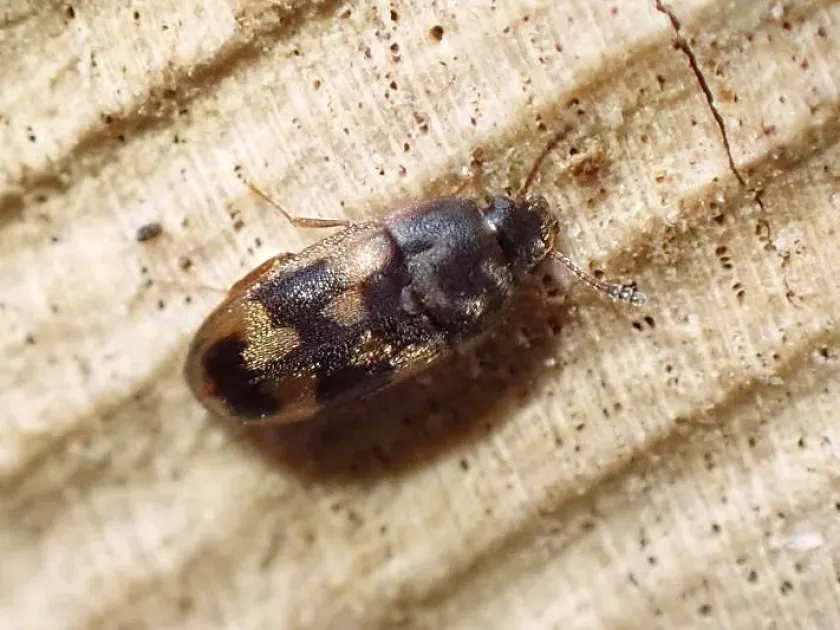
Description
How to identify
Litargus connexus is a small beetle belonging to the Mycetophagidae family, commonly known as hairy fungus beetles. Adults are generally 2–3 mm long with an elongated, slightly convex body covered with fine, soft hairs.
The coloration of these beetles typically ranges from reddish-brown to black, often featuring distinct lighter spots on the elytra. The antennae are tipped with a three-segmented club, a key feature for identification under magnification.
The larvae are pale and highly mobile, dwelling within the food source. Because they prefer environments where fungi are already present, they are often overlooked during routine visual inspections of stored grain.
Adults are proficient fliers, facilitating their movement throughout storage facilities. This mobility makes them a persistent threat to various batches of grain and processed plant materials stored in damp conditions.
Accurate identification requires careful examination of structural characteristics, such as the punctuation of the elytra and the specific morphology of the antennae, typically performed by a trained entomologist.
What it damages
As a fungus feeder, Litargus connexus primarily targets stored products that have already begun to deteriorate due to high moisture. It consumes mold mycelium and spores, causing indirect damage to the stored grain.
The feeding activity of these beetles, combined with the presence of mold, significantly degrades the physical and commercial quality of grain, pulses, and dried fruits. This results in direct weight loss and reduced germination rates.
The accumulation of waste products, such as frass and larval skins, contaminates the grain mass. This contamination renders the product unfit for consumption or standard processing and lowers its market value.
Their presence increases the overall moisture content in the micro-environment, which in turn fosters further mold growth. This creates a feedback loop that accelerates the spoilage of the entire stored batch.
Economic damage is twofold: the loss of the raw commodity itself and the substantial costs associated with professional fumigation or disposal of heavily infested batches to prevent cross-contamination.
When it appears
In temperature-controlled storage environments, Litargus connexus can remain active throughout the year. They do not have a strict diapause when environmental conditions remain stable.
Optimal development occurs at temperatures ranging from 20°C to 28°C and relative humidity levels exceeding 70%. These conditions are common in poorly ventilated warehouses or during periods of high humidity.
Spring and summer represent peak periods for migration, as adults may enter buildings from the surrounding environment. This necessitates increased vigilance during the warmer months of the year.
The life cycle from egg to adult takes approximately 4–6 weeks, meaning populations can multiply rapidly if sanitation is neglected during the summer months.
Ongoing monitoring using pheromone or adhesive traps is essential, especially when transitioning between storage seasons, to ensure that any early infestation is identified and treated immediately.
Signs of infestation
The most reliable sign of an infestation is a distinct, earthy, or musty smell associated with fungal spoilage within the warehouse. The presence of the beetles themselves on the surface of bags is a clear indicator.
Careful inspection of grain samples often reveals the beetles embedded in the produce. Surface debris and dust levels higher than normal are also suggestive of an underlying population.
- Presence of adult beetles on the packaging or in insect traps.
- Fine, powdery residue and moldy smell in stored goods.
- Visible fungal growth on the surface of seeds or grains.
- Hollowed-out seeds caused by larval feeding alongside fungal growth.
Visual inspections should be supplemented with laboratory analysis of grain samples to detect the presence of larvae that may be hiding deep within the stored commodity.
Control measures
The most effective strategy for managing Litargus connexus is moisture control. Storing grain at a moisture content that inhibits fungal growth makes the commodity unattractive to these beetles.
Sanitation practices are crucial, including the regular cleaning of bins and floors to remove dust, spilled grain, and debris where the beetles might find refuge and start a population.
Physical barriers, such as sealing gaps and installing fine-mesh screens on ventilation intakes, are vital to preventing adult beetles from entering the warehouse from the outside.
When an infestation is detected, fumigation using registered phosphine-based products is the standard approach to eliminate all life stages of the insect within the stored mass.
Implementing a strict "first-in, first-out" inventory system ensures that stored products do not sit long enough to accumulate moisture and mold, thereby minimizing the risk of a successful infestation.
Taxonomy
- Latin name
- Litargus connexus
- Order
- Coleoptera (beetles)
- Family
- Mycetophagidae
- EPPO code
- LITACO
Discussion
No discussions yet — be the first.