
Steppe polecat
Mustela eversmannii
Description
How to identify
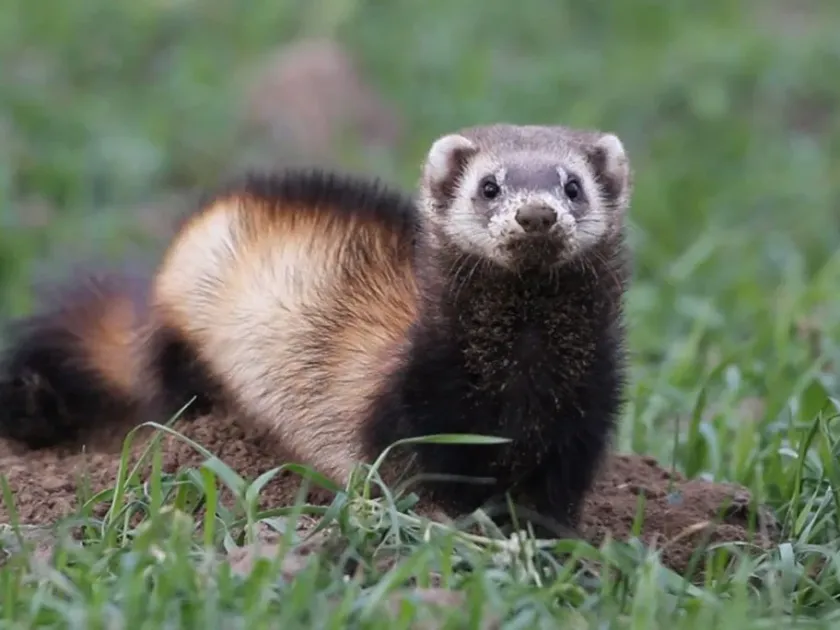
The Steppe polecat (Mustela eversmannii) is a carnivorous mammal belonging to the family Mustelidae. It is a long-bodied, short-legged predator.
The species is identifiable by its pale yellowish-brown coat, dark limbs, and a characteristic dark "mask" around the eyes and across the muzzle.
Typically found in open habitats, steppe polecats are highly adapted to burrowing, often utilizing abandoned rodent burrows to create their homes.
As active nocturnal predators, they are equipped with sharp teeth and claws designed specifically for hunting small vertebrates like ground squirrels and hamsters.
They are solitary creatures, exhibiting peak activity during the night and at twilight, which makes direct observation in fields difficult.
What it damages
Steppe polecats are not phytophagous; they do not feed on crops, meaning they cause no direct consumption-based damage to agricultural products.
Indirect damage occurs when their digging activities disrupt the soil structure and destroy the root systems of various field crops.
The creation of complex tunnel networks leads to localized crop failures as plants die from soil displacement and root system exposure.
Agricultural operations are further complicated because burrow entrances and excavated soil mounds interfere with the passage of heavy machinery.
Despite the damage, it is important to acknowledge that their predatory nature helps suppress populations of harmful rodents that consume significant amounts of grain.
Signs of infestation
Burrows are the primary indicator of presence; they are characterized by oval openings and piles of excavated soil near the entrance.
The presence of prey remains, such as remnants of rodents or birds left outside the burrow entrance, is a common sign of a polecat's den.
A strong, pungent musky odor is often present near the burrow site, particularly during the breeding season or when the animal is agitated.
Visual identification of tracks in soft soil shows a five-toed pattern, which differs from smaller rodents that inhabit agricultural lands.
Trail camera footage or the use of night-vision devices in suspected areas can confirm the identity of the animal during its active nocturnal hours.
Control measures
Control measures must be carefully chosen, as the Steppe polecat often serves as a beneficial predator and may have protected status in some regions.
Physical exclusion using fine-mesh fencing around sensitive nursery areas or small experimental plots is the most effective way to prevent entry.
Ultrasonic deterrent devices can create an environment that the polecats find uncomfortable, encouraging them to relocate to non-cultivated areas.
Standard agricultural practices, such as deep tilling and surface leveling, disrupt the burrowing environment, making the site unattractive for habitation.
In cases of significant population density, farmers should coordinate with local wildlife authorities to safely relocate the animals to natural habitats.
Taxonomy
- Latin name
- Mustela eversmannii
- Family
- Mustelidae
- EPPO code
- MUSTEV
Discussion
No discussions yet — be the first.