
Stoat
Mustela erminea
Description
How to identify
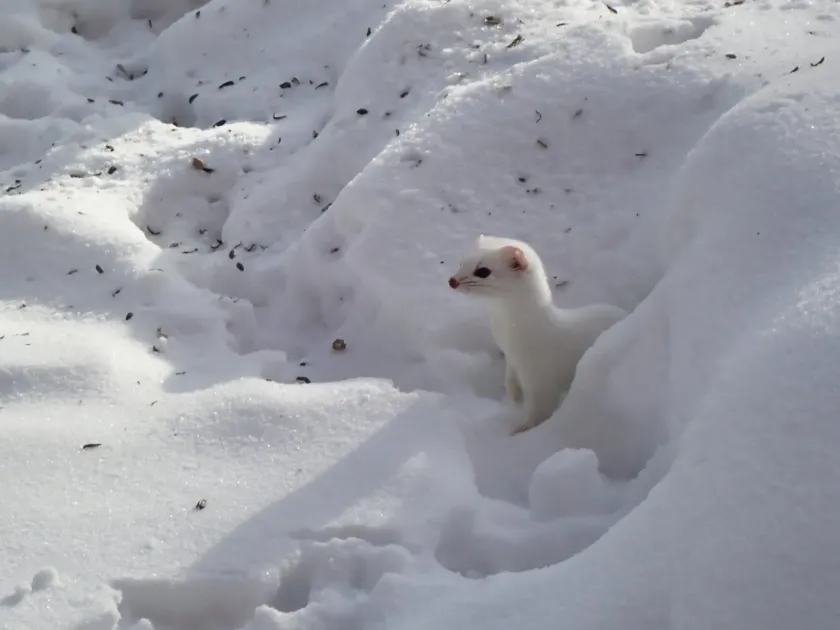
The stoat (Mustela erminea) is a small carnivore belonging to the Mustelidae family. It is easily recognized by its long, slender body and a bushy tail with a black tip that remains dark regardless of the season.
During the summer, the coat is reddish-brown with a white belly. In northern regions, the coat turns white in winter, which is the origin of the term 'ermine' when referring to their winter fur.
Stoats are agile, intelligent, and highly active predators. They are known for their curiosity and ability to climb trees, swim, and tunnel through small spaces.
Adult stoats typically measure between 17 and 30 centimeters in length. They are territorial animals, with males holding larger territories that overlap with those of several females.
Their anatomy allows them to hunt efficiently in narrow, subterranean burrows, making them perfect natural hunters for small rodents.
What it damages
The stoat is not a plant pest. It is an obligate carnivore, meaning its diet consists exclusively of meat and it does not damage crops, vegetables, or ornamental plants.
In fact, stoats are highly beneficial to agriculture. By consuming high numbers of mice, voles, and rats, they play a crucial role in controlling populations of destructive crop pests.
The only negative aspect for a farmer is potential predation on poultry. Stoats can kill chickens if they manage to enter unprotected coops or pens.
This behavior is opportunistic. The primary threat to a stoat is not the plant, but the poor structural integrity of fences or housing units intended for livestock.
Generally, the ecological value of a stoat as a natural rodenticide far outweighs the minor risks associated with poultry farming in well-secured facilities.
When it appears
Stoats are active throughout the year and do not hibernate. Their activity levels remain high during both warm summer months and cold winter days.
The breeding season occurs during spring and summer. During this time, hunting pressure increases as adult stoats must secure enough food for their growing offspring.
During autumn and winter, they may approach barns and agricultural buildings, seeking refuge from the cold and preying on rodents attracted to grain stores.
They are primarily nocturnal or crepuscular, meaning they are most active during the night or twilight hours, though they may hunt during the day if the prey density is high.
The movement patterns of stoats are largely dictated by the availability of prey, meaning they will settle where rodent populations are most dense.
Control measures
No control measures are recommended to eradicate stoats on farmland, as they provide essential ecosystem services by suppressing rodent outbreaks.
If poultry protection is required, the best approach is to physically block access points. Using heavy-gauge wire mesh with small gaps is effective at keeping stoats out of coops.
Avoid using chemical rodenticides, as the primary danger is secondary poisoning; a stoat consuming poisoned mice will ingest the toxin and eventually die.
Sanitation is key: keeping farmyards free of tall weeds, debris, and refuse piles reduces the cover that rodents use, which in turn discourages predators from hanging around.
Promoting a balanced environment where natural predators can thrive is the most sustainable way to keep rodent populations under control without chemical inputs.
Taxonomy
- Latin name
- Mustela erminea
- Family
- Mustelidae
- EPPO code
- MUSTER
Discussion
No discussions yet — be the first.