
Cacao mirid bug
Monalonion collaris
Description
How to identify
The cacao mirid bug (Monalonion collaris) is a destructive insect pest belonging to the Miridae family within the order Hemiptera. It is primarily recognized as a significant threat to tropical plantations, particularly cacao.
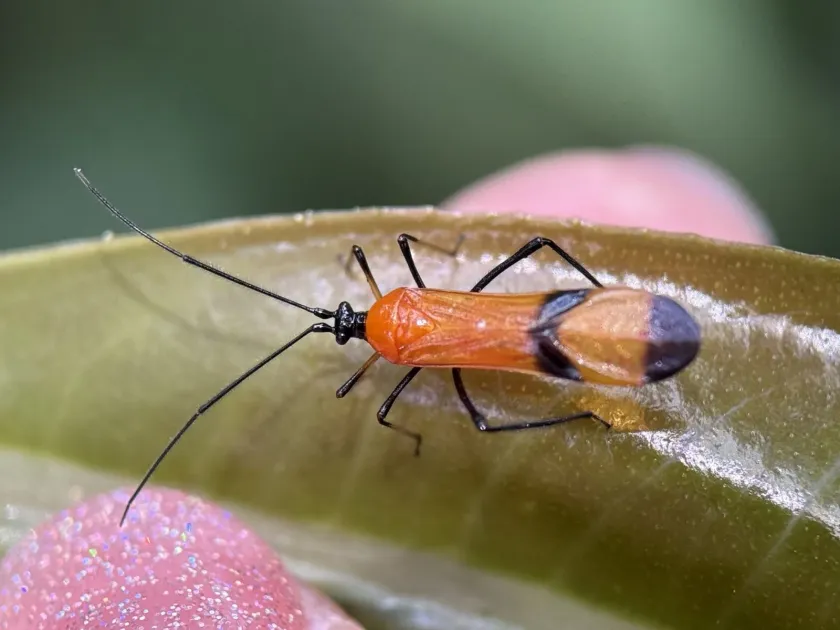
Adult insects are roughly 8 to 10 millimeters long, featuring an elongated body shape typical of plant bugs. Their coloration is usually dark brown or black, often distinguished by a prominent pale collar area on the pronotum.
Nymphs go through five distinct developmental stages (instars) before reaching maturity. During these stages, they closely resemble adults but lack functional wings and are generally smaller in size.
The life cycle is closely linked to climatic conditions, favoring regions with high humidity and consistent warmth. Females lay eggs inside the plant tissue, protecting them from environmental fluctuations and predators.
These insects are highly mobile and can quickly disperse across a plantation, especially when tree canopies are interlocking, facilitating their movement between host plants.
What it damages
The primary feeding activity occurs on cacao pods, where both nymphs and adults use their piercing-sucking mouthparts to extract sap. This process inflicts direct tissue damage on the developing fruit.
Young pods are particularly susceptible; feeding causes them to wither, become deformed, or drop prematurely. This leads to substantial harvest losses for farmers and reduces overall plantation yields.
Mature pods suffer from localized tissue necrosis at the puncture sites. These lesions create entry points for secondary fungal infections, which can rot the seeds inside and render the cacao useless.
Beyond cacao, the species has been observed affecting other crops such as avocado and certain citrus varieties, demonstrating its capacity as a polyphagous pest in diverse agroforestry systems.
The cumulative damage caused by mirid bugs can turn a productive plantation into an economic burden if infestation levels are not managed promptly and effectively.
When it appears
The bug's population dynamics are highly responsive to rainfall patterns. In many tropical regions, activity spikes follow the onset of the rainy season, which triggers new plant growth.
In managed plantations with year-round irrigation, the insect can remain active throughout the entire year, resulting in overlapping generations that complicate control efforts.
The most critical window for surveillance is during the pod development stage. This is when the insects congregate on fruits, making them most vulnerable to monitoring and intervention.
During drier, harsher conditions, populations often retreat to refugia on wild host plants or denser, more humid sections of the plantation where microclimate conditions are more favorable.
Understanding these seasonal fluctuations allows plantation managers to time their interventions precisely, maximizing the efficiency of protective measures and reducing chemical exposure.
Signs of infestation
Early warning signs of an infestation include minute dark spots or pits on the surface of cacao pods. Over time, these spots expand, often turning into blackened, necrotic patches.
Shoots and buds damaged by the mirid bug appear scorched or curled. This leaf dieback occurs because the bug extracts nutrients from the tender tissue, disrupting the plant's vascular development.
The presence of pods with a distorted, lumpy, or scarred appearance is a strong indicator of historical feeding activity, as the tree attempts to heal the wounds caused by the bug's saliva.
Observing the pests directly can be difficult due to their quick movements and cryptic behavior. They are most easily seen on the undersides of leaves or along the stems during cooler parts of the day.
Presence of excrement, appearing as small black specks on the stems and pods, often accompanies the feeding sites and serves as a reliable marker for recent bug activity.
Control measures
Effective management requires an integrated approach that focuses on reducing the pest's environment and utilizing targeted interventions to control population spikes.
- Regular pruning of damaged branches and infected pods to remove breeding grounds.
- Maintaining proper plantation spacing to ensure air circulation and reduce micro-humidity.
- Utilizing biological control agents, such as entomopathogenic fungi like Beauveria bassiana.
- Applying selective insecticides during periods of high pest activity to minimize impact on pollinators.
- Using pheromone-based traps to monitor population levels and detect early migration into the plantation.
Conservation of natural predators, including specific ant species, spiders, and predatory wasps, plays a vital role in keeping mirid bug populations below the economic injury level.
Chemical applications should be strictly regulated to ensure residue levels comply with international safety standards, especially for high-quality export-grade cacao production.
Continuous monitoring programs are essential for success, allowing farmers to detect outbreaks early when physical or biological methods are still highly effective at preventing widespread damage.
Taxonomy
- Latin name
- Monalonion collaris
- Order
- Hemiptera (bugs, aphids, leafhoppers)
- Family
- Miridae
- EPPO code
- MONACO
Discussion
No discussions yet — be the first.