

Pest · Lepidoptera (butterflies) · affects Potato, Apple, Winter barley
Especially harmful
Potato tuber moth
Phthorimaea operculella
Description
How to identify
The potato tuber moth (Phthorimaea operculella) belongs to the order Lepidoptera and the family Gelechiidae. Adult moths are small, with a wingspan of about 15 mm, displaying a grey-brown color pattern that allows them to blend perfectly with plant debris.
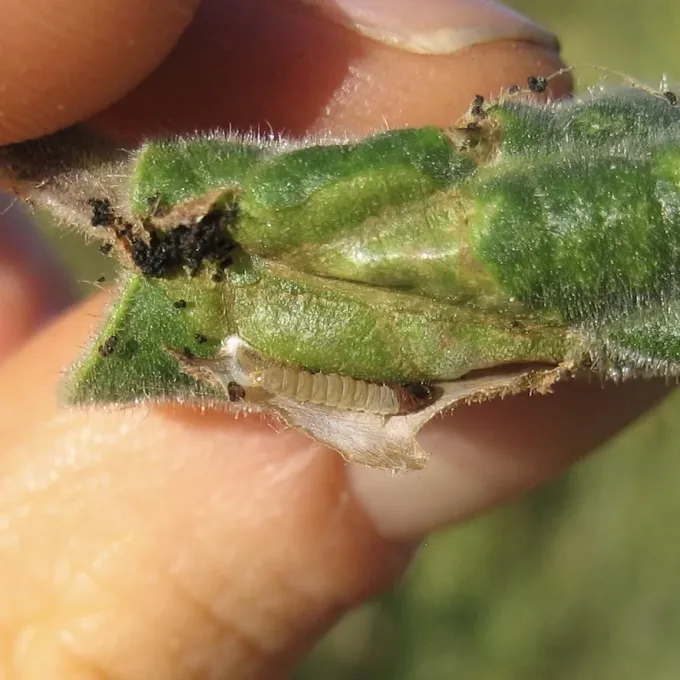
Larvae are 10–12 mm long and typically pale pink or greenish with a dark head capsule. Pupation occurs within a silken cocoon, which the larvae spin in secluded places, such as soil crevices or around damaged tubers, to ensure their survival and protection.
What it damages
The moth is a primary pest of solanaceous crops including potatoes, tomatoes, tobacco, and peppers. Damage occurs throughout the growing season in the field and continues in storage facilities, leading to significant economic losses for producers.
Beyond solanaceous hosts, the pest can impact various other crops. Reports indicate that it may also damage fodder beet, winter rapeseed, winter barley, common hops, apple trees, alfalfa, and peas, making it a highly adaptable and dangerous agricultural threat.
When it appears
The life cycle of this pest is highly temperature-dependent, allowing for multiple generations per year, often ranging from four to eight. This rapid turnover makes it difficult to manage without constant monitoring and integrated pest management strategies.
Overwintering occurs as larvae or pupae in crop residues or warehouses. Adult flight activity initiates when temperatures consistently exceed 10°C. Hot and dry weather conditions are known to significantly accelerate the reproductive cycle of the moth.
Signs of infestation
Visible signs of infestation on foliage include irregular mines or blotches, which are the result of larvae feeding within the leaf tissues. In stems, feeding causes wilting and premature death of the terminal parts of the plant, weakening the overall crop structure.
Tubers are primarily damaged by larvae that burrow into the flesh, creating complex tunnels filled with excrement. These entry points often lead to secondary bacterial or fungal infections, rendering the potato tuber unmarketable and prone to rapid decay.
Control measures
Cultural control measures are the first line of defense, including deep plowing after harvest to destroy pupae and rotating crops away from solanaceous plants. High hilling of potatoes is essential to prevent eggs from reaching the tubers under the soil surface.
Chemical control involves the application of appropriate insecticides during peak flight periods to prevent larval establishment. In storage, maintaining temperatures below 4°C is an effective method to inhibit the growth and spread of the pest population.
In brief
13
Damages crops
Content graph
Damages crops · 13
Content graph
Connections · Potato tuber moth
Most often together:
Marketplace
Products · 4


As Selektiv
ТОВ «Фабрика агрохімікатів», Черкаси, Україна
Insecticides
0
0
·
63
33 offers
13.96 €per 1 l
Buy
Biology
Taxonomy
- Latin name
- Phthorimaea operculella
- Order
- Lepidoptera (butterflies)
- Family
- Gelechiidae
- EPPO code
- PHTOOP
Community
Discussion
No discussions yet — be the first.