
Field bindweed
Misgurnus fossilis
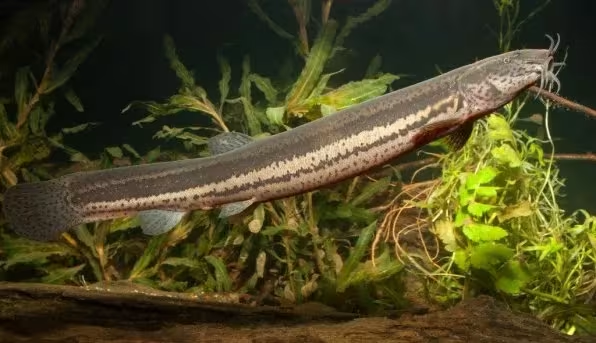
Description
How to identify
Field bindweed (Convolvulus arvensis) is a perennial herbaceous plant from the Convolvulaceae family. It is notorious for its deep, extensive, and highly branched root system that can penetrate several meters into the soil.
The stems are twining or prostrate, reaching lengths of up to 120 centimeters. The leaves are characteristically arrow-shaped or hastate, arranged alternately along the slender, twisting vines.
The flowers are funnel-shaped and white or pale pink in color. They typically open during the day and are highly attractive to pollinators, ensuring a very high seed production rate per season.
The fruit is a small capsule containing dark, rough seeds. These seeds are extremely resilient and can remain viable in the soil for several decades, making eradication very difficult.
The root system is the main survival mechanism of the plant. Even tiny segments of roots, when detached during soil cultivation, can regenerate into new individual plants within a short period.
What it damages
This weed causes significant economic losses in almost all field crops. It is particularly harmful to cereals, maize, oilseeds, and various horticultural orchards and vineyards.
The vines wrap tightly around the stalks of crops, causing severe lodging. This makes harvesting difficult, increases mechanical stress on machines, and leads to significant yield losses in the field.
Bindweed competes aggressively with crops for essential nutrients, water, and sunlight. In arid environments, it can deplete soil moisture reserves, leading to stunted crop development.
The dense foliage of the bindweed creates a canopy that blocks sunlight from reaching the leaves of the primary crop, thereby drastically reducing the efficiency of photosynthesis.
Furthermore, field bindweed serves as a host for various agricultural pests and viral diseases. It acts as a reservoir, allowing pathogens to spread rapidly to nearby healthy crops.
When it appears
Seed germination begins in the spring when soil temperatures reach approximately 8 to 10 degrees Celsius. First sprouts usually appear in April or early May depending on the local climate.
The period of most vigorous growth for both the root system and the aerial parts occurs during the summer months, specifically throughout June and July.
Flowering occurs throughout the entire summer season, starting from June and extending into early autumn. This is the stage when the plant exerts the most competitive pressure on surrounding crops.
Seed maturation happens gradually from mid-summer onwards. These seeds are often dispersed by wind, water, or machinery during field operations, contributing to the spread of the infestation.
The aerial parts of the bindweed die back following the first severe autumn frosts. However, the root system remains alive and dormant underground, ready to sprout again as soon as temperatures rise.
Signs of infestation
The most obvious sign of infestation is the presence of spiral-shaped vines winding around the stems of crops. In grain fields, this manifests as widespread lodging or flattened crop patches.
Visually, infested areas can be identified by the abundance of funnel-shaped white or pink flowers, which stand out significantly against the green background of the main crop.
Stunted growth or chlorotic leaves on crops surrounded by bindweed are key indicators of nutrient and water competition. Affected plants often look weaker than those in non-infested areas.
When digging into the soil, you will often find fragile, whitish, horizontal roots. Their presence confirms the establishment of a long-term infestation that cannot be solved by a single weeding session.
Dense mats of tangled vines covering the soil surface between crop rows are a definitive sign of severe weed pressure that requires urgent management intervention.
Control measures
Effective management requires a multi-year approach, combining mechanical and chemical control. Regular cultivation to exhaust the roots is essential, but it must be done persistently.
Systemic herbicides, particularly those based on glyphosate or phenoxy acids, are the most effective way to manage bindweed. Application is most successful during the active flowering stage.
Crop rotation with competitive, dense-canopy plants can help suppress the growth of bindweed. Integrating cover crops also prevents the weed from establishing a strong hold on the soil surface.
- Shallow cultivation to stimulate seed germination followed by secondary control.
- Deep plowing to disturb the extensive root network in the autumn.
- Targeted chemical applications after harvest to move the herbicide into the roots.
In garden settings, persistent hand-pulling or the use of solarization techniques can help manage smaller patches, although it requires consistent attention for several seasons.
Taxonomy
- Latin name
- Misgurnus fossilis
- Family
- Cobitidae
- EPPO code
- MISGFO
Discussion
No discussions yet — be the first.