
Spined loach
Cobitis
Description
How to identify
The spined loach (genus Cobitis) belongs to the family Cobitidae within the order Cypriniformes, commonly found in slow-moving freshwater systems.
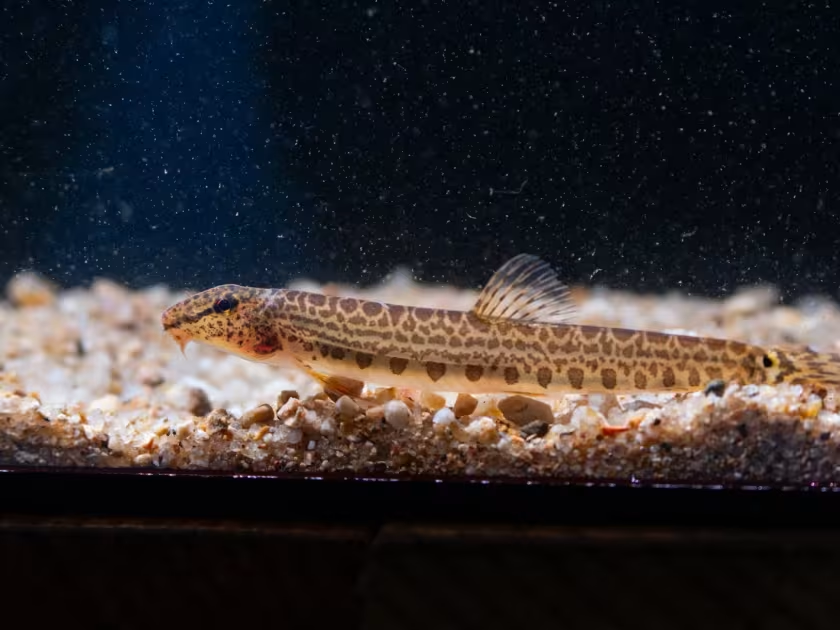
They are characterized by an elongated, compressed body and a distinctive erectile bifid spine located beneath each eye used for defensive purposes.
The coloration usually consists of dark spots or bars along the sides, providing excellent camouflage against sandy or muddy substrates.
Adult individuals typically reach a size of 10 to 12 centimeters, making them relatively small and inconspicuous inhabitants of riverbeds.
As benthic fish, they spend most of their time near or buried within the bottom sediment of rivers, streams, and lakes.
What it damages
It is essential to clarify that the spined loach is not a pest of agricultural crops, as it is strictly an aquatic organism.
The species feeds primarily on small invertebrates, larvae, and detritus found on the riverbed, having no impact on terrestrial plant life.
Agricultural damage attributed to this species is non-existent, as they do not consume stems, leaves, roots, or grains of crops.
Their presence in water systems near agricultural fields does not threaten the harvest but instead indicates a healthy aquatic environment.
Therefore, no damage assessment or economic injury level calculation is required regarding this species for any crop production system.
When it appears
The activity of the spined loach is primarily governed by water temperature and seasonal changes within its habitat.
During the spring and summer months, when water temperatures are optimal, these fish remain active, feeding and searching for mates.
Spawning usually occurs in late spring or early summer, following the natural warming cycle of the local water bodies.
As temperatures drop during the autumn, the metabolic rate of the fish slows significantly, leading them to prepare for overwintering.
In winter, they retreat into the deep mud or sand of the river bottom, entering a period of low activity until the following spring.
Signs of infestation
Identifying the presence of spined loach requires careful observation of shallow water areas where they usually hide.
One may notice their behavior of burying themselves in sand, with only their eyes visible to monitor potential threats.
If handled, they may use their suborbital spines, which can scratch the skin; therefore, careful observation is recommended.
A high density of these loaches is often considered a bioindicator of good water quality, reflecting an environment free of heavy pollutants.
Absence of signs of feeding damage on crops confirms that these fish do not pose any threat to the agricultural industry.
Control measures
Since the spined loach is not a pest, there are no control measures or pest management strategies implemented against them.
Efforts should instead be focused on protecting the water quality in irrigation systems and reservoirs to preserve local biodiversity.
The use of chemical agents in or near water bodies is strongly discouraged, as it causes severe harm to the aquatic ecosystem and the loach populations.
Farmers should prioritize the management of actual crop pests, such as insects or weeds, which have a direct impact on yields.
Promoting a balanced approach to water management ensures that beneficial species like the spined loach can continue their ecological role.
Taxonomy
- Latin name
- Cobitis
- Family
- Cobitidae
- EPPO code
- COBISP
Discussion
No discussions yet — be the first.