
Stone loach
Barbatula
Description
How to identify
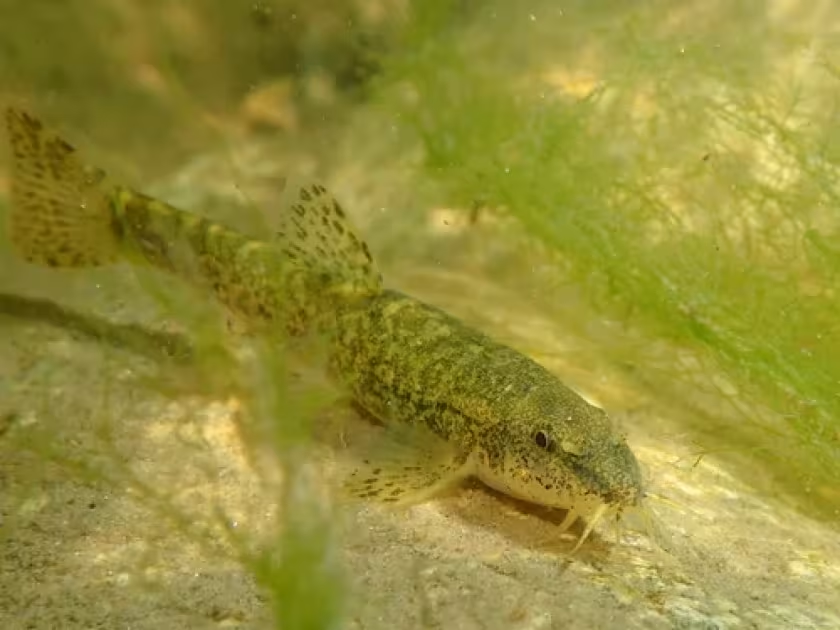
The stone loach (Barbatula barbatula) is a small freshwater fish species belonging to the Balitoridae family within the Cypriniformes order. It possesses a streamlined, elongated body that is either scaleless or covered in minute, inconspicuous scales.
A primary identification feature of the species is the presence of six sensory barbels surrounding the mouth, which are essential for navigating murky bottom environments. The coloration is typically mottled, blending yellow, brown, and dark spots to match substrate textures.
Adult stone loaches usually measure between 12 to 15 centimeters in length. They are primarily bottom-dwellers, preferring clear, fast-flowing streams with rocky or sandy beds, though they can inhabit stagnant pond environments.
While often confused with larger salmonid species due to nomenclature, Barbatula barbatula holds no commercial value. It is ecologically distinct and lacks the economic benefits associated with game or food fish.
In an agricultural context, it is not a crop pest but is considered a nuisance in aquaculture systems. It does not damage terrestrial vegetation, focusing its activity exclusively on the benthic zone of aquatic systems.
What it damages
The damage caused by the stone loach is confined to professional fish farming. It acts as a direct food competitor to the fry and juveniles of valuable commercial fish species, consuming the same benthic invertebrates.
In spawning or nursing ponds, the stone loach poses a significant threat by preying on the eggs and larvae of commercial species. This predation significantly reduces the survival rate of the target fish stocks.
There is no record of stone loach damaging aquatic or terrestrial plants. Its impact is purely ecological and focused on disrupting the food chain balance within controlled pond environments.
Mass reproduction of stone loach in a pond ecosystem can lead to a decrease in overall production volume, necessitating increased efforts in pond sanitation and species management.
By consuming valuable feed resources, the stone loach increases the cost per unit of production, making it an undesirable component of the fish population in managed aquaculture.
When it appears
The stone loach is most active during the spring and summer months when water temperatures promote higher metabolic rates. Increased activity aligns with the breeding season and intensive foraging.
The spawning period typically occurs between April and June. This is the time when the species poses the highest risk to commercial fish populations due to their increased foraging activity on egg deposits.
During winter, the fish undergoes a period of dormancy, burying itself in substrate or sheltering under stones. During this time, the metabolic rate is significantly reduced, and its negative impact is minimized.
Daytime behavior is often cryptic; the fish is largely nocturnal, hiding in crevices to avoid predators. This makes detection difficult for pond managers during standard visual inspections.
Effective control measures must be synchronized with the seasonal cycles of the species, focusing on pond maintenance prior to the spring spawning season to prevent population explosions.
Control measures
Mechanical control via pond draining is the most effective method for managing stone loach populations. Drying the pond bottom and performing lime treatment effectively eliminates adults and larvae.
Preventative measures include the installation of fine-mesh screening at water inflow points. This physical barrier stops eggs or juvenile loach from entering managed ponds from external natural water sources.
Biological control involves the introduction of predatory fish species, such as northern pike or perch. These predators utilize the stone loach as a natural food source, keeping the population at a sustainable minimum.
Maintaining high water quality standards and consistent monitoring of the fish population allows managers to identify and remove invasive loach colonies before they reach significant levels.
- Complete draining and liming of pond beds.
- Installation of fine-mesh inflow screens.
- Stocking with predatory fish for natural control.
- Routine monitoring of benthic populations.
Taxonomy
- Latin name
- Barbatula
- Family
- Cobitidae
- EPPO code
- BRBASP
Discussion
No discussions yet — be the first.