
Miscodera arctica
Miscodera arctica
Description
How to identify
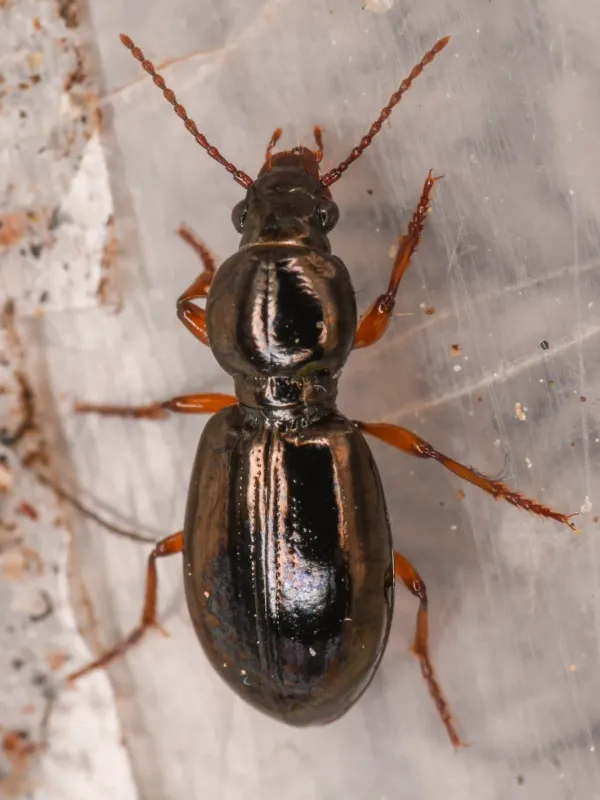
Miscodera arctica is a species of ground beetle belonging to the family Carabidae. These beetles are relatively small, usually measuring between 6 to 8 mm, and are easily distinguished by a distinct constriction of the pronotum, which gives them a unique appearance.
The coloration of these beetles ranges from dark brown to black, often exhibiting a subtle metallic sheen. The elytra are marked with clear, punctured striae, which is a characteristic feature of this specific species.
The larvae live predominantly in the soil, possessing an elongated body and well-developed legs that allow them to move effectively through the upper soil layers in search of food.
Adult beetles are typically nocturnal or crepuscular. While ground beetles are generally considered beneficial predators in agro-ecosystems, Miscodera arctica can occasionally feed on agricultural crops under specific conditions.
This beetle is well-adapted to northern climates and prefers moist, cool soil environments, often found in areas with high organic matter, which provides both shelter and favorable conditions for development.
What it damages
When populations reach high densities, Miscodera arctica can cause damage to the subterranean parts of crops. Both larvae and adults may feed on the tender roots and root collars of young plants.
Young seedlings are particularly vulnerable, especially cereal crops and various vegetables grown in wet or peaty soils. Feeding damage often leads to stunted growth and, in severe cases, the death of the seedling.
Root damage caused by the larvae weakens the plant, making it significantly more susceptible to secondary infections by soil-borne pathogens, such as fungi and bacteria, which can lead to root rot.
Economic impact is generally linked to areas where poor agricultural practices, such as lack of crop rotation or improper soil management, allow the population of these beetles to thrive.
The damage is most critical during the early stages of plant development when the root system is not yet robust enough to withstand significant herbivory.
When it appears
Adult beetles typically appear in fields during the first half of the summer as the soil warms up. This timeframe often coincides with the germination and early growth phases of many cultivated crops.
The life cycle involves an overwintering stage where both larvae and adults remain in the soil. Spring emergence is a key period for monitoring as the beetles seek food and mating opportunities.
Eggs are laid in moist soil, and the resulting larvae actively feed throughout the summer months. The length of the developmental cycle can vary depending on the local climate and temperature.
Pupation occurs within the soil in small earthen chambers. In colder northern regions, the life cycle may be extended over several years to accommodate the environmental constraints.
Agronomists should prioritize field inspections during May and June to identify early signs of infestation and prevent significant damage to the crop stand.
Signs of infestation
A primary indicator of Miscodera arctica presence is the sudden appearance of sparse or thin patches in the crop field. Affected plants often show signs of stress, including yellowing leaves and reduced vigor.
Exposing the roots of affected plants will reveal missing or chewed-off fine root hairs, which is a classic symptom of soil-dwelling pest activity. Larvae may be found near the root zone.
The use of light traps or pitfall traps during the night is an effective diagnostic method to confirm the presence and population density of these beetles in the field.
Small soil tunnels or surface disturbances near the plant base serve as additional evidence of larval activity. Observations during evening hours may reveal beetles hiding under clods or plant debris.
Wilting of plants during the daytime, despite adequate soil moisture, suggests significant damage to the vascular root system, requiring immediate investigation by an agronomist.
Control measures
Deep autumn plowing is the most effective cultural control method, as it disrupts the soil habitat and exposes larvae and overwintering adults to cold and natural predators.
Implementing a rigorous crop rotation schedule helps break the life cycle of the beetle by preventing it from establishing a permanent food supply in a specific field.
Improved field drainage is crucial for areas prone to waterlogging, as Miscodera arctica prefers moist soils for its development and activity.
The application of biological control agents, such as entomopathogenic fungi, can help suppress population numbers without negatively impacting other beneficial predatory insects.
- Regular inter-row cultivation to disturb larval habitat.
- Removal of weeds that provide shelter for adults.
- Ensuring optimal seed quality for fast and vigorous plant establishment.
Taxonomy
- Latin name
- Miscodera arctica
- Order
- Coleoptera (beetles)
- Family
- Carabidae
- EPPO code
- MISCAR
Discussion
No discussions yet — be the first.