
Hornet mimic hoverfly
Milesia crabroniformis
Description
How to identify
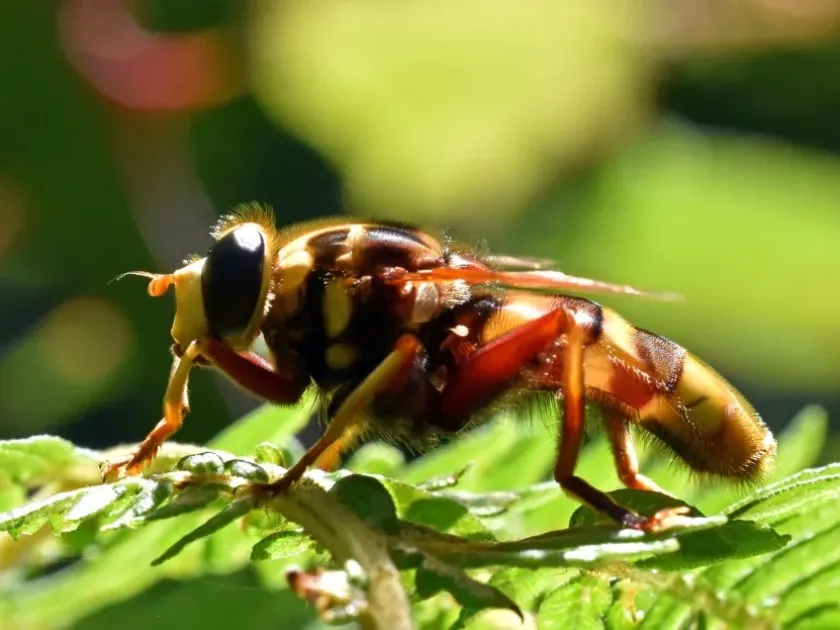
Milesia crabroniformis is a large species of hoverfly, famous for its incredible visual resemblance to the European hornet, Vespa crabro.
Adult flies can reach up to 25 mm in length, featuring a yellow and black patterned abdomen that mimics the warning coloration of stinging wasps.
Despite their threatening appearance, they are completely harmless to humans and plants, as they belong to the Diptera order and lack a stinger.
They can be distinguished from hornets by their single pair of wings, large fly-like compound eyes, and their specific flight pattern, which involves hovering.
The larvae are known as rat-tailed maggots due to their elongated posterior breathing tube, which allows them to respire while submerged in decomposing material.
What it damages
The hornet mimic hoverfly is not considered an agricultural pest and does not cause damage to crops, vegetables, or garden fruits.
Larval stages are saprophagous, meaning they inhabit and feed on rotting organic matter, specifically decomposing hardwood in hollow trees.
They play a positive ecological role by accelerating the natural decomposition process of dead wood within forest or garden ecosystems.
Adult flies are effective pollinators, feeding on nectar from various flowers and supporting the biodiversity of the surrounding landscape.
Consequently, their presence is indicative of mature trees and healthy ecological decay processes rather than any threat to plant health.
When it appears
The adult hornet mimic hoverfly is typically seen during the height of the summer, peaking in July and August.
They are most active on warm, sunny days when they frequent nectar-rich flowers in parks, orchards, and forest edges.
Larval development occurs within decaying wood throughout the year, with larvae often overwintering inside the wooden cavities.
The population cycle is heavily dependent on the availability of suitable nesting sites, which include ancient or damaged trees with internal rot.
As summer draws to a close, adult activity decreases significantly as the life cycle transitions into the overwintering phase for the larvae.
Signs of infestation
The most common sign of their presence is the sighting of adult flies hovering around flowers or landing on tree trunks.
Due to their size and distinct buzzing sound, many people mistakenly identify them as aggressive hornets, leading to unnecessary alarm.
Since the larvae are hidden deep within decaying wood or tree hollows, their presence is rarely visible unless a hollow tree is being inspected.
There are no signs of leaf damage, fruit decay, or root issues associated with this insect, confirming its status as a non-pest.
The presence of this insect should be viewed as a sign of environmental health, as it requires specific niche habitats to thrive.
Control measures
No control measures are necessary for Milesia crabroniformis, as it does not pose a threat to horticultural or agricultural productivity.
Standard orchard maintenance, such as removing extremely hazardous or heavily rotted trees, will naturally limit the habitat for larvae.
The use of insecticides is strictly discouraged, as it would cause collateral damage to beneficial pollinators and other non-target insect species.
Management should focus on maintaining tree health through proper pruning and preventing excessive wood decay in valuable garden trees.
Education is the best tool for dealing with this insect, as recognizing it as a harmless mimic prevents unnecessary chemical intervention.
Taxonomy
- Latin name
- Milesia crabroniformis
- Order
- Diptera (flies)
- Family
- Syrphidae
- EPPO code
- MILECR
Discussion
No discussions yet — be the first.