

Pest · Coleoptera (beetles) · affects Maize, Common sunflower, Fodder beet
Especially harmful
Darkling beetles
Tenebrionidae
Description
How to identify
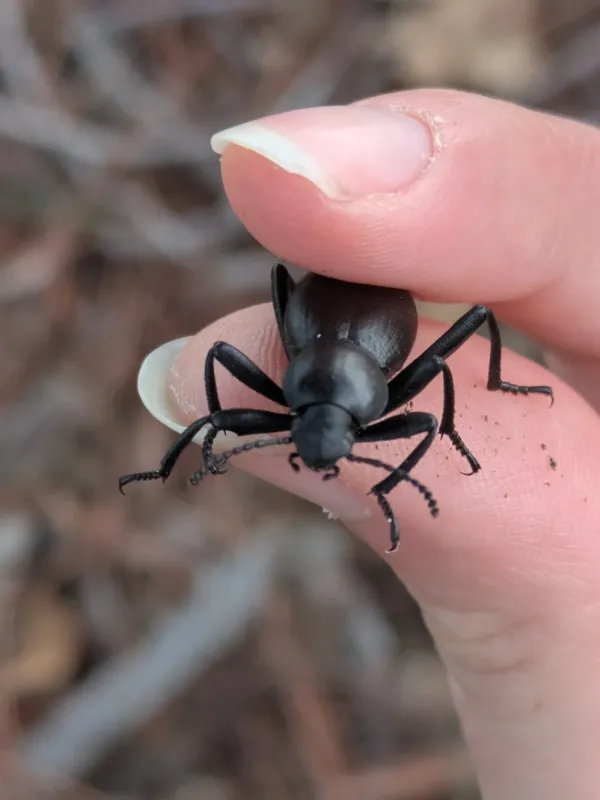
Darkling beetles (Tenebrionidae) are a diverse family of beetles, generally characterized by their dark or black coloration, which gave them their common name.
Adult beetles typically possess a hard exoskeleton and can vary in size from small species of a few millimeters to larger, more robust specimens.
The larvae of these beetles, commonly known as false wireworms, have a hardened, elongated body that allows them to move efficiently through the soil profile.
They belong to the order Coleoptera and are remarkably adaptable to diverse environmental conditions, including arid regions where other pests struggle.
Correct identification often involves examining the soil around affected plants to distinguish these larvae from similar soil-dwelling pests like true wireworms.
What it damages
Darkling beetles cause significant agricultural damage, particularly when their larvae feed on newly sown seeds, sprouts, and roots of various crops.
The feeding activity of false wireworms can lead to total crop failure in heavily infested patches, requiring growers to replant entire fields.
Adult beetles may also contribute to damage by feeding on young foliage, which can stress the seedlings and make them more susceptible to environmental diseases.
The destruction of the root system often leads to stunted growth, yellowing of leaves, and the eventual death of young plants throughout the field.
Economic losses are often compounded during drought years when the insects turn to cultivated crops as their primary source of essential moisture.
When it appears
The life cycle of darkling beetles is often prolonged, with development from egg to adult occurring over several months or even years depending on the species.
Overwintering typically takes place in the soil or under organic debris, with adults emerging to resume activity as soon as the soil temperatures rise in spring.
The most critical period for crops is during the early planting season, when the soil is warm enough for larvae to be active near the seed zone.
Larval development continues throughout the growing season, during which they remain almost entirely hidden beneath the soil surface feeding on roots.
Pupation usually occurs in the soil, and the emergence of the new generation of adults typically happens towards the late summer or autumn months.
Signs of infestation
The primary visual sign of a darkling beetle infestation is the appearance of patchy, thin, or dead areas within a row of newly germinated crops.
Close inspection of the affected plants often reveals damaged seeds or chewed subterranean stems, which are typical indicators of larval feeding.
In infested fields, soil excavations will usually reveal the presence of false wireworm larvae near the root zones of wilted or struggling plants.
Adult beetles may be observed on the soil surface during the night, as they are nocturnal and avoid direct sunlight to minimize water loss.
Uneven germination and sudden wilting of young seedlings are reliable indicators that soil pests are present and actively causing damage.
Control measures
Effective management begins with sound agronomical practices, such as maintaining proper crop rotation to break the beetle's life cycle in the field.
Tillage practices, specifically deep plowing, can disrupt the soil environment, exposing larvae and pupae to predators and adverse weather conditions.
Seed treatments with approved systemic insecticides provide the most robust protection for germinating crops, shielding them during the most vulnerable stage.
Managing weed populations is also essential, as these plants provide alternative food sources and shelter that help beetle populations survive and thrive.
- Proper crop rotation sequences
- Deep soil cultivation
- Insecticide seed treatments
- Weed control in and around fields
Content graph
Connections · Darkling beetles
Most often together:
Marketplace
Products · 33
Biology
Taxonomy
- Latin name
- Tenebrionidae
- Order
- Coleoptera (beetles)
- Family
- Tenebrionidae
- EPPO code
- 1TENEF
Community
Discussion
No discussions yet — be the first.