
Angular-winged katydid
Microcentrum retinerve
Description
How to identify
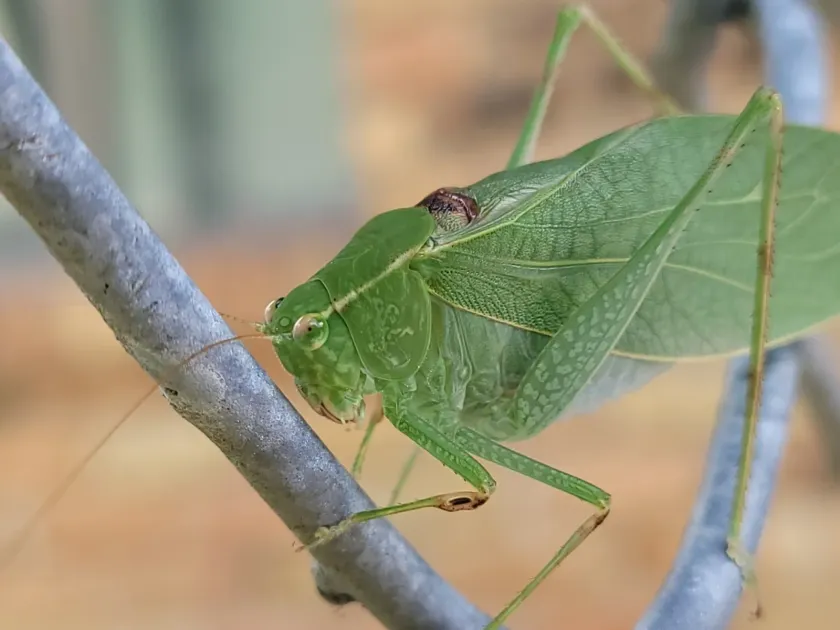
The angular-winged katydid (Microcentrum retinerve) is a member of the Tettigoniidae family within the Orthoptera order. It is renowned for its remarkable camouflage, as its body structure and color closely mimic the leaves of the trees it inhabits.
Adult insects typically measure between 40 and 50 millimeters in length and feature light green coloration. The most distinctive identifying feature is the netted venation of their wings, which perfectly replicates the appearance of veins on a broad leaf.
The life cycle involves an incomplete metamorphosis, consisting of egg, nymph, and adult stages. The eggs are distinctively flat and scale-like, usually deposited in overlapping rows along the edges of leaves or on thin branches.
These insects are primarily nocturnal, making them difficult to spot during daylight hours. They remain well-hidden within the foliage canopy, which is their primary habitat throughout the summer months.
Nymphs resemble smaller, wingless versions of the adults. As they undergo several molts, they gradually develop full wings, typically reaching their reproductive maturity in mid to late summer.
What it damages
This pest is known to affect a variety of woody plants, including citrus, apples, peaches, and various grape cultivars. Both adults and nymphs feed on tender foliage, causing irregular holes and ragged leaf edges.
Heavy feeding pressure can lead to significant defoliation, particularly on younger plants. This reduction in leaf area decreases the tree's photosynthetic capacity, which may result in stunted growth and weakened immunity against secondary pests.
In addition to foliage damage, angular-winged katydids may feed on the skin of developing fruits, causing scarring and surface wounds. These damaged sites are susceptible to rot and secondary fungal infections.
The act of oviposition (egg-laying) itself can cause minor damage to the plant. The eggs, firmly attached in rows, can sometimes cause necrosis or tissue deformation on the leaf margins where they are deposited.
While mature trees can usually withstand moderate infestations, nurseries and young orchards are at higher risk of economic loss due to aesthetic damage and growth retardation caused by the insects' feeding activity.
Control measures
Effective management begins with regular monitoring. During the winter season, inspecting branches for egg masses can help reduce the potential population for the following spring, as the eggs are often laid on the terminal shoots.
Biological control plays a key role, as numerous natural predators, including birds, spiders, and parasitic wasps, help keep populations in check. Maintaining a diverse garden ecosystem supports these beneficial insect populations.
For chemical intervention, applying insecticides against early-stage nymphs is most effective. Targeting them before they mature ensures better control and prevents the damage caused by voracious adult specimens.
In smaller landscapes or private gardens, mechanical removal or manual collection at night using a flashlight can be surprisingly effective. Using light traps can also assist in monitoring population trends.
Horticultural oils or insecticidal soaps can be utilized as a safer, environmentally conscious alternative for managing early infestations, providing a way to protect the plant while preserving the health of the broader orchard ecosystem.
Taxonomy
- Latin name
- Microcentrum retinerve
- Order
- Orthoptera (locusts)
- Family
- Tettigoniidae
- EPPO code
- MCCERE
Discussion
No discussions yet — be the first.