
Bog bush-cricket
Metrioptera brachyptera
Description
How to identify
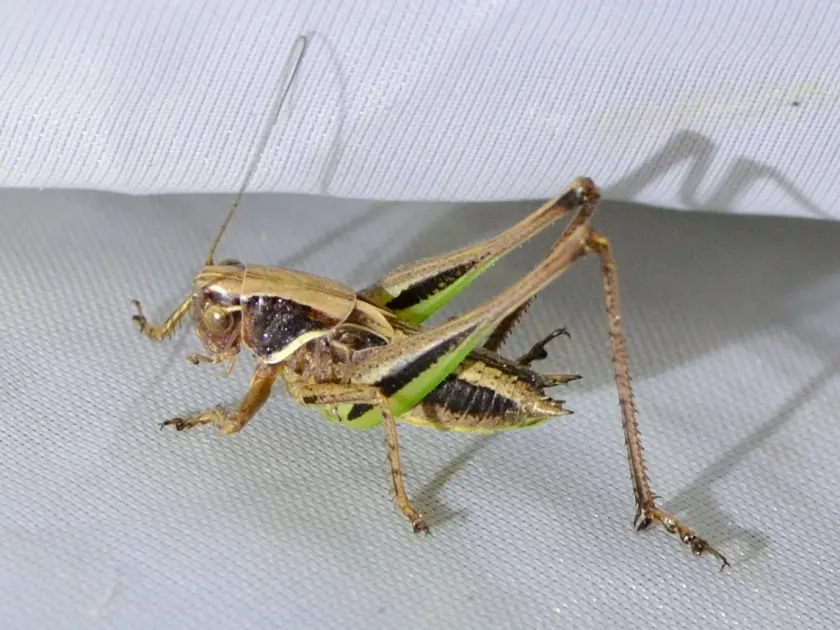
The bog bush-cricket (Metrioptera brachyptera) is a member of the Tettigoniidae family. These insects are distinguished by their short wings, which rarely extend to the tip of the abdomen, making them easily identifiable.
Their body color ranges from vivid green to shades of brown, providing excellent camouflage within grasslands and marshy habitats where they typically thrive.
They possess strong, elongated hind legs adapted for jumping. The head features robust mandibles suited for chewing plant tissues, seeds, and occasionally small invertebrates.
Unlike migratory locusts, this species does not form massive swarms. They maintain a solitary lifestyle, though they can reach high densities in areas with suitable vegetation.
Females are equipped with a well-developed, sword-like ovipositor, which they use to insert eggs into plant stems or the soil to ensure their protection during winter.
What it damages
These crickets affect a variety of crops, including cereals, grasses, and some horticultural species. They pose the greatest threat to seedlings and young plants, where even minor feeding can stunt growth.
Both nymphs and adults feed on leaves and stems. Extensive feeding results in ragged foliage and, in severe cases, the destruction of growing points, which stops plant development.
The wounds created by their feeding serve as entry points for fungal and bacterial pathogens, leading to secondary diseases that further diminish crop quality and yield.
During years with high humidity and favorable temperatures, populations can spike, causing noticeable damage to field edges and sometimes encroaching into the main crop area.
While their damage is often localized compared to other major pests, they can cause significant economic losses in specific regions where these insects are highly prevalent.
When it appears
The lifecycle of Metrioptera brachyptera is univoltine, meaning one generation per year. The winter is spent in the egg stage, safely buried in the soil or vegetation.
Nymphs typically emerge in late spring, around May or June. They progress through several instars, gradually increasing in size and developing their distinct short wings.
Adults become active and reach their peak population levels during mid-to-late summer, specifically July and August, which is when most crop damage is observed.
After mating and egg-laying in late autumn, the adult crickets die off as temperatures drop. The cycle is strictly dictated by regional climatic conditions, particularly soil moisture.
Early season monitoring is essential, as managing nymphs before they reach maturity is significantly more effective than controlling the hardened adult population.
Signs of infestation
Key signs of infestation include chewed leaf margins that look uneven and coarse. Unlike the smooth cuts of certain caterpillars, these feeding marks appear jagged and irregular.
Observation of the field at dawn or dusk often reveals the jumping activity of crickets. The presence of male singing (stridulation) in the summer is a strong indicator of their density.
Stunted growth or deformed stems in grain crops, especially near field borders, often suggest the presence of bush-crickets feeding on the tender plant parts.
Fecal pellets left on the leaves are another common sign of their presence, often found in conjunction with missing tissue on the lower and middle leaves.
Inspecting the interface between crop fields and adjacent natural grasslands or wet meadows is the best way to detect the early stages of a potential invasion.
Control measures
Cultural control, such as deep autumn plowing, is the most effective method to destroy eggs buried in the soil before they hatch in the spring.
Managing vegetation on field borders is crucial. Clearing weeds and high grass from edges prevents the insects from establishing a base for migration into the field.
Crop rotation can disrupt the lifecycle by planting non-host species, making the environment less favorable for the crickets to complete their development.
If population thresholds are exceeded, targeted application of authorized insecticides should be implemented, prioritizing applications during the early nymphal stages.
Encouraging biodiversity by protecting natural predators like birds and ground beetles can help keep cricket populations at manageable levels without heavy chemical use.
Taxonomy
- Latin name
- Metrioptera brachyptera
- Order
- Orthoptera (locusts)
- Family
- Tettigoniidae
- EPPO code
- MTRPBR
Discussion
No discussions yet — be the first.