
Eurasian badger
Meles
Description
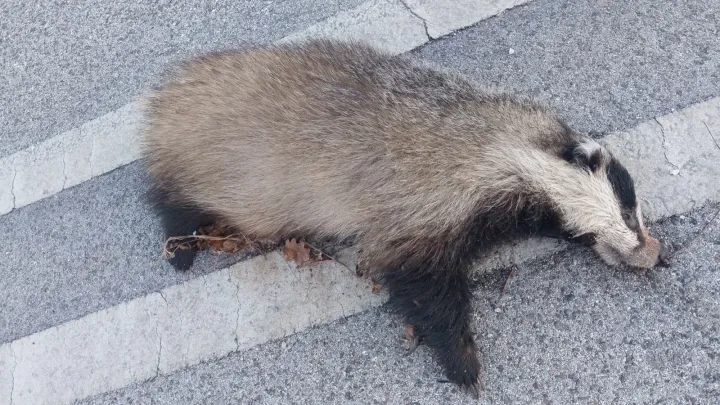
How to identify
The Eurasian badger (Meles meles) is a robust mammal belonging to the Mustelidae family. They are recognizable by their distinctive black-and-white striped head, greyish fur, and sturdy, low-slung body.
Equipped with powerful limbs and long, strong claws, badgers are expert diggers. They construct vast underground tunnel systems known as setts, which can persist for decades if left undisturbed.
While badgers are generally beneficial to ecosystems by consuming large numbers of insects, their foraging habits in agricultural landscapes often turn them into a pest for farmers.
They are primarily nocturnal animals, which makes detecting them directly more difficult compared to other diurnal pests, though their trails and burrows are easy to spot.
Physically, they can reach weights of up to 20 kg before winter, as they must build up significant fat reserves for their period of winter inactivity.
##damage##Badgers are omnivores, but they can be destructive to vegetable gardens. They are particularly fond of root crops such as potatoes, carrots, and beets, which they excavate from the soil.
Melon and squash patches are also prone to damage, as badgers often tear open the rind of pumpkins, watermelons, and melons to feed on the sweet flesh inside.
Their movement across farmland creates well-worn trails that crush seedlings and damage standing crops, reducing the overall yield of a planted field.
Burrowing activity near fields or orchards can lead to structural damage to the soil and accidental severing of tree roots, which may stress or kill fruit-bearing plants.
Furthermore, crops partially eaten or damaged by badgers are highly susceptible to secondary fungal infections and bacterial rots, leading to even greater losses during storage or harvest.
When it appears
Badger activity increases significantly from early spring as they emerge from their winter dens to forage for food throughout the growing season.
Summer months, particularly during dry spells, see increased badger activity as they search for moisture-rich food sources in gardens and fields.
Late summer and autumn are the peak periods for damage, as badgers intensely feed to gain weight for the winter, causing them to explore all available crops.
While they are less active in the deep winter months, the presence of their setts nearby remains a constant management issue for land owners.
Agricultural planning must account for their seasonal patterns to prevent peak damage during the final weeks of crop maturation.
Signs of infestation
The most obvious signs of badger presence are their large, tunnel-like burrow entrances, often accompanied by fresh piles of excavated soil.
Well-defined trails, roughly 20-30 cm wide, leading from their setts to the garden or crop fields are a clear indicator of their regular routes.
In fields, you will often find 'snuffle holes' — small, shallow pits created by badgers while searching for earthworms, larvae, and insects in the topsoil.
Tooth marks on harvested or damaged vegetables, combined with flattened vegetation and coarse badger hairs caught on fencing, provide definitive proof of their activity.
The scent of their 'latrines' — small, shallow pits used for waste — is a distinctive sign that a badger territory is established nearby.
Control measures
Physical exclusion is the most effective control method. Sturdy wire mesh fences, buried at least 50 cm into the ground, prevent badgers from burrowing under the perimeter.
Electric fencing, set at the appropriate height for badgers, acts as a non-lethal deterrent that effectively keeps them away from vulnerable vegetable plots.
Motion-activated lights and sound-based deterrents can be used to disrupt their nocturnal foraging habits, encouraging them to move to less cultivated areas.
Certain scent-based repellents, if applied correctly around the boundary of the field, can make the area less attractive to badgers during the night.
Where badgers are protected by local legislation, all control measures must be non-lethal and comply with regional wildlife regulations to ensure legal compliance.
Taxonomy
- Latin name
- Meles
- Family
- Mustelidae
- EPPO code
- MLESSP
Discussion
No discussions yet — be the first.