
Melanostoma mellinum
Melanostoma mellinum
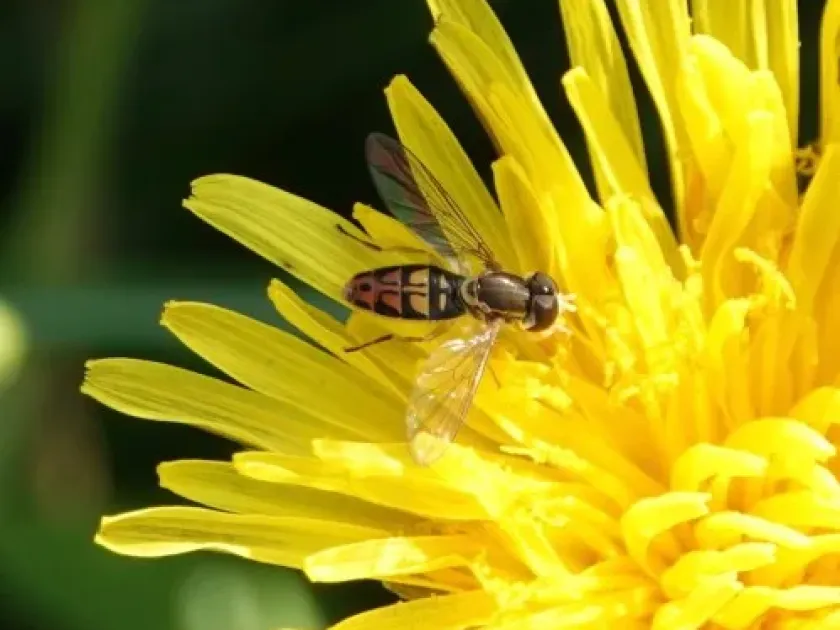
Description
How to identify
Melanostoma mellinum is a dipteran insect belonging to the hoverfly family (Syrphidae). Adult specimens have a slender body, approximately 7–10 mm in length, with distinctive yellow markings on the abdomen.
The larvae of this species typically lead a secretive lifestyle. They lack visible segmentation and possess a greenish-gray coloration, which allows them to effectively camouflage themselves on the surface of leaves and stems.
A notable feature of adults is their ability to hover in the air over flowers, resembling the flight patterns of bees or wasps. In field conditions, they are often confused with beneficial entomophagous species within the same family.
The insect's life cycle consists of an egg stage, three larval instars, a pupal stage, and the adult (imago). Typically, late-stage larvae or formed pupae overwinter within plant residues.
This species is a polyphage, meaning it can develop on a wide range of vegetation, including weeds, which makes identifying breeding grounds at early stages quite challenging.
What it damages
The primary damage is caused by larvae that feed on plant tissues. While often classified as a secondary or conditional pest, massive infestations can lead to significant yield losses in cereal crops.
The insect most actively damages cereal crops, including wheat, barley, and rye. Larvae feed by rasping the epidermis of leaves, disrupting photosynthesis and weakening the overall vitality of the plant.
In high humidity conditions, the physical damage caused by feeding can act as an entry point for fungal and bacterial infections, further reducing grain quality and the marketability of agricultural produce.
Damage to young seedlings can lead to stunted growth or total plant failure, which affects crop stand density and overall field productivity during the growing season.
The level of damage directly depends on climatic conditions: years with warm, humid springs can see population levels reaching threshold values that require active intervention.
When it appears
The first emergence of adults occurs in early spring when daily average temperatures exceed 10-12 degrees Celsius. Mass flight usually coincides with the active vegetative stage of cereal crops.
Under temperate climate conditions, up to 2–3 generations can develop within a single season. This enables rapid population dynamics when an adequate food supply, such as common weeds, is present.
Larval feeding is most intense during the stem elongation stage of cereals. At this time, plants are most vulnerable to the loss of photosynthetic leaf surface and structural tissue damage.
Autumn activity decreases as the insects enter diapause. It is crucial to note that during this period, they often congregate on post-harvest residues, preparing to overwinter in the soil or under layers of vegetation.
Weather factors such as prolonged heavy rains or sharp temperature drops can significantly reduce adult populations, interrupting the development cycle and decreasing the number of eggs laid on leaves.
Signs of infestation
The first signs of infestation are small light-colored spots or stripes on the leaf blades, which eventually turn brown and die off as the tissue necrosis spreads.
By inspecting the underside of the leaf or the leaf axils, one can detect the larvae. They move slowly and blend in almost perfectly with the plant's color, so finding them requires diligence and the use of a magnifying glass.
Stunted crop development compared to surrounding areas can indirectly indicate the presence of an infestation. Leaves may curl or deform in areas where larval feeding is most intensive.
The presence of specific larval frass, appearing as tiny dark specks on the leaves, is also a clear indicator of active pest feeding within the field.
General plant wilting, often manifested as yellowing leaf tips, is frequently a consequence of disrupted tissue nutrition caused by the feeding activity of the larvae.
Control measures
The primary method of control is agronomic management, including deep tillage after harvest. This practice effectively destroys pupal overwintering sites and reduces the pest pressure for the following year.
Crop rotation is an essential preventive measure. Alternating cereal crops with non-host plants disrupts the insect's life cycle and removes its food source during critical seasonal periods.
Weed management around field margins and headlands is crucial, as weeds often act as reservoirs for breeding and maintaining the population before the mass migration into the main crop.
Chemical control is implemented only when economic damage thresholds are exceeded. Systemic insecticides with broad-spectrum activity, approved for use on cereal crops, are generally recommended.
Regular monitoring of crop health using yellow sticky traps is essential. These traps allow for the timely detection of adult flights, enabling growers to make informed decisions regarding the necessity of pesticide applications.
Taxonomy
- Latin name
- Melanostoma mellinum
- Order
- Diptera (flies)
- Family
- Syrphidae
- EPPO code
- MLASME
Discussion
No discussions yet — be the first.