
Melanostoma fasciatum
Melanostoma fasciatum
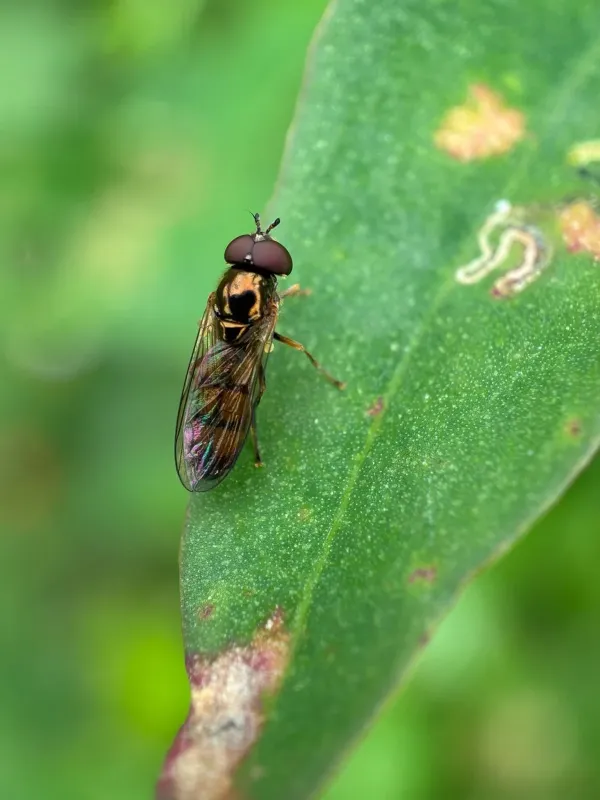
Description
How to identify
Melanostoma fasciatum belongs to the family Syrphidae (hoverflies), which is well-known for the mimicry of their adult forms that resemble stinging wasps.
Adults are small, slender flies with distinct yellow and black abdominal markings. They are famous for their ability to hover stationary in the air before darting away.
The larvae are typically slug-like, greenish or brownish, and are specialized predators that lack the prominent features of adult flies.
The lifecycle follows a complete metamorphosis pattern: egg, three larval instars, puparium, and adult. Overwintering occurs mainly as mature larvae or puparia protected in the soil.
Identifying this species is crucial for farmers to recognize that they are hosting allies rather than pests in their fields.
What it damages
Contrary to the status of a pest, Melanostoma fasciatum is considered a highly beneficial species within agricultural systems due to its predatory larval stage.
The larvae are voracious predators of aphids, which are major pests for many crops, including cereals, vegetables, and ornamental plants.
Adult hoverflies serve as important pollinators, moving between flowers to feed on nectar and pollen, thereby contributing to higher crop yields through better pollination.
There is no record of this species causing damage to plant tissues; their relationship with crops is entirely symbiotic or beneficial.
Implementing strategies to increase their population can significantly reduce the need for chemical aphicides in integrated pest management programs.
When it appears
Adults emerge early in the spring, coinciding with the beginning of the flowering season, which provides the necessary nutrition for their development.
The species produces multiple generations throughout the growing season, with population spikes often following the buildup of aphid colonies.
Mid-summer is usually the period of highest activity, where both adults (pollinating) and larvae (predating) are most abundant in the field.
As temperatures drop in autumn, the flies begin to seek shelter for overwintering, or the pupae enter diapause until the following spring.
Understanding these seasonal patterns helps agronomists time their field assessments to better leverage natural biological control.
Control measures
No control measures are needed for Melanostoma fasciatum because it is not a pest, but a valuable partner in sustainable farming practices.
The primary goal for agronomists should be the conservation and encouragement of this species to enhance natural pest suppression.
Avoiding broad-spectrum insecticides, especially during peak flowering times, is essential to protect these beneficial insects.
Habitat management, such as planting wildflower strips, can create an environment that supports hoverfly populations and ensures their presence in the crop field.
- Minimize pesticide applications during peak pollinator activity hours.
- Select pest-specific insecticides that do not harm non-target predators.
- Maintain buffer zones with diverse vegetation to harbor natural enemy populations.
Taxonomy
- Latin name
- Melanostoma fasciatum
- Order
- Diptera (flies)
- Family
- Syrphidae
- EPPO code
- MLASFA
Discussion
No discussions yet — be the first.