
Green-headed hoverfly
Melangyna viridiceps
Description
How to identify
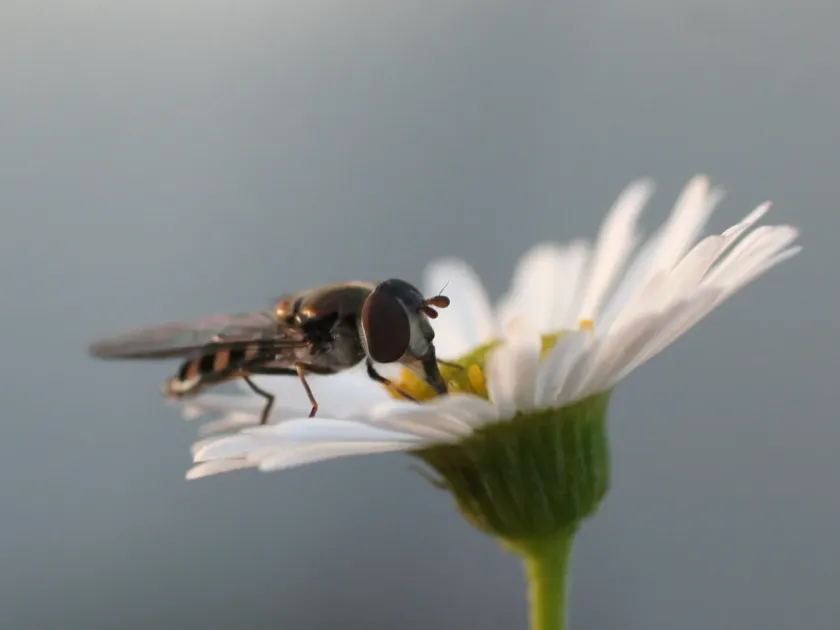
The Green-headed hoverfly (Melangyna viridiceps) belongs to the Syrphidae family, order Diptera. Adult flies are often mistaken for small wasps or bees due to their characteristic yellow and black abdominal patterns, a classic example of mimicry.
The name comes from the large, bright green multifaceted eyes of the adult fly. These insects are well-known for their ability to hover motionless in mid-air before darting away at high speed, a behavior that is unique to the hoverfly family.
The body of the adult is covered with sparse hairs, and the wings are clear with specific venation. Their appearance is relatively small, typically measuring between 8 and 12 millimeters in length, making them easy to overlook in a dense garden.
The larval stage is quite different from the adult. They look like small, legless, slug-like creatures with a pale green or yellowish coloration. This appearance allows them to blend in perfectly with plant foliage and aphid colonies.
Hoverfly larvae lack a distinct head and move by contracting their bodies. Despite their simplistic appearance, they are highly specialized hunters equipped to locate prey through chemical cues emitted by aphid colonies.
What it damages
It is crucial to state that the Green-headed hoverfly is not a plant pest; it is a highly beneficial insect in agriculture. The damage they cause is strictly limited to garden pests, primarily aphid populations.
The larvae are voracious predators of aphids. A single larva can consume hundreds of aphids during its development phase, acting as a natural biological control agent that limits the spread of these sap-sucking insects.
Beyond aphids, these larvae are known to feed on various other soft-bodied pests, including scale insects and spider mites. Their presence significantly reduces the stress on plants caused by pest infestations.
Adult flies are essential pollinators. By feeding on nectar and pollen, they facilitate the fertilization of many fruits, vegetables, and flowers, thereby directly contributing to higher crop yields in orchards and gardens.
They do not cause any harm to plant tissues, fruits, or roots. Their role in the ecosystem is exclusively beneficial, helping to maintain a healthy balance and preventing pest outbreaks from reaching critical levels.
When it appears
The activity of Green-headed hoverflies typically begins in late spring, corresponding with the first blooms of the season. Adults emerge from their overwintering sites to feed on nectar and begin mating.
During the summer months, the population is at its peak. Females search for aphid-infested plants to deposit their eggs. This synchronization is vital because it ensures that larvae hatch right where their food source is abundant.
Multiple generations can occur throughout the growing season, depending on the temperature and the availability of food. Warm, stable weather conditions favor the rapid growth and reproduction of these flies.
As autumn approaches and temperatures drop, their life cycle slows down. They survive the winter by sheltering in protected areas, often as pupae or sometimes as adults, depending on local environmental conditions.
The presence of these insects is strongly correlated with the blooming period of various plants. Continuous availability of nectar-rich flowers throughout the season is key to sustaining a stable hoverfly population in any given area.
Control measures
There is absolutely no need to control or eradicate the Green-headed hoverfly; in fact, the goal of every gardener should be to attract and protect them. They are natural allies in crop protection.
To encourage their presence, it is vital to avoid broad-spectrum insecticides, especially during the flowering stage. Such chemicals can inadvertently wipe out these beneficial predators and pollinators.
Planting nectar-rich flowers like dill, coriander, sweet alyssum, or marigolds helps maintain the adult hoverfly population. Providing a consistent food source ensures they stay in your garden area.
Maintaining diverse vegetation and keeping some wild plants near garden beds creates the habitat these insects need for reproduction and shelter during various stages of their life cycle.
By implementing integrated pest management practices, gardeners can rely on the natural predation of these hoverflies to keep aphid numbers low. This approach reduces costs and promotes sustainable, eco-friendly agricultural practices.
Taxonomy
- Latin name
- Melangyna viridiceps
- Order
- Diptera (flies)
- Family
- Syrphidae
- EPPO code
- SYRPVD
Discussion
No discussions yet — be the first.