
Meganola fumosa
Meganola fumosa
Description
How to identify
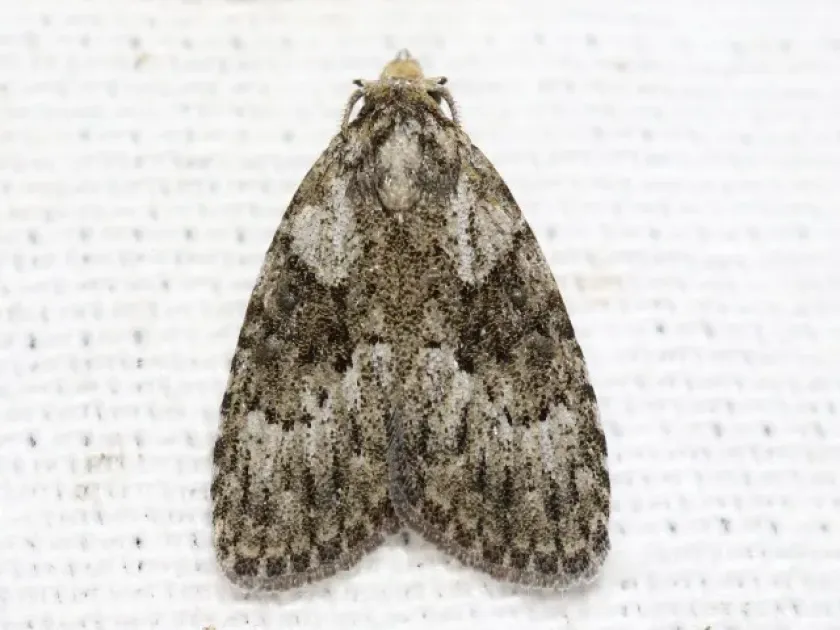
Meganola fumosa is a moth species belonging to the Nolidae family. Adult moths are relatively small, characterized by a smokey or greyish pattern on their wings, which provides excellent camouflage against tree bark.
The larvae, or caterpillars, are the primary stage of interest for agronomists. They often possess sparse hairs, contributing to their cryptic appearance among foliage and twigs, which helps them evade avian predators.
The lifecycle follows complete metamorphosis: egg, larva, pupa, and adult. This biological progression is highly dependent on environmental temperatures, which dictate the number of generations per year.
These moths are primarily nocturnal, making them difficult to detect during the day. Their flight period usually coincides with the early growth stages of their host plants, which is a critical time for monitoring.
The pupal stage is the most common form of overwintering. They create robust, camouflaged cocoons in bark crevices or protected spots on the host plant, allowing them to withstand harsh winter climates.
What it damages
Larval feeding is the main source of agricultural concern. These caterpillars feed aggressively on leaves, consuming large portions of the leaf blade and sometimes skeletonizing the foliage.
They host on a variety of broad-leaved trees and shrubs, including several species of commercial and ornamental fruit trees, making them a recurring threat in agricultural landscapes.
Heavy infestations can lead to significant defoliation, which severely limits the tree's ability to perform photosynthesis, ultimately leading to stunted growth and reduced fruit yield.
Repeated annual damage can weaken the overall vitality of the plant, making it more susceptible to drought, secondary infections, and attacks from other pests.
In nursery settings, damage caused by this pest can result in permanent deformation of young saplings, rendering them unfit for sale or subsequent planting in orchards.
Signs of infestation
The most evident sign is the presence of irregular holes in leaves or ragged leaf edges. Initial damage often appears on the upper canopy before spreading downward.
Frass (larval droppings) appearing as small, dark granular pellets on leaves or stuck to the bark of branches is a definitive indicator of an active caterpillar infestation.
Silk webbing may be visible near the base of leaves or in the forks of branches, where caterpillars anchor themselves or construct their cocoons for pupation.
Wilting of terminal shoots or premature leaf drop during the peak summer months can be an indirect sign that the plant is struggling due to significant pest pressure.
Observing the presence of small, brownish cocoons attached to the bark or hidden in leaf litter during winter or early spring is a clear sign of a previously established population.
Control measures
Biological control agents, such as formulations of Bacillus thuringiensis, are highly effective against these caterpillars while remaining safe for beneficial insect populations.
Mechanical management, including the manual removal of larvae and pruning of heavily infested twigs, is a sustainable approach for smaller orchards and garden settings.
When infestation levels exceed economic thresholds, the application of targeted insecticides, carefully timed to coincide with early larval development, is recommended.
Promoting a healthy ecosystem by encouraging the presence of parasitic wasps and insectivorous birds provides long-term, self-regulating control of the moth population.
- Regular field scouting during the spring growing season.
- Installation of pheromone traps to monitor adult flight activity.
- Maintaining plant vigor through balanced fertilization and hydration.
- Removal of debris and loose bark to eliminate overwintering sites.
Taxonomy
- Latin name
- Meganola fumosa
- Order
- Lepidoptera (butterflies)
- Family
- Nolidae
- EPPO code
- ROESFU
Discussion
No discussions yet — be the first.