
Masoreus wetterhallii
Masoreus wetterhallii
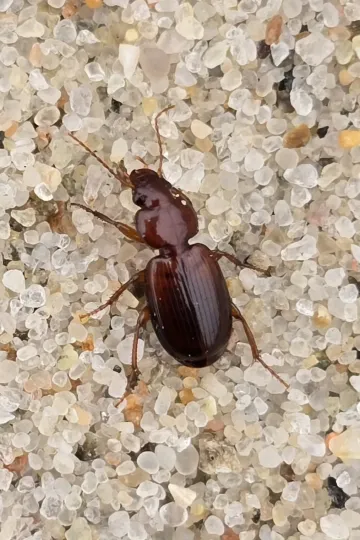
Description
How to identify
Masoreus wetterhallii is a small ground beetle species belonging to the family Carabidae, typically measuring between 5 and 6 millimeters in length.
The body is characterized by a flattened shape, which allows the beetle to navigate through narrow soil crevices and find refuge under surface debris.
Its coloration ranges from dark brown to black, often exhibiting a subtle metallic sheen on the elytra that helps in visual identification.
The antennae and legs are notably lighter, usually yellowish-brown, serving as a distinct morphological marker for this specific species.
Equipped with well-developed mandibles, these beetles are capable of both predatory behavior and consuming seeds, making them potential agricultural threats.
What it damages
Although many carabid beetles are beneficial to ecosystems, Masoreus wetterhallii can occasionally behave as a plant pest in specific cropping systems.
The primary damage occurs when adults feed on newly sown seeds of grain crops, effectively destroying the embryo and preventing germination.
This feeding activity leads to thin, uneven plant stands, which significantly reduces the overall yield potential of the agricultural field.
Seedlings that do germinate may suffer from stem base damage, leading to stunted growth or total plant mortality during the early development stages.
Under drought conditions, these beetles may increase their consumption of vegetative parts of plants to compensate for moisture loss.
When it appears
The life cycle is closely linked to soil temperature, with adult emergence typically occurring during the early spring warming period.
Activity peaks during the spring and early summer months, which coincide with the critical planting and seedling establishment phases of cereal crops.
There is typically one generation per year, with larval development taking place within the soil, where they may also feed on organic matter.
Adults overwinter in protected soil niches or under dense vegetation to survive freezing temperatures during the winter months.
Mid-summer heat can lead to a reduction in activity, as the beetles seek deeper soil layers or cooler micro-habitats to avoid extreme conditions.
Signs of infestation
The primary indicator of an infestation is the appearance of patches of missing or damaged seedlings across the field despite adequate soil moisture.
Inspecting the soil around un-germinated seeds often reveals gnawed remains or missing embryos caused by the beetles' feeding activity.
Visual observation of the soil surface during dusk or dawn can reveal adult beetles foraging in areas where seedlings are showing signs of stress.
Wilting of young plants with no signs of fungal infection or root disease often points to physical damage at the collar of the seedling.
High numbers of these beetles found in soil traps are a reliable diagnostic sign that intervention measures may be necessary to protect the crop.
Control measures
Agricultural practices remain the first line of defense, including thorough tillage to disrupt the habitats of the overwintering beetle population.
Systemic insecticidal seed treatments are the most reliable method for protecting grain seeds from subterranean attack during the germination process.
Crop rotation helps to limit the buildup of local beetle populations by removing consistent food sources over consecutive growing seasons.
Field sanitation, particularly the removal of weeds and crop residues, reduces the available cover and breeding sites for the beetles.
- Deep fall plowing.
- Strategic planting dates.
- Regular field monitoring with traps.
Taxonomy
- Latin name
- Masoreus wetterhallii
- Order
- Coleoptera (beetles)
- Family
- Carabidae
- EPPO code
- MASRWE
Discussion
No discussions yet — be the first.