
Masoreus
Masoreus
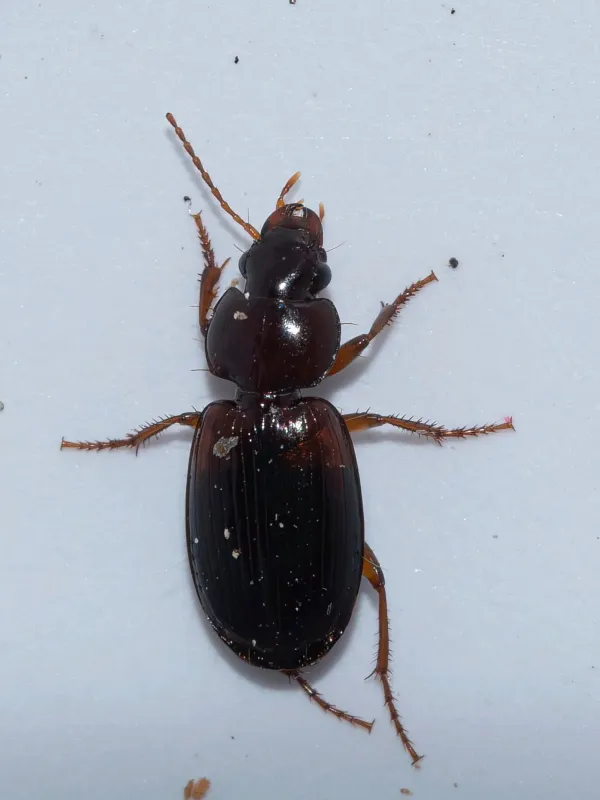
Description
How to identify
Masoreus is a genus of ground beetles (Carabidae) within the order Coleoptera. These insects possess a specific body structure typical of the subfamily Lebiinae.
The adult body is generally flattened, oval or elongated, measuring approximately 5-7 mm in length. Coloration ranges from dark brown to black, sometimes exhibiting a metallic sheen or light spots on the elytra.
The beetle's head is equipped with strong mandibles designed for capturing prey. Antennae are filiform and of medium length, while the legs are well-developed, adapted for rapid movement across the soil surface.
Masoreus larvae are of the campodeiform type, characterized by an elongated body, developed thoracic legs, and cerci at the end of the abdomen. They lead a secretive lifestyle, inhabiting the upper layers of soil or plant debris.
Systematically, this genus is part of the predatory ground beetle group, though some species may exhibit mixophagy, making them potentially hazardous to crops under specific environmental conditions.
What it damages
Primary damage occurs when the population density increases significantly. Masoreus may affect cereals, vegetable crops, and perennial grasses.
Adults and larvae damage young seedlings by feeding on leaf or cotyledon tissues, leading to the weakening and eventual death of plants during early developmental stages.
Root system damage caused by Masoreus larvae disrupts water and nutrient uptake, which is critical during drought periods or early establishment phases.
Harmfulness manifests as crop thinning, often necessitating field replanting or additional protective interventions. Large aggregations of the pest on young seedlings are particularly dangerous.
Beyond direct tissue consumption, the pest's presence creates favorable conditions for secondary fungal and bacterial infections through open wounds in plant tissues.
When it appears
The active development period for Masoreus begins in early spring, immediately after the soil warms up. Adults emerge from overwintering sites and begin active feeding.
The peak of adult activity often coincides with the germination of agricultural crops, at which time maximum population density is observed in the fields.
The summer generation undergoes egg, larval, and pupal stages throughout the warm season, with the rate of development depending directly on temperature and soil moisture levels.
In autumn, adults and late-instar larvae move to deeper soil layers or under plant residues to enter diapause for overwintering.
Weather conditions, such as a prolonged cold spring or an exceptionally dry summer, can alter the emergence timing and reproductive intensity of the species.
Signs of infestation
A primary indicator of Masoreus presence is the appearance of patchy seedling thinning, often misidentified as wireworm damage.
Inspection of seedlings reveals uneven, jagged leaf edges or damage at the stem base inflicted by the beetles' mandibles.
Visual monitoring of the soil during evening or morning hours allows for the detection of adults, which quickly scurry across the surface or burrow into the substrate when disturbed.
Seedlings appear stunted, with growth slower compared to healthy plants in other areas of the field, and apical wilting is frequently observed.
Excavation of the topsoil around damaged plants may reveal the larvae themselves or characteristic tunnels created within the soil.
Control measures
The primary control measure is the implementation of crop rotation. Excluding sensitive crops from fields following precursors that favor pest accumulation significantly lowers the risk.
Deep autumn plowing with soil inversion facilitates the destruction of overwintering sites and creates unfavorable conditions for larval development.
Applying insecticidal seed treatments before planting is the most effective chemical protection method, providing prolonged protection for the young plant.
During mass outbreaks on seedlings, the application of soil-applied insecticides or contact-stomach insecticides during the growing season is effective.
- Monitoring population density using pitfall traps.
- Optimizing sowing dates to avoid the peak adult activity phase.
- Timely weed control.
- Improving overall agricultural management and field conditions.
Taxonomy
- Latin name
- Masoreus
- Order
- Coleoptera (beetles)
- Family
- Carabidae
- EPPO code
- MASRSP
Discussion
No discussions yet — be the first.