
Sable
Martes zibellina
Description
How to identify
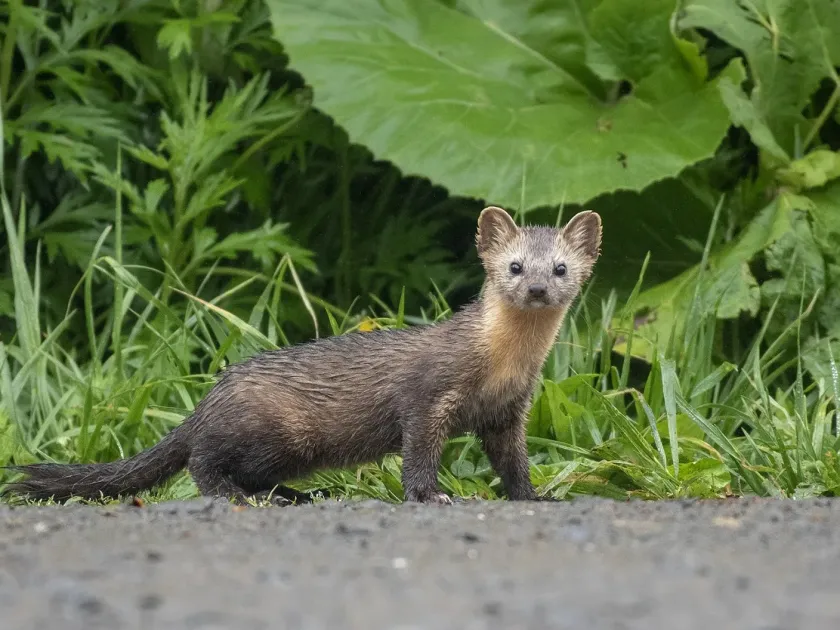
The sable (Martes zibellina) is a member of the Mustelidae family within the order Carnivora. It is a small, agile predator primarily native to the vast boreal forests of Eurasia.
Physically, the sable is characterized by a slender body, short legs, and a bushy tail. Its length typically ranges from 35 to 55 centimeters, with a weight averaging between 1 and 1.8 kilograms.
The coat color of the sable is highly variable, ranging from light sandy tones to deep, rich browns and near-black shades, depending on the individual and the season.
Sables are equipped with sharp, retractable claws and strong, pointed teeth, which are highly adapted for hunting small mammals and birds within their natural ecosystem.
They are primarily nocturnal or crepuscular hunters, relying on their keen sense of hearing and smell to locate prey in the dense forest undergrowth or near human settlements.
What it damages
While the sable is a forest-dwelling carnivore and not a traditional crop pest, its presence near agricultural areas can cause significant damage to livestock operations, especially poultry farming.
The animal is a skilled climber and jumper, allowing it to easily breach poorly secured enclosures, coops, and sheds where domestic chickens or ducks are kept.
Sables may also cause indirect agricultural damage by digging into the ground near young tree roots while chasing rodents, which can destabilize the soil or harm small, newly planted saplings.
In storehouses, their quest for food may lead them to damage food packaging or structural components, potentially inviting other vermin into the area to feed on spilled supplies.
The psychological impact on farm animals, caused by the scent and proximity of a predator, can result in stress-related productivity declines in birds and small livestock.
When it appears
The most active period for sables, when they are most likely to encroach upon agricultural land, is during the late autumn and winter months when forest food sources become scarce.
As natural prey species like voles or squirrels hibernate or become less accessible due to snow cover, sables may broaden their hunting grounds toward human environments.
Springtime can see an increase in activity as females, which are rearing young, require a more consistent and accessible protein source to support their offspring.
In contrast, the summer months are typically quiet for farmers, as sables spend the majority of their time in deeper forest habitats where natural prey is abundant.
Weather conditions play a major role; harsh winters with deep snow or extreme temperatures often correlate with higher rates of sable sightings near residential farm areas.
Signs of infestation
Presence is most often identified through characteristic paw prints left in the snow or soft mud, which are distinctively paired and show the unique movement pattern of a mustelid.
Physical evidence of predation, such as remains of poultry showing typical bite wounds to the neck or head, is a strong indicator of a sable or similar small predator.
Damaged fencing, small holes in walls, or signs of scratching on wooden door frames and latches indicate repeated attempts to gain entry into protected structures.
Droppings, which contain fur, bone, and feather remnants, can often be found near the perimeter of the area or along the animal's established travel routes.
Nocturnal disturbances, such as loud squawking of poultry or restless livestock behavior, often precede the discovery of actual damage to the farm infrastructure.
Control measures
Effective defense involves reinforcing all poultry coops with high-quality, buried wire mesh to prevent the predator from digging under the structures.
Installing motion-activated lighting around the perimeter of farm buildings is a simple yet highly effective way to discourage nocturnal predators from approaching.
Maintaining a clean farm environment, including the proper storage of grain to discourage rodents, is crucial, as rodent populations are a primary attractor for sables.
The use of ultrasonic sound emitters can create an uncomfortable environment for mustelids without affecting larger domestic animals or humans.
- Utilize live-capture traps to relocate individuals safely away from agricultural zones.
- Seal all foundation gaps and roof vents with robust materials like galvanized metal.
- Apply natural scent-based repellents around the farm perimeter to deter entry.
Taxonomy
- Latin name
- Martes zibellina
- Family
- Mustelidae
- EPPO code
- MRTSZI
Discussion
No discussions yet — be the first.