
European pine marten
Martes martes
Description
How to identify
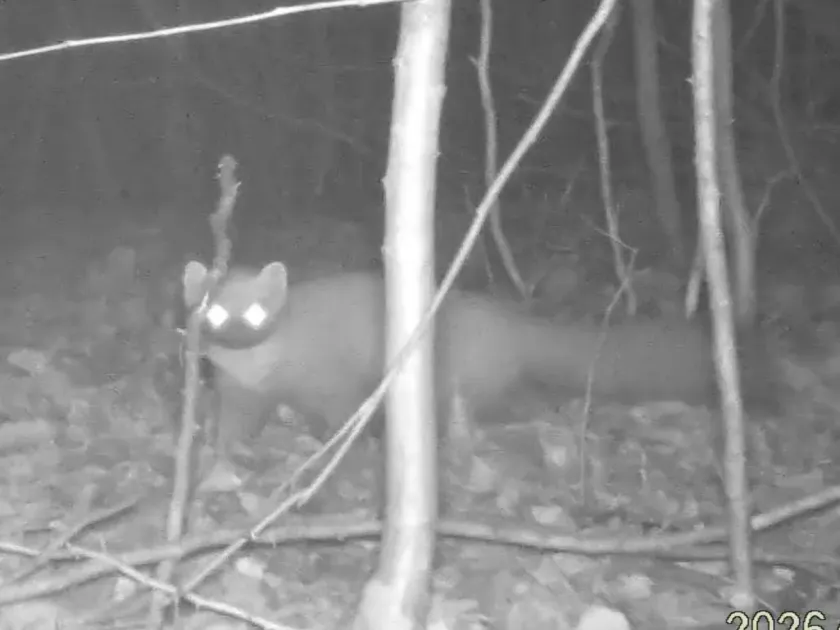
The European pine marten (Martes martes) is a member of the Mustelidae family. It is a slender, agile mammal characterized by its brown coat and a distinct cream-colored throat patch.
This species typically measures 45 to 58 centimeters in body length, excluding its bushy tail, and is highly adapted for climbing trees and navigating vertical surfaces.
Pine martens are primarily nocturnal and crepuscular, meaning they are most active during the night and at twilight, which aids in their survival and concealment.
Unlike many other small predators, they possess semi-retractable claws that provide excellent grip on rough surfaces, allowing them to access rooftops easily.
Though they are vital for forest ecosystem health by controlling rodent populations, their opportunistic nature leads them to raid human establishments.
What it damages
The primary economic impact of the pine marten in agricultural settings is the predation of domestic poultry, including chickens, ducks, and geese.
They are known for their surplus killing behavior, often attacking multiple birds in a single coop, which results in significant losses for smallholder farms.
Eggs are a highly favored food source for the pine marten, meaning that their presence poses a direct threat to the reproductive cycle and future output of the farm.
Apart from predation, they can cause structural damage by chewing on wiring, tearing through insulation materials, and disturbing food storage facilities.
The constant threat of marten attacks induces chronic stress in poultry, leading to reduced egg production and increased susceptibility to various avian diseases.
Signs of infestation
Evidence of a marten attack usually includes carcasses with puncture wounds around the neck, often left in a disorganized pile or scattered across the enclosure.
Droppings are a reliable diagnostic sign; they are long, twisted, dark, and often contain undigested fur, feathers, or berry seeds, commonly found near the entrance of a building.
Footprints can be seen on soft ground or roofs, showing five toes with prominent claw marks, which are quite distinct from the prints of domestic cats or ferrets.
Sounds of scrambling on rooftops or walls at night, coupled with distressed behavior from dogs and chickens, are common warnings that a marten is exploring the area.
Small holes in roofs, gaps under eaves, or damaged mesh wiring are telltale signs that the predator has been testing the physical barriers of your property.
Control measures
Exclusion is the most effective method: seal all potential entry points in chicken coops and sheds using heavy-duty hardware cloth rather than standard chicken wire.
Ensure that all structural openings, particularly at the roofline and ventilation ducts, are securely covered, as these are the most frequent access points for martens.
Implement motion-activated deterrents, such as floodlights or sirens, to startle the animal and discourage it from entering the yard during its active hours.
Live traps can be placed near suspected entry routes; however, check local regulations regarding the relocation of wildlife before taking any action.
Maintain the farm grounds by trimming back overhanging tree branches and removing brush piles, which otherwise provide the marten with cover to approach unseen.
Taxonomy
- Latin name
- Martes martes
- Family
- Mustelidae
- EPPO code
- MRTSMA
Discussion
No discussions yet — be the first.