
Tarbagan marmot
Marmota sibirica
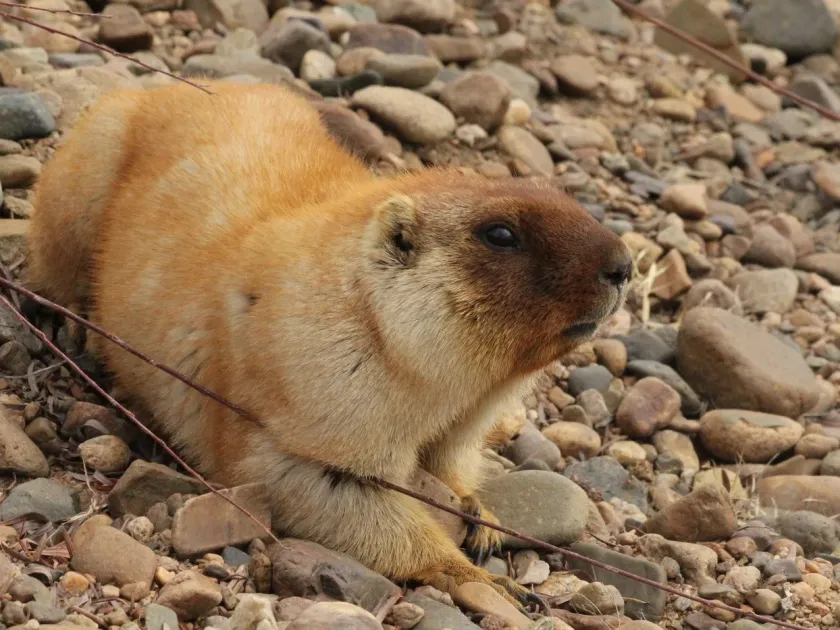
Description
How to identify
The Tarbagan marmot, scientifically known as Marmota sibirica, is a large rodent species belonging to the squirrel family (Sciuridae). It is native to the steppes and grasslands of Mongolia and surrounding areas.
These animals are stout, ground-dwelling rodents with powerful limbs adapted for extensive digging. Adult individuals typically weigh between 4 and 8 kilograms, with a dense, yellowish-brown fur coat.
Tarbagans live in social colonies, constructing complex underground burrow systems that can extend several meters deep, serving as habitats and protection from predators.
They are characterized by high fertility rates in favorable conditions, which often leads to the rapid expansion of colonies into agricultural landscapes.
As a natural reservoir for various infectious diseases, including plague, the presence of the Tarbagan marmot poses a significant public health risk in addition to agricultural damage.
What it damages
The Tarbagan marmot is primarily a pest for cereal crops, legumes, and vegetable fields located near their colony sites, as they rely on succulent green vegetation for their diet.
Significant economic loss occurs when marmots graze on young crop sprouts, causing patchy stands and drastically reducing the total yield per hectare.
The physical act of burrowing results in large piles of excavated soil being deposited on top of crops, effectively smothering and destroying standing plants in the affected area.
The intricate system of tunnels created by the marmots disrupts soil structure, making the ground uneven and dangerous for heavy agricultural machinery during field operations.
Furthermore, colonies can deplete forage quality in pastures by selectively feeding on palatable grass species, allowing invasive weeds to dominate the remaining area.
When it appears
The active life cycle of the Tarbagan marmot begins in early spring, usually March or April, when the animals emerge from their winter hibernation.
During the summer months (May through August), the animals exhibit their highest levels of activity, feeding intensively and expanding their burrow networks.
Crop damage typically peaks in early summer, coinciding with the period when young pups emerge from the burrows and begin grazing on surrounding vegetation.
As autumn approaches in September, the animals reduce their activity levels, focusing on preparing their chambers for the onset of winter.
From October until the end of winter, the marmots remain in hibernation deep underground, resulting in zero impact on crop fields during the cold season.
Signs of infestation
The most prominent sign of a colony is the presence of large, noticeable mounds of fresh soil at the burrow entrances, often referred to as "marmot mounds."
Visual patches of destroyed or heavily grazed vegetation, often radiating from the burrow site into the field, clearly indicate active feeding areas.
Well-trodden paths connecting the burrow entrances to feeding sites across the fields serve as a distinct warning of high population density.
The sharp, piercing alarm whistle characteristic of the species is an immediate indicator of a colony's presence when approaching the site.
Freshly excavated soil, combined with fecal droppings at the entrance, confirms that the tunnel system is currently being used by the colony.
Control measures
Managing the Tarbagan marmot population requires a balanced approach that respects both agricultural needs and public health safety protocols.
- Implementing deep tillage on infested fallow land to collapse and destroy burrow networks.
- Utilizing crop rotation techniques to make the fields less attractive for feeding.
- Deploying authorized fumigation methods in accordance with sanitary and veterinary standards.
- Maintaining physical barriers or buffer zones between wild habitats and cultivated acreage.
- Regular epidemiological monitoring by professional services to prevent disease transmission.
Due to the risk of infectious diseases, farmers should never attempt to handle or eradicate these animals without consulting local agricultural and health authorities.
Taxonomy
- Latin name
- Marmota sibirica
- Order
- Rodents
- Family
- Sciuridae
- EPPO code
- MAROSI
Discussion
No discussions yet — be the first.