
Apple plant bug
Lygocoris communis
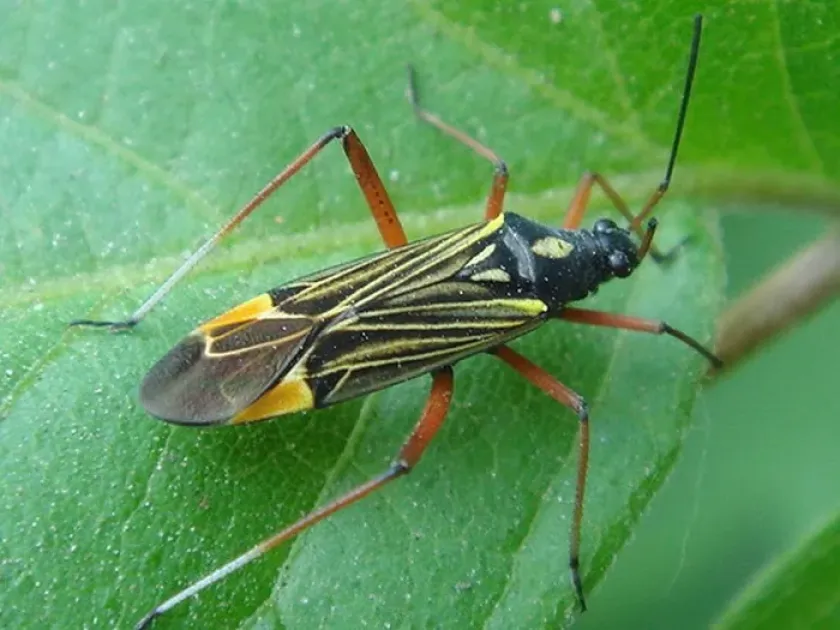
Description
How to identify
The apple plant bug (Lygocoris communis) belongs to the Miridae family within the order Hemiptera. Adults are roughly 6–7 mm long, exhibiting a greenish-yellow to brownish coloration that provides excellent camouflage against tree foliage.
The insect features an elongated body and long legs, which enable rapid movement across the leaves and branches. Its antennae are prominent, often exceeding half the length of its body, serving as key sensors in its environment.
Nymphs resemble the adults but are smaller, flightless, and undergo five developmental stages (instars) before reaching maturity. During these stages, they grow progressively and their appearance shifts from a pale green to a more distinct, darker hue.
The species overwinters as eggs inserted into the bark of young shoots of apple and other fruit trees. In the spring, these eggs hatch into nymphs, synchronizing their emergence with the budding stage of the host tree to ensure an immediate food source.
Adults are highly mobile during the summer, capable of flying between trees to find optimal feeding or egg-laying sites. Their elusive behavior makes them difficult to spot during routine inspections, necessitating specific monitoring techniques in professional orchards.
What it damages
Both nymphs and adults feed on the sap of young leaves, flower buds, and developing fruit. By piercing the plant tissue, they inject salivary enzymes that cause localized cell death, leading to significant physiological stress on the tree.
While apple trees are the primary host, this pest also frequently attacks pear, plum, and cherry trees. In cases of severe infestation, they may migrate to nearby berry bushes, causing noticeable damage to the vegetative growth of those crops.
Leaves affected by the bug show characteristic numerous small holes, often surrounded by a reddish or brown necrotic ring. Heavy feeding causes the foliage to curl and deform, often leading to premature leaf drop which reduces the plant's photosynthetic capacity.
The most severe economic damage occurs when the bugs feed on fruitlets. This feeding causes the development of corky, wart-like growths and deep pitting on the surface of the maturing fruit, rendering the harvest unmarketable and poor in quality.
Prolonged infestation weakens the tree, making it susceptible to secondary infections and reducing the formation of flower buds for the following year. The combination of leaf loss and damaged fruit directly threatens the total annual production of the orchard.
When it appears
The life cycle of the apple plant bug is closely aligned with the phenological phases of its host trees. Nymphs typically hatch during the green-tip or bud-burst stage, allowing them to start feeding on the most tender and nutritious parts of the tree immediately.
Feeding peaks during May and June as nymphs progress through their instars. This is a critical time for orchard management, as the rapid expansion of shoots provides high volumes of accessible sap, supporting the bug’s development.
By mid-June, most of the population has reached the adult stage. Adults continue to feed but are more active and widely distributed throughout the tree canopy. Their activity generally persists until the end of summer, depending on regional temperature variations.
Egg-laying takes place in late summer, with females selecting one- or two-year-old shoots for oviposition. The eggs are deposited deep under the bark to protect them from environmental fluctuations and the potential effects of predators during the winter months.
The bug produces only one generation per year. However, the timing of egg hatching can be staggered, which often leads to a prolonged presence of the pest in the orchard, necessitating carefully timed interventions to be effective.
Signs of infestation
Small, pale spots on young leaves are often the first sign of activity. As these spots expand and tissue dies, they turn into distinct holes, making the foliage appear as if it has been punctured by a needle.
Deformed or bumpy fruit is a diagnostic sign of the apple plant bug. If young fruit shows corky spots or asymmetrical growth, it is a strong indicator that the bugs were feeding on the fruitlets shortly after the blossom stage.
To detect the presence of the pest, growers often use the "limb-tapping" method. By shaking branches over a white cloth sheet, nymphs can be easily dislodged and counted, helping to determine if the population exceeds the economic threshold.
While difficult to spot, the egg-laying sites on young bark appear as subtle longitudinal cracks or small bumps. Identifying these areas in winter can help predict which sections of the orchard are likely to face higher pressure in the spring.
Because nymphs are excellent at hiding on the undersides of leaves, a general lack of vigor or stunted growth in the tips of shoots may also suggest a hidden infestation, even if direct sightings of the insect are infrequent during the day.
Control measures
Integrated Pest Management (IPM) is essential for controlling the apple plant bug, focusing on combining preventative cultural practices with targeted, responsible treatments.
- Early-season application of insecticides, timed precisely to the hatching of the first nymphs, is the most effective way to prevent widespread damage.
- Pruning practices that remove infested or dead shoots help reduce the overwintering population of eggs, directly lowering the pest pressure for the next season.
- Encouraging natural predators such as predatory bugs, lacewings, and spiders can significantly suppress the bug population in orchards with lower pesticide usage.
- Using sticky traps or monitoring stations provides data on adult movement, allowing growers to time their protective measures with high accuracy.
- Maintaining a clear ground cover and managing weed species in the orchard prevents the bugs from finding alternative host plants, keeping them concentrated where they can be effectively managed.
Taxonomy
- Latin name
- Lygocoris communis
- Order
- Hemiptera (bugs, aphids, leafhoppers)
- Family
- Miridae
- EPPO code
- LYGUCM
Discussion
No discussions yet — be the first.