
Green blowfly
Lucilia cuprina
Description
How to identify
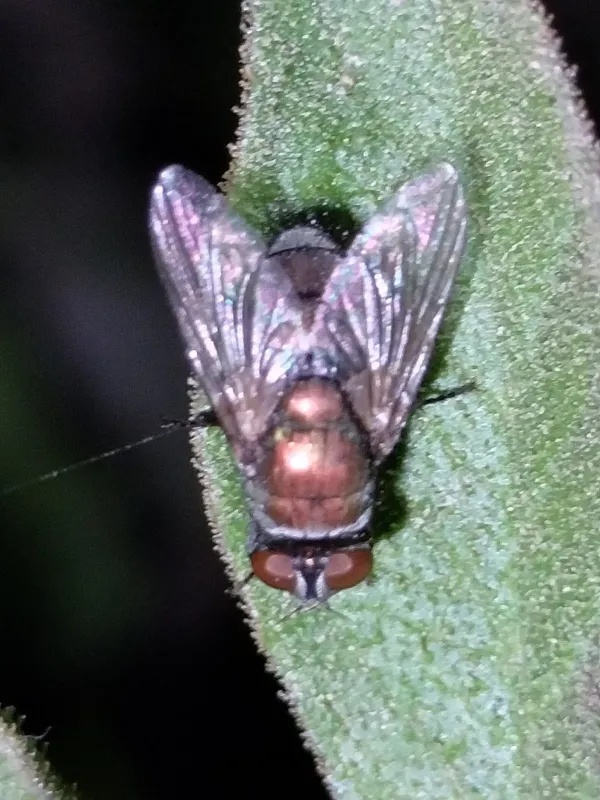
The green blowfly (Lucilia cuprina) is a member of the order Diptera and the family Calliphoridae. These insects are easily recognized by their metallic green or bronze-colored body.
Adult flies are typically 4 to 8 millimeters long. They possess a robust thorax and abdomen, and their eyes are large, with males having closer-set eyes than females.
The mouthparts are of the sponging type, adapted for taking up liquid nutrients from decaying organic matter or animal fluids.
The larvae are creamy-white, headless, and legless maggots. They possess a segmented body with rows of small spines that aid in movement through tissues.
The life cycle is rapid, consisting of eggs, three larval instars, pupae, and adults. The entire developmental process can be completed in less than two weeks in ideal conditions.
What it damages
The primary concern regarding Lucilia cuprina is its role as a parasite causing cutaneous myiasis, commonly known as "flystrike" in sheep and other livestock.
Females lay eggs in wounds, soiled wool, or skin folds. The larvae hatch and consume the living tissue, causing severe distress and systemic infection in the host.
Beyond livestock damage, the flies act as mechanical vectors for various pathogenic bacteria, which can contaminate farm infrastructure and food products.
Flystrike causes significant economic losses in the sheep industry due to decreased wool quality, reduced weight gain, and veterinary treatment costs.
If left untreated, severe infestations can lead to toxemia and mortality in the affected animals, posing a major challenge to farm animal welfare.
When it appears
The activity of the green blowfly is heavily influenced by climate and temperature, with peak prevalence occurring during warm spring and summer months.
In temperate climates, the flies become active when daily temperatures consistently rise above 15 degrees Celsius.
High humidity and rainfall are critical factors for successful larval development and population explosions in pastures and farm environments.
As autumn approaches, the activity declines, and the insects typically enter a state of dormancy, overwintering as pupae in the soil or protected debris.
Inside barns or livestock facilities, if temperature and food resources remain stable, the breeding cycle can continue for a longer duration than in open fields.
Signs of infestation
Initial signs of a strike include restlessness, tail twitching, and constant scratching or biting at the affected area by the livestock.
The fleece around the affected site often appears wet or discolored, and there is usually a distinct, pungent odor of decaying tissue.
Upon closer inspection, clusters of eggs or active maggots can be found deep within the wool or skin lesions.
General signs of malaise, such as reduced appetite and isolation from the flock, often follow once the infestation begins to cause physiological stress.
The presence of large numbers of flies buzzing around pens or watering holes is a strong indicator of an impending threat to the herd.
Control measures
Effective management begins with strict sanitation, including the regular removal of manure, carcasses, and other decaying organic materials from farm premises.
Preventive strategies such as crutching and docking sheep help keep the hindquarters clean, significantly reducing the attractiveness of the animals to flies.
- Application of chemical insecticides or preventative washes to protect the animals during high-risk seasons.
- Usage of pheromone-based traps to monitor and reduce adult fly populations in sensitive areas.
- Timely antiseptic treatment of any wounds or scratches to prevent flystrike occurrence.
Genetic selection for sheep breeds less susceptible to flystrike is considered a long-term strategy in agricultural research.
Ongoing monitoring of the flock and immediate isolation of any symptomatic animals are essential to prevent the spread of the infestation.
Taxonomy
- Latin name
- Lucilia cuprina
- Order
- Diptera (flies)
- Family
- Calliphoridae
- EPPO code
- LUCICU
Discussion
No discussions yet — be the first.