
Green bottle fly
Lucilia caesar
Description
How to identify
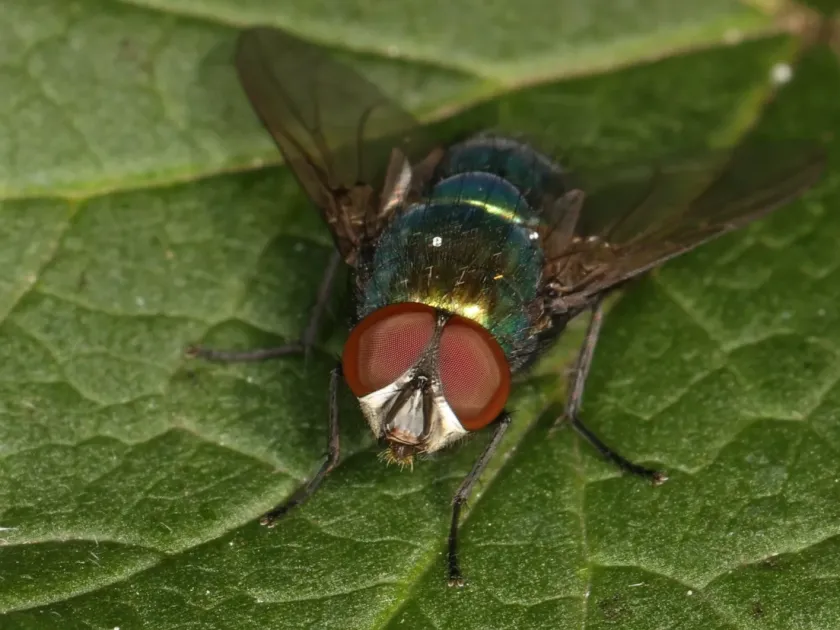
The green bottle fly (Lucilia caesar) is a member of the Diptera order and the Calliphoridae family. The insect is easily recognized by its vibrant green or metallic gold-green body and translucent wings.
Adult flies measure between 6 and 11 mm. They are characterized by a sturdy body covered in bristles and large compound eyes. They are highly efficient fliers and have a keen sense of smell.
The biological cycle involves four stages: egg, larva, pupa, and adult. They are prolific breeders, capable of producing several generations during the warm season, which allows for rapid population growth.
These flies are known for their ability to locate food sources from significant distances. While they serve as decomposers in nature, they are considered significant nuisances in agricultural and farming environments.
They overwinter as pupae or adults in protected locations such as building crevices, leaf litter, or soil, emerging as soon as the weather warms up in the spring.
What it damages
The primary damage caused by the green bottle fly relates to sanitation and disease transmission. They feed on decaying organic matter, picking up pathogens that they later spread to plants and produce.
In livestock production, they are a major concern as they can cause myiasis, where larvae infest wounds or soiled areas of animals, causing significant health problems and economic losses.
By landing on fruits and vegetables, especially those damaged by other pests, they accelerate decay and contaminate the produce with bacteria, rendering it unsalable and unsuitable for storage.
The presence of large populations of these flies creates unsanitary conditions in packing houses and storage facilities, often forcing farmers to implement rigorous and costly cleaning protocols.
Beyond direct damage, the aesthetic impact and the potential for contaminating fresh produce make them a high-priority target for integrated pest management in commercial agriculture.
Control measures
Strict sanitation is the cornerstone of control. Removing decaying organic matter, animal waste, and spoiled produce is essential to eliminate the substrates required for breeding.
The use of sticky traps, bait stations, and insect-proof screens on windows and ventilation shafts effectively limits the population of adults entering storage buildings and farm areas.
In cases of high infestation, chemical control or insect growth regulators can be applied to breeding sites to disrupt the fly life cycle before they reach the adult stage.
Protecting livestock through wound care and maintaining clean bedding environments is critical for preventing fly strikes and protecting animal health.
- Regular removal of manure and organic waste.
- Installation of screens on storage facility windows.
- Application of safe insecticides in breeding areas.
- Use of UV light traps in enclosed spaces.
- Prompt management of animal wounds and cleanliness.
Taxonomy
- Latin name
- Lucilia caesar
- Order
- Diptera (flies)
- Family
- Calliphoridae
- EPPO code
- LUCICA
Discussion
No discussions yet — be the first.