
Common green bottle fly
Lucilia
Description
How to identify
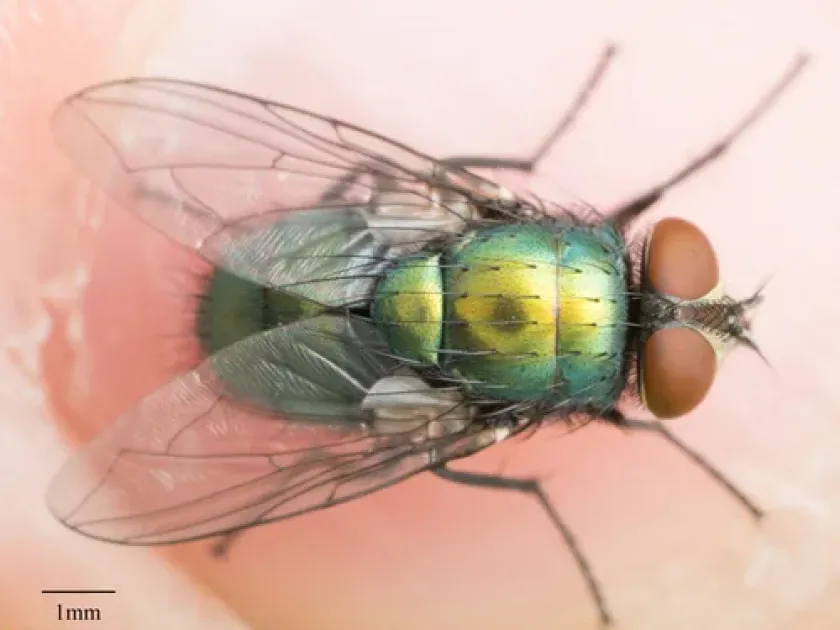
The common green bottle fly, scientifically known as Lucilia, belongs to the family Calliphoridae. It is easily identifiable by its brilliant, metallic green or blue-green coloration, which acts as a distinctive visual characteristic.
Adult flies typically measure between 8 to 12 mm in length. They possess large, reddish-brown eyes and a robust body structure covered with fine bristles. The larvae are creamy-white, headless, and tapered, which is characteristic of many blowfly species.
The life cycle undergoes complete metamorphosis, including egg, three larval stages, pupa, and adult. Development speed is highly influenced by ambient temperature and humidity, with optimal conditions allowing a cycle to complete in less than two weeks.
Females are highly fecund, laying hundreds of eggs in protein-rich organic matter. These sites serve as the primary source of nutrition for the emerging larvae, ensuring rapid growth and successful survival of the next generation.
While often associated with decomposition, these insects are highly mobile and frequently interact with agricultural environments, searching for food sources or suitable breeding grounds near human structures.
What it damages
These flies act primarily as indirect agricultural pests. They are attracted to decaying organic matter, including fruit and vegetables that have sustained mechanical damage, insect bites, or early-stage rot.
As they land on wounded plant tissues, they act as vectors for various plant pathogens, including bacteria and fungi. This accelerates the rate of tissue decomposition, turning minor blemishes into severe rotting spots on crops like tomatoes and peppers.
The presence of larvae in produce renders it completely unmarketable and unsuitable for storage. Furthermore, the transfer of pathogens often leads to secondary infections in neighboring healthy crops, causing potential yield loss.
In greenhouses, high populations of these flies are indicators of poor sanitation practices. Their activity can compromise the overall health of the crop by promoting rot in environments where humidity is already conducive to disease development.
Damage is not limited to physical destruction but also involves the contamination of produce with pathogens that may pose hygiene risks during post-harvest handling and transport.
Control measures
Rigorous sanitation is the primary strategy for managing Lucilia populations. This includes the regular removal and proper disposal of decaying plant material, overripe fruits, and any organic waste from the growing area.
Installing fine-mesh screens on greenhouse vents and doors effectively prevents the entry of adult flies. Utilizing bait traps can also assist in monitoring and reducing the population density in enclosed environments.
Biological control methods, such as the use of specialized pathogens or specific entomophagous organisms, can be integrated into a pest management plan, provided they do not conflict with the crop's ecosystem requirements.
Proper composting techniques, such as using covered or sealed bins, prevent flies from accessing rotting matter for egg-laying. This simple structural change significantly reduces the local population of the pest.
In cases where infestations are significant, the application of registered insecticides may be necessary. Users must strictly follow label instructions, particularly regarding application timing and pre-harvest intervals, to ensure produce safety.
Taxonomy
- Latin name
- Lucilia
- Order
- Diptera (flies)
- Family
- Calliphoridae
- EPPO code
- LUCISP
Discussion
No discussions yet — be the first.