
Loricera pilicornis
Loricera pilicornis
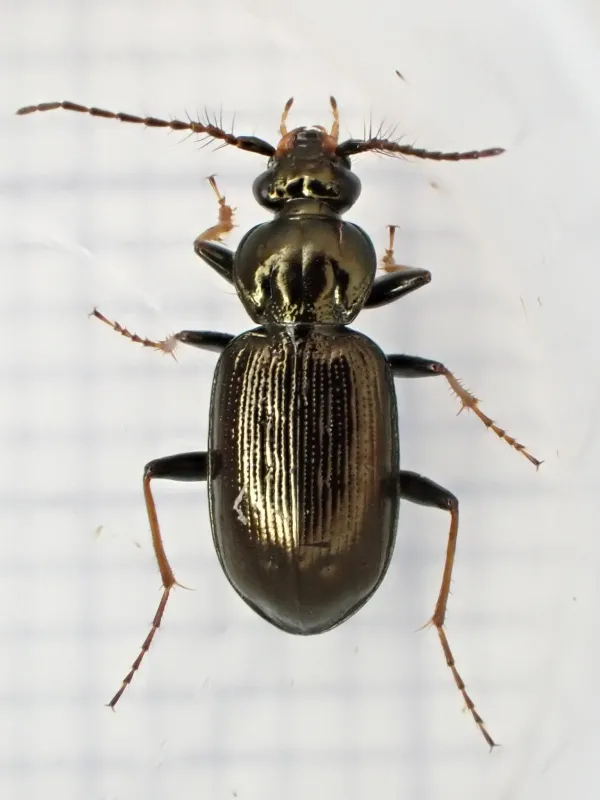
Description
How to identify
Loricera pilicornis is a species of ground beetle belonging to the family Carabidae. Adult beetles typically reach 6–8 mm in length.
The defining characteristic of this species is the presence of distinct long, hair-like bristles on the first and second segments of their antennae.
Their bodies are generally dark with a metallic bronze or greenish sheen, while their head is robust with powerful jaws adapted for predatory hunting.
The larvae are campodeiform and highly mobile, featuring well-developed legs that allow them to move quickly through the upper soil layers.
These beetles are nocturnal, spending the daylight hours hiding under soil clods or crop debris, which makes them difficult to observe directly.
What it damages
While primarily considered beneficial predators that feed on collembolans, Loricera pilicornis can occasionally become a pest under specific conditions.
When natural food sources are scarce or their population density is exceptionally high, they may damage emerging agricultural seedlings.
Crops such as cereals, sugar beets, and various vegetables are most vulnerable during the early stages of germination and initial growth.
Damage occurs when beetles feed on the epidermis of stems and young roots, which can stunt the plant growth or even lead to seedling mortality.
Additionally, the wounds created by feeding can serve as entry points for various soil-borne pathogens, increasing the risk of secondary infections.
When it appears
The beetles become active in early spring as soon as soil temperatures rise sufficiently and the ground thaws after winter.
Peak activity for both larvae and adults generally occurs during the first half of the growing season, supported by adequate soil moisture levels.
The life cycle includes overwintering as adults within the soil or beneath thick layers of organic debris, ensuring high survival rates during colder months.
Reproduction typically takes place throughout the warmer season, with new generations dispersing across fields to establish their territories.
As autumn temperatures drop, activity decreases significantly as the beetles burrow deeper into the soil to enter a state of dormancy.
Signs of infestation
The primary sign of their presence is the direct sighting of beetles during evening surveys or using pitfall traps installed in the fields.
Damage to seedlings typically presents as shallow, superficial grazing marks on the hypocotyl near the soil surface.
If large patches of seedlings exhibit signs of wilting or if plants can be easily pulled from the soil due to root damage, carabid activity may be the cause.
The presence of small, characteristic exit or entry holes in the soil surface often indicates an active population of beetles moving beneath the surface.
Combining field observations with an assessment of crop density helps determine if the damage is indeed caused by these ground beetles.
Control measures
Good agricultural practices, such as proper crop rotation, are essential for limiting the buildup of ground beetle populations in a specific area.
Deep autumn tillage is an effective method to disrupt their overwintering sites, exposing larvae and adults to natural predators like birds.
Treating seeds with appropriate systemic insecticides provides a robust shield for young plants, protecting them during their most vulnerable growth stages.
Maintaining optimal agronomic conditions promotes vigorous crop growth, allowing plants to pass the stage of vulnerability as quickly as possible.
Chemical control via spraying is considered a last resort and should only be applied if damage exceeds the established economic threshold.
Taxonomy
- Latin name
- Loricera pilicornis
- Order
- Coleoptera (beetles)
- Family
- Carabidae
- EPPO code
- LORIPI
Discussion
No discussions yet — be the first.