
Loricera
Loricera
Description
How to identify
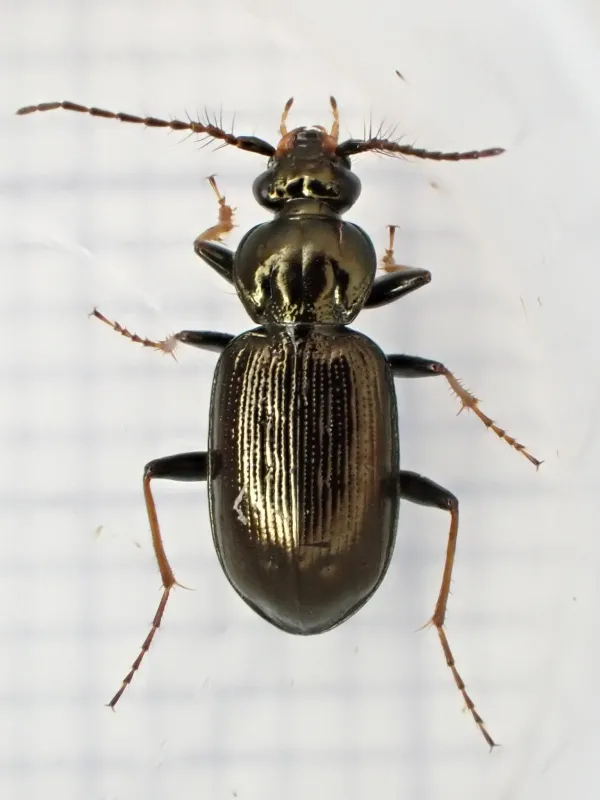
Loricera is a genus of ground beetles (Carabidae) known for their distinctive morphological features. These beetles are primarily ground-dwellers found in moist environments.
They are characterized by elongated setae on the labium, which are used to capture small prey. Adult beetles generally reach 6 to 8 millimeters in length and have a dark appearance.
The larvae are also predatory, possessing a robust exoskeleton suited for life within the soil and leaf litter layers. They are highly active hunters in their micro-habitats.
Systematically, they are widely recognized as beneficial predators rather than pests, playing a crucial role in maintaining soil ecological balance.
Identifying the exact species within the genus involves examining specific microscopic features of the pronotum and eyes, as they can be subtle across different populations.
What it damages
Loricera beetles do not cause damage to crops. They are specialized predators that feed on small arthropods, such as springtails and other soft-bodied invertebrates.
Because they do not feed on plant tissues, they are not classified as agricultural pests. There is no evidence of them damaging roots, stems, or leaves of commercial crops.
In fact, their presence is beneficial as they assist in the natural suppression of harmful pest populations within the field environment.
Occasionally, they may be found in areas where crops are suffering, but this is a correlation with the presence of prey rather than an act of herbivory.
They contribute to agricultural productivity by functioning as natural biological control agents, reducing the reliance on synthetic chemicals.
When it appears
Loricera activity begins in early spring when soil temperatures allow these insects to emerge from their overwintering sites.
The peak population density usually occurs during late spring and early summer, coinciding with the availability of their prey base.
During the heat of midsummer, they move deeper into the soil profile to avoid desiccation, as they require humid conditions to survive.
Autumn marks the period of migration towards overwintering sites, often found under debris, in logs, or deeper within the soil layer.
Their life cycle includes complete metamorphosis, meaning the larvae and adults share similar habitats but fulfill different roles during the growth phases.
Signs of infestation
Since Loricera are not pests, there are no characteristic signs of crop damage such as chewed foliage or stem boring to look for.
Their presence is best detected through the use of pitfall traps, which are a standard tool for monitoring ground beetle biodiversity in agricultural research.
Observation of high beetle activity usually correlates with a high density of non-pest soil invertebrates, which is a sign of a healthy field ecosystem.
Monitoring for these beetles is typically done to assess the "health" of the field rather than to look for signs of infestations.
Seeing them in your fields is a positive indicator that the soil food web is functioning properly without excessive intervention.
Control measures
No control measures are necessary for Loricera, as they are beneficial organisms that provide ecosystem services to farmers.
Practices that promote their survival include reducing tillage frequency and minimizing the use of broad-spectrum pesticides, which can harm these predators.
Implementing conservation biological control strategies, such as maintaining hedgerows, creates safe habitats for these beetles to thrive.
Farmers should aim to integrate these natural predators into their overall pest management strategy by fostering a hospitable environment.
- Minimize chemical usage.
- Retain crop residues to maintain soil moisture.
- Encourage biodiversity in field margins.
Taxonomy
- Latin name
- Loricera
- Order
- Coleoptera (beetles)
- Family
- Carabidae
- EPPO code
- LORISP
Discussion
No discussions yet — be the first.