
Arizona mirid bug
Lopidea arizonae
Description
How to identify
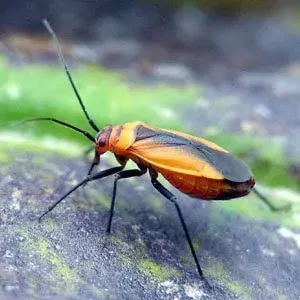
The Arizona mirid bug (Lopidea arizonae) belongs to the family Miridae, known for containing many significant agricultural pests. These insects are easily recognized by their distinct coloration, which often features vibrant reds, oranges, and blacks, serving as an aposematic warning to potential predators.
Adult bugs typically measure between 6 to 8 mm in length, possessing an elongated, oval-shaped body. They are equipped with long antennae that serve as highly sensitive sensory organs, allowing the bug to detect environmental changes and potential host plants efficiently.
The life cycle of L. arizonae includes several nymphal stages, which resemble adults in structure but lack developed wings. Throughout their development, both nymphs and adults rely on sucking sap from plant tissues, which is the primary source of their nutrition and survival.
Agronomists often use yellow sticky traps or sweep nets to identify the presence of these bugs in fields. Early detection is crucial because the reproductive capacity of this species can lead to rapid population explosions during warm, dry weather conditions.
These bugs are well-adapted to arid environments, particularly in the southwestern regions of North America. Their ability to thrive in high-heat zones makes them persistent pests in both agricultural fields and ornamental plant gardens.
What it damages
As a polyphagous insect, the Arizona mirid bug feeds on a diverse range of agricultural and horticultural crops. Their piercing-sucking mouthparts allow them to target the most succulent parts of the plant, including developing buds, flowers, and young fruits.
Feeding activities involve injecting saliva that contains enzymes into the plant tissue. This process disrupts the plant's metabolic functions, leading to localized cell death, severe deformation of leaves, and the premature dropping of buds or immature fruits.
In addition to direct mechanical damage, L. arizonae can act as a vector for various plant pathogens. By wounding the plants, they create entry points for secondary fungal and bacterial infections, which can result in broader systemic damage to the crop.
The economic impact is significant in terms of both yield loss and quality reduction. Fruits that are fed upon by these bugs often develop irregular shapes or necrotic spotting, making them unsuitable for market and drastically reducing the producer's profitability.
Under heavy infestation, the cumulative damage can suppress plant growth, leading to stunted development. If left unmanaged, the pest can cause extensive loss of productivity, requiring producers to implement aggressive mitigation strategies.
Signs of infestation
The earliest signs of an Arizona mirid bug infestation are small, yellowish, or brown spots on the foliage. These marks indicate sites where the insects have pierced the leaf tissue and extracted sap, resulting in localized cellular necrosis.
Deformed, curled, or stunted terminal leaves are common symptoms. As the plant attempts to grow, the damage caused by the bugs to the meristematic tissues prevents the leaves from developing symmetrically, resulting in an overall unthrifty appearance.
A high rate of bud or fruit abortion is a major indicator of a severe infestation. When inspecting the fallen buds, one can often find tiny puncture marks, which confirm the activity of piercing-sucking insects rather than other environmental stressors.
Small dark specks of excrement on the undersides of leaves provide further evidence of bug activity. These spots are often accompanied by a general loss of plant turgor, as the bugs compromise the plant's vascular system, leading to water stress.
Direct observation of the bugs is possible by shaking branches over a collection tray or using a sweep net. Adult bugs are mobile and will quickly disperse or hide within the canopy when disturbed, making careful observation necessary during peak activity hours.
Control measures
Effective management requires an integrated approach that begins with cultural practices. Eliminating weeds in and around the fields is essential, as these plants often serve as early-season hosts and overwintering sites for the population.
- Monitoring fields regularly to determine economic thresholds.
- Encouraging natural predators such as lacewings and ladybeetles.
- Applying targeted insecticides only when threshold levels are exceeded.
- Rotating crops to interrupt the life cycle of the pest.
Chemical control should be employed judiciously, focusing on the use of selective insecticides that minimize harm to beneficial pollinators and natural enemies. Timing the application to coincide with the most vulnerable developmental stages is critical for success.
Promoting overall plant health through adequate irrigation and nutrient management helps plants withstand and recover from feeding damage. Robust, healthy plants are significantly more resilient to bug attacks than those suffering from physiological stress.
Taxonomy
- Latin name
- Lopidea arizonae
- Order
- Hemiptera (bugs, aphids, leafhoppers)
- Family
- Miridae
- EPPO code
- LOPIAR
Discussion
No discussions yet — be the first.