
Lophyridia lunulata
Lophyridia lunulata
Description
How to identify
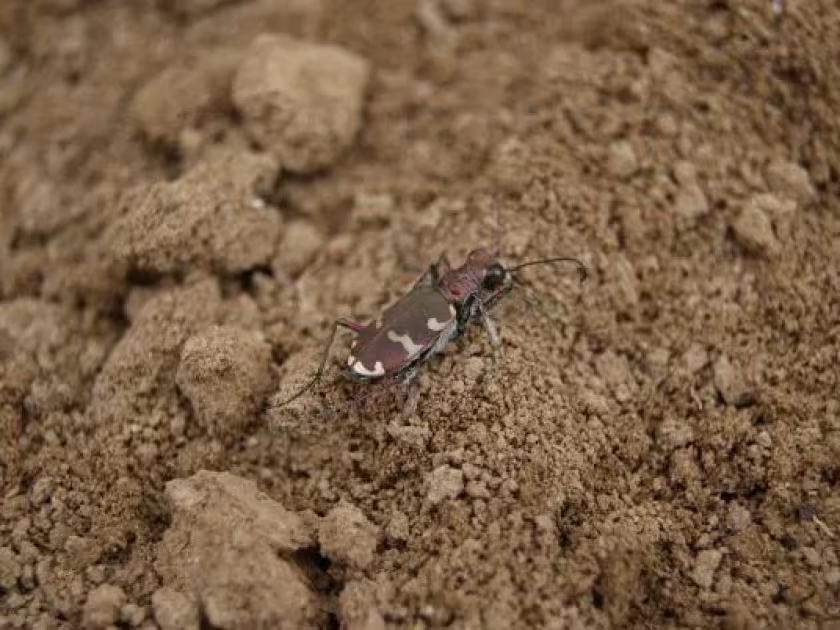
Lophyridia lunulata is a species of tiger beetle belonging to the Carabidae family. These insects are easily identified by their elongated, slender bodies and exceptionally long legs designed for rapid movement across sandy surfaces.
Adult beetles possess a dark, often metallic coloration with distinct pale spots or markings on their elytra, providing excellent camouflage against sandy or saline soils.
They feature a wide head equipped with large, sickle-shaped mandibles, which are powerful tools used for seizing and subduing prey during their active hunts.
Larvae are sedentary soil-dwellers that construct vertical burrows in the ground. They are elongated and pale, with a large, heavily chitinized head to act as a plug for their burrow entrance.
As thermophilic insects, they thrive in open, sun-exposed environments, typically inhabiting salt marshes, riverbanks, and coastal areas with loose soil structures.
What it damages
While Lophyridia lunulata is primarily predatory, feeding on various small invertebrates, they can cause incidental damage to agricultural crops under specific conditions.
Damage usually occurs during the early seedling stage of vegetable and cereal crops, when adult beetles may nibble on succulent plant tissues to obtain moisture or nutrients.
High population densities can lead to stand reduction, especially when crop fields are situated adjacent to natural habitats like saline or sandy grasslands.
Larval burrowing activity can disturb the soil architecture around the root zones of seedlings, potentially causing stress and hindering the uptake of nutrients and water.
While the economic impact is often localized, severe infestations in sensitive crops can necessitate management interventions to prevent significant yield losses.
When it appears
Adults emerge in late spring as ground temperatures reach levels conducive to their metabolic activity, marking the beginning of their hunting season.
The peak activity period occurs throughout the summer months (June and July), aligning with the critical growth stages of many agricultural crops.
The life cycle involves complete metamorphosis, consisting of egg, three larval instars, pupa, and adult stages, with adults typically overwintering deep in the soil.
A second, smaller peak of activity may occur in late summer, following rain showers that provide favorable moisture levels for emerging young beetles.
As autumn temperatures drop, the beetles retreat deeper into the substrate to enter a state of diapause, remaining inactive throughout the winter season.
Signs of infestation
The presence of this pest is indicated by numerous small, circular burrow openings in the soil, often appearing in clusters within drier parts of the field.
Visual detection of adults is easiest on hot, sunny days, as they are highly active hunters that scurry across the surface when approached.
Irregular, jagged damage on the leaves or stems of young seedlings serves as a potential indicator of adult feeding activity during dry periods.
Stunted growth or wilting in specific patches of the field, without signs of fungal pathogens, may suggest root zone disturbance caused by high larval density.
Field monitoring during the night using UV or standard light traps can effectively confirm the density of the adult population in the agroecosystem.
Control measures
Mechanical cultivation and tillage of inter-rows are highly effective methods for disrupting larval burrows and significantly reducing the survival rate of the next generation.
Implementing proper irrigation management to maintain soil moisture can discourage this species, as they strongly prefer dry, unstable soil conditions.
If population levels exceed the economic injury threshold, targeted application of contact insecticides can be used to manage the adult population during their peak activity.
Strategic crop rotation helps break the life cycle by making the field environment less suitable for sustained long-term colonization.
Biological control using entomopathogenic fungi or beneficial nematodes provides an environmentally responsible strategy to target the larval stages within their burrows.
Taxonomy
- Latin name
- Lophyridia lunulata
- Order
- Coleoptera (beetles)
- Family
- Carabidae
- EPPO code
- LOPDLU
Discussion
No discussions yet — be the first.