
Lophyra flexuosa
Lophyra flexuosa
Description
How to identify
Lophyra flexuosa is a species of tiger beetle (family Carabidae) known for its predatory behavior and distinct physical appearance.
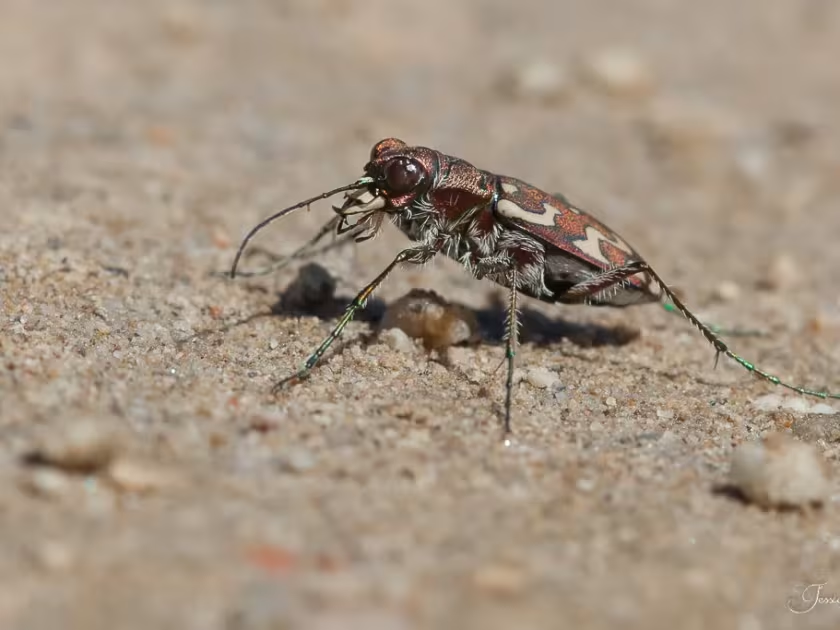
Adult beetles are approximately 10–12 mm long, featuring a metallic bronze to black body with a unique wavy light-colored pattern on their elytra.
The larvae live in deep, vertical burrows within the soil, utilizing powerful mandibles to capture small insects that pass by the entrance of their dwellings.
Adults possess large, bulging eyes, providing excellent vision for hunting on open ground, and are highly active runners and fliers in warm weather.
They prefer sandy or sparsely vegetated soil environments, making them common in areas with poor ground cover or specific ecological conditions.
What it damages
While primarily predators, Lophyra flexuosa larvae can occasionally cause damage to agricultural crops when these beetles inhabit field areas during the seedling stage.
Damage occurs when larvae accidentally strike young sprouts or when their hunting behavior interferes with the root zones of emerging delicate plants.
Crop loss is typically localized, occurring most frequently in fields adjacent to sandy patches or uncultivated land that acts as a natural habitat for the species.
Farmers often observe sporadic patches of stunted or cut seedlings, which may resemble damage from more common soil-dwelling pests.
However, it is important to note that these beetles provide natural biological control by preying on other insect pests present in the field ecosystem.
When it appears
The activity of adult beetles typically begins in late spring, continuing throughout the summer as temperatures rise and the soil warms up.
The species overwinters primarily in the larval stage, residing deep within the soil profile to avoid freezing temperatures during the winter months.
Life cycles are often linked to seasonal climate variations, with peak numbers occurring in sunny, dry weather when the beetles are most active on the soil surface.
Large numbers of adults are most visible during the hottest parts of the day when they are actively hunting or basking on bare ground.
The generation cycle is relatively slow, and monitoring should be most intensive during the emergence phase of the targeted crops in early spring.
Signs of infestation
The most reliable sign of their presence is the series of clean, small circular holes in the soil, which serve as the entrances to the larval burrows.
Adults are easily detected by their rapid flight response; when approached, they frequently take to the air and land a short distance away.
Seedling damage is characterized by clean cuts or torn tissue at the base of the plant, often localized around the entrance of the larval burrow.
Field observation is best conducted during bright, sunny conditions when the beetles are most active and visible on the soil surface.
Monitoring should be focused on the edges of fields or areas with sandy soil composition where these beetles are more likely to establish their burrows.
Control measures
Tillage is the most effective management strategy; plowing destroys the larval burrows and disrupts their life cycle, significantly reducing local populations.
Maintaining a healthy, high-density crop stand prevents the beetles from settling, as they prefer open, sparsely vegetated ground for their hunting behavior.
Chemical control should be considered a last resort and only applied if larval density exceeds economic thresholds for the crop at hand.
- Implementing proper soil preparation and cultivation practices.
- Using seed treatments to provide early-stage protection against soil-dwelling insects.
- Improving soil structure through organic amendments to make it less suitable for burrowing.
Integrated pest management should prioritize cultural practices over chemical interventions to maintain the ecological balance and utilize the beetle's natural predatory role.
Taxonomy
- Latin name
- Lophyra flexuosa
- Order
- Coleoptera (beetles)
- Family
- Carabidae
- EPPO code
- LPHRFL
Discussion
No discussions yet — be the first.