
Lophyra beetle
Lophyra
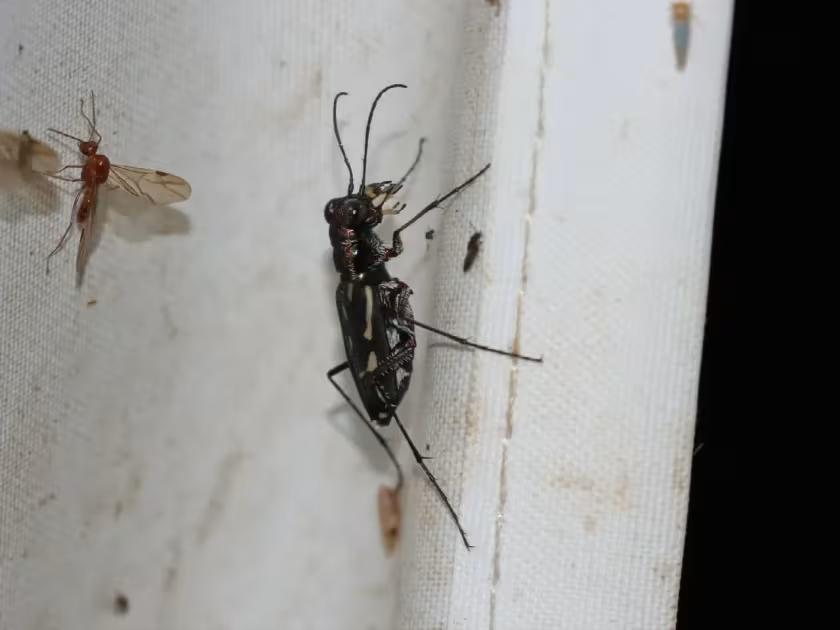
Description
How to identify
The genus Lophyra belongs to the family Carabidae and subfamily Cicindelinae, commonly known as tiger beetles. These insects are recognized by their slender bodies, metallic colors, and distinctive markings on their elytra.
Adult Lophyra beetles are highly active predators. They possess long, spindly legs that allow them to move with extreme speed, making them some of the fastest-running insects relative to their size.
The larvae are specialized soil dwellers that live in vertical burrows. They wait at the entrance of their burrows for prey to pass by, using their powerful mandibles to strike quickly and drag the victim inside.
The life cycle involves complete metamorphosis, moving through egg, larval, and pupal stages before emerging as an adult beetle. Development can span over one or two years depending on the environmental conditions.
These beetles prefer open environments with exposed soil, often inhabiting fields, paths, and coastal areas where they hunt for smaller insects.
What it damages
The Lophyra beetle is considered a beneficial predator rather than a plant pest. There is no evidence of these beetles causing direct damage to agricultural crops.
They do not consume plant foliage, roots, or seeds. Their impact on agricultural fields is positive, as they actively prey on various small invertebrates, including larvae of potential crop pests.
By consuming a wide range of prey, they contribute to the natural biological control of insect populations within the agroecosystem.
In most agronomic contexts, their presence is seen as a sign of a healthy, biodiverse soil environment that supports natural suppression of pest species.
No agricultural economic losses have been attributed to the presence of Lophyra in any crop system.
Control measures
There are no control measures designed to target Lophyra because they are classified as beneficial insects that assist in pest management.
Sustainable agricultural practices prioritize the preservation of these predators to maintain ecosystem services and reduce the need for synthetic chemical interventions.
Heavy reliance on broad-spectrum insecticides can significantly deplete Lophyra populations, leading to a loss of natural control over other harmful insect species.
Integrated Pest Management (IPM) strategies encourage the use of selective pest control methods that do not harm non-target predatory beetles.
- Maintain non-cropped areas to provide habitat for predatory beetles.
- Adopt reduced tillage practices to protect larval burrows.
- Utilize selective insecticides rather than broad-spectrum chemicals.
Taxonomy
- Latin name
- Lophyra
- Order
- Coleoptera (beetles)
- Family
- Carabidae
- EPPO code
- LPHRSP
Discussion
No discussions yet — be the first.