
Lobiopa insularis
Lobiopa insularis
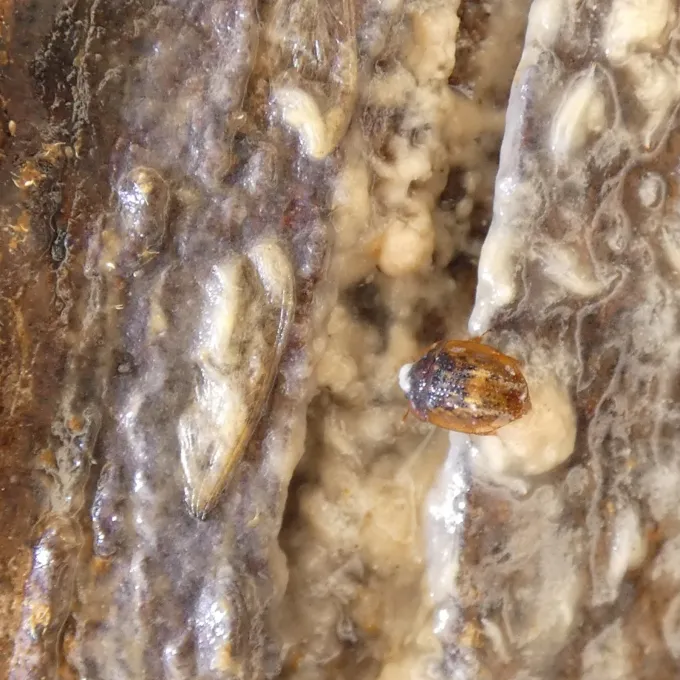
Description
How to identify
Lobiopa insularis belongs to the Nitidulidae family, commonly known as sap beetles. These insects are often categorized as secondary pests because their infestation is usually associated with previously damaged or overripe fruit tissues.
Adult beetles possess a flattened, oval-shaped body. Their coloration typically ranges from dark brown to nearly black, often with a matte finish, which allows them to blend in with soil debris and decaying plant material.
The larvae go through several developmental stages, feeding primarily on decomposing plant tissues. Because they prefer the interior of the fruit or the ground, their presence is often overlooked until significant damage has occurred.
The life cycle of this species is highly dependent on environmental factors, particularly humidity and temperature. Warm and moist conditions facilitate rapid reproduction and population growth.
As a mobile species, Lobiopa insularis can quickly colonize areas with abundant food sources. Understanding their biology is essential for implementing effective monitoring and control strategies in fruit production.
What it damages
This pest affects a wide range of crops, including tomatoes, strawberries, and various cucurbits. It particularly targets fruits with high sugar content or those that have already suffered from cracks or mechanical injury.
The primary damage is caused by adult beetles entering the fruit through existing openings. They consume the internal pulp, rendering the fruit commercially unmarketable and prone to rapid degradation.
Beyond physical consumption, these beetles act as vectors for fungal and bacterial pathogens. This leads to the onset of secondary rot, which destroys the crop much faster than the feeding activity of the beetles themselves.
Post-harvest losses can be severe if infested fruits are introduced into storage or transport batches. The beetles can move from infested fruit to healthy ones, creating contamination hotspots within a short time.
Significant economic damage is typically observed in fields where harvesting is delayed or where fallen fruit is left to decompose on the soil, providing a continuous breeding ground for the pest.
Signs of infestation
The primary indicator of an infestation is the presence of small entry holes on the fruit surface. These holes are often surrounded by softened, discolored tissues indicative of early decay.
Upon inspecting the interior of damaged fruits, one can often find adult beetles or larvae hiding inside. Because they tend to burrow deeper into the fruit, they are rarely seen during a quick superficial check.
A distinct, acidic, or fermented odor coming from ripening fruit is a strong warning sign. This scent acts as an attractant, drawing more beetles from the surrounding environment to the crop.
During twilight hours or early morning, beetles can be found hiding in the plant canopy or in the debris under the plants. Since they are primarily nocturnal or crepuscular, daylight scouting may fail to detect low-level populations.
- Entrance holes on the fruit skin.
- Larvae discovered inside the fruit pulp.
- Rapid onset of wet rot symptoms on damaged fruits.
Control measures
The most critical control measure is the timely and thorough harvesting of crops. Reducing the amount of overripe fruit left on the plant significantly lowers the pest's ability to survive and reproduce.
Sanitation is essential: remove all fallen fruits and organic debris from the field. Eliminating these food sources disrupts the pest's life cycle and prevents them from establishing a permanent colony.
Implementing proper crop rotation helps break the cycle of infestation. Avoid planting highly susceptible crops in the same area for consecutive seasons to discourage population buildup.
The use of insecticides should be localized and based on monitoring results. Always adhere to pre-harvest intervals to ensure the safety of the final produce and to prevent excessive chemical residues.
Monitoring using pheromone or food-based traps is highly recommended. These tools provide an early warning of beetle activity, allowing for targeted interventions before the population reaches an uncontrollable level.
Taxonomy
- Latin name
- Lobiopa insularis
- Order
- Coleoptera (beetles)
- Family
- Nitidulidae
- EPPO code
- LOBPIN
Discussion
No discussions yet — be the first.