
Common periwinkle
Littorina littorea
Description
How to identify
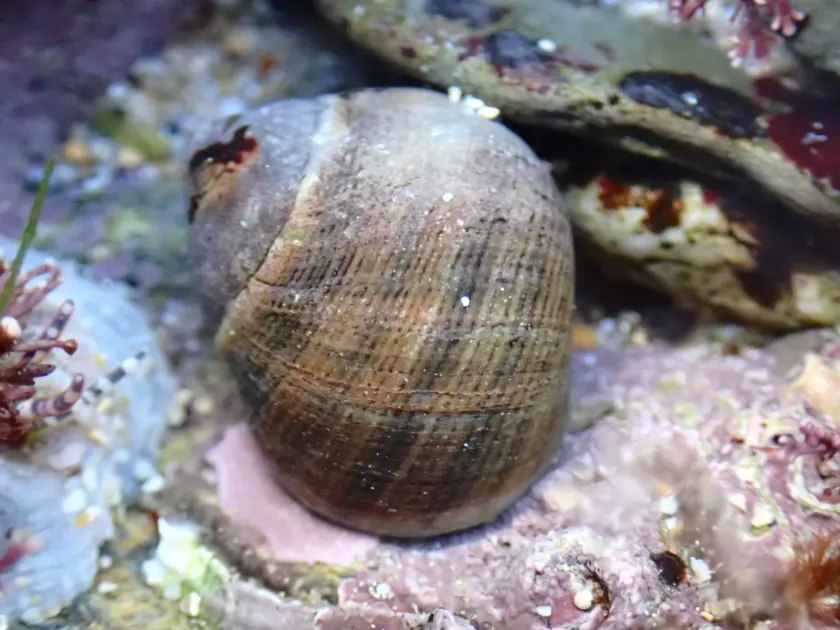
The common periwinkle Littorina littorea is a marine gastropod mollusk belonging to the family Littorinidae. It is characterized by a thick, globular, dark-colored shell that typically ranges from 2 to 4 cm in height.
The shell surface is generally smooth with indistinct spiral striae, and the aperture is large, allowing the animal to seal itself inside to prevent desiccation during low tide.
Common periwinkles are dioecious, meaning they have separate sexes. They reproduce by laying egg capsules in the water column or on hard substrates in the intertidal zone.
They are extremely resilient, capable of surviving significant fluctuations in salinity and temperature, which makes them highly adaptable to coastal agricultural environments.
These mollusks primarily move using a muscular foot, leaving behind a characteristic slime trail that can be used to identify their presence in a growing area.
What it damages
The primary damage caused by Littorina littorea occurs when they inhabit marshes or cultivated coastal plots, often feeding on salt-tolerant crops.
By using their radula, they scrape the surface of plant stems and leaves, causing mechanical injuries that disrupt the plant's structural integrity and photosynthetic capability.
Feeding damage is particularly severe on young seedlings and tender shoots, which can lead to stunted growth or the eventual death of the affected plant tissue.
Large aggregations of these snails can also impose a significant physical load on fragile stems, causing them to bend or snap, especially during high-tide periods.
Furthermore, the physical damage acts as an entry point for various secondary pathogens, potentially leading to fungal or bacterial infections in the coastal crop field.
When it appears
The activity of the common periwinkle is largely dictated by water temperatures, with peak activity occurring during the spring and summer months.
During the spring, as temperatures rise, these snails migrate toward the intertidal zone, where they actively forage and seek out optimal feeding grounds.
Breeding typically occurs in late spring and throughout the summer, which coincides with the vegetative growth phase of many coastal plant species.
As water temperatures drop during autumn, periwinkles become less active, often burying themselves in the substrate or retreating to deeper waters for the winter.
While they are cold-tolerant, their metabolic rate slows significantly in winter, effectively reducing their impact on agricultural areas during the dormant season.
Signs of infestation
The most reliable sign of a periwinkle infestation is the presence of scraped patches on the leaves or stems of plants, indicating active feeding by the mollusk.
During low tide, large numbers of snails can be observed clustered at the base of plants or resting on the soil surface within the cultivated area.
Shiny, dried mucus trails left on the soil or plant surfaces are a clear indicator of recent nocturnal movement and feeding activity by the snails.
Yellowing, wilting, or localized necrosis in plants located near the shoreline often points to heavy mollusk grazing and physiological stress.
Accumulated empty shells around the roots of crops are also a sign that the area is an established habitat for the periwinkle population.
Control measures
Physical removal is the most straightforward control measure, involving hand-picking snails during low tide when they are most accessible and clustered.
Installing physical barriers such as fine-mesh fences or gravel strips can effectively prevent these gastropods from entering sensitive agricultural plots.
Adjusting the field's hydrology and drainage systems can help create less favorable conditions for mollusk survival, forcing them to migrate elsewhere.
Encouraging natural predators, such as coastal birds and specific fish species, provides an environmentally friendly way to keep the periwinkle population in check.
The use of molluscicides should be strictly limited to prevent ecological damage to the fragile coastal ecosystem, prioritizing sustainable and preventative management strategies.
Taxonomy
- Latin name
- Littorina littorea
- Order
- Molluscs
- Family
- Littorinidae
- EPPO code
- LITTLR
Discussion
No discussions yet — be the first.