
Banded chink shell
Lacuna vincta
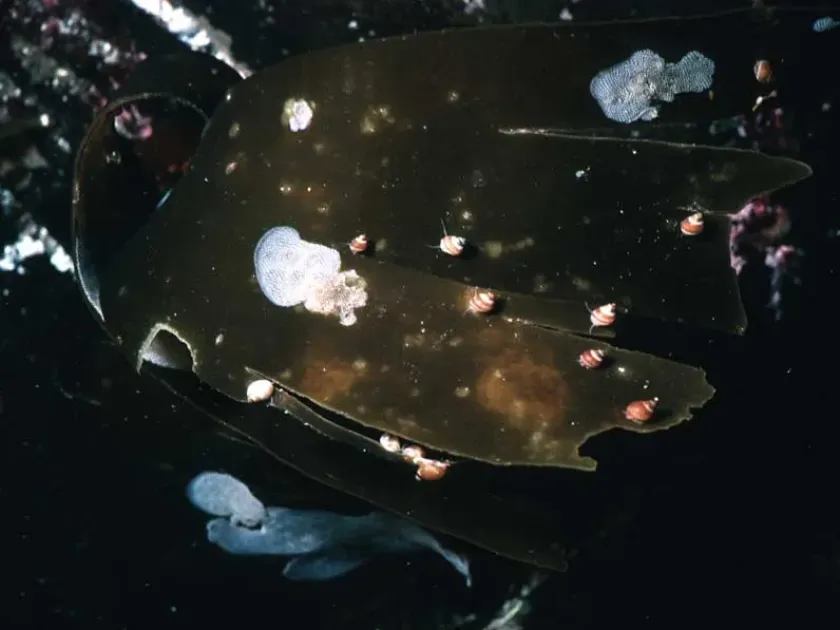
Description
How to identify
The banded chink shell (Lacuna vincta) is a small marine gastropod mollusk belonging to the family Littorinidae. Its shell is typically conical in shape with a smooth surface, often marked by a distinct spiral band that gives the species its common name.
The mollusk's body is adapted to life in intertidal zones, where it moves actively across substrates using a muscular foot. Adult specimens usually measure between 10 to 15 millimeters in length.
Shell coloration varies from yellowish-brown to nearly black, providing effective camouflage against marine plants. These morphological characteristics make them difficult to detect in their natural environment.
Systematically, this species belongs to the order Littorinimorpha, which includes a wide variety of sea snails. Their biology is closely tied to tidal dynamics, where they find food and shelter.
It is important to distinguish this species from other littorinids, as they occupy similar ecological niches but have varying levels of impact on cultivated marine crops.
What it damages
The primary food source for the banded chink shell includes various species of marine algae, particularly kelp and rockweed. The mollusks scrape the epidermis of the plants using their radula, damaging the integrity of the thallus.
Significant damage occurs in coastal aquaculture farms where high-value seaweeds are cultivated. Feeding on young shoots can stunt growth and potentially lead to the destruction of entire plantations.
The mollusks' grazing activity weakens the plant's immune system, making them susceptible to secondary fungal and bacterial infections. Consequently, plantations lose their commercial value and biological quality.
Under high population density, these snails can completely clear young seedlings, causing severe economic losses for marine farms.
Furthermore, these mollusks can act as vectors for spores of parasitic organisms that target damaged plant tissues, exacerbating the impact of the infestation.
When it appears
The activity of the banded chink shell is highly dependent on water temperature and seasonal reproductive cycles. Peak feeding activity typically occurs during spring and summer when water temperatures are optimal for their metabolism.
Reproduction usually takes place one or two times per year. After mating, females deposit egg capsules attached to the surfaces of algae or rocks.
The larval stage, known as the veliger, leads a planktonic life for a period, drifting with currents, which facilitates the wide dispersal of the species to new areas.
In autumn, as water temperatures drop, mollusk activity decreases significantly, and they migrate to deeper strata or seek shelter in rock crevices.
During the winter, individuals enter a state of reduced metabolism, surviving harsh environmental conditions while attached to the substrate.
Signs of infestation
The first sign of an infestation is the appearance of specific "grazing" marks—furrows and ulcers on the seaweed thalli caused by the mollusk's radula.
Visual inspection of the plants reveals the mollusks themselves, often attached to the undersides of leaves or near the branching points of the thallus.
The presence of empty egg capsules on plant surfaces is another characteristic indicator, confirming active reproduction within the area.
Gradual bleaching and the decay of algae tissue surrounding the damage sites point to the progressive impact of this pest.
A sudden decline in biomass density on cultivated plots, in the absence of other apparent causes, serves as indirect evidence of established mollusk colonies.
Control measures
The primary method of control is the manual removal of mollusks from artificial substrates, which is most effective when population levels are low.
Biological control methods, such as the introduction of natural predators like crabs or specific fish species, can significantly reduce the pest population without chemical intervention.
Managing planting density can help reduce the attractiveness of a site to mollusks by improving water circulation and limiting shelter opportunities.
Using specialized protective netting or barriers to restrict the migration of snails toward young shoots is an effective preventative measure.
In industrial aquaculture, regular monitoring of plant health is essential to identify and contain infestation hotspots before they reach critical levels.
Taxonomy
- Latin name
- Lacuna vincta
- Order
- Molluscs
- Family
- Littorinidae
- EPPO code
- LACUVI
Discussion
No discussions yet — be the first.