
Common periwinkle
Littorina littoralis
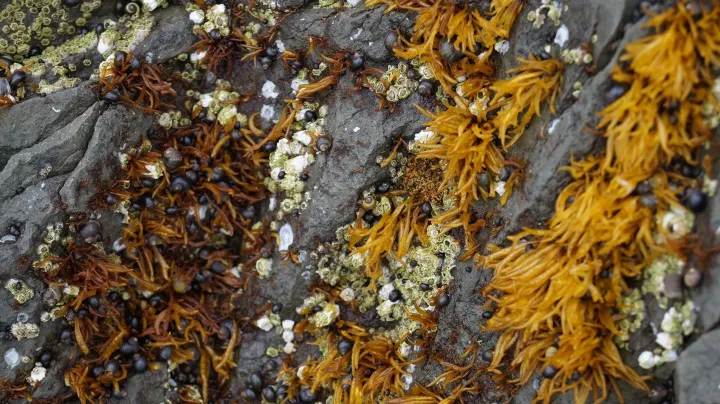
Description
How to identify
The common periwinkle is a marine gastropod mollusk belonging to the family Littorinidae. Its shell is rounded-conical in shape, durable, and typically reaches a size of about 20 mm.
Shell coloration is highly variable, ranging from yellow and olive to dark brown or black, often featuring distinct patterns or bands. The mollusk's body is darkly pigmented, and it has sensitive tentacles on its head.
Taxonomically, it belongs to the order Littorinimorpha. These mollusks are typical inhabitants of littoral zones, adapted to the periodic exposure and submersion by tides.
The mollusk utilizes specialized sensory organs to locate food sources effectively and navigate through its environment to avoid harsh conditions during low tide.
Proper identification is based on the morphology of the shell aperture, which is characteristic of the Littorina littoralis species.
What it damages
The primary diet of the common periwinkle consists of attached marine macroalgae, specifically species of the genus Fucus. They act as significant phytophages in coastal ecosystems.
In mariculture environments, these mollusks can cause significant economic damage by grazing on young seaweed thalli, leading to biomass loss.
Heavy infestations on commercial seaweed farms can result in the degradation of cultivation areas, significantly reducing the yield and quality of the product.
Damage appears as superficial tissue grazing, which can compromise the structural integrity of the seaweed or facilitate the entry of pathogens into the plant tissues.
While natural to the ecosystem, their population density requires careful monitoring in commercial settings to prevent extensive plant damage.
When it appears
The activity of common periwinkles is strongly correlated with water temperature and the growth cycle of their food sources, peaking during the spring and summer seasons.
During winter, the mollusk's metabolism slows down, and it enters a state of reduced activity, resuming intensive grazing as temperatures rise in the spring.
The reproductive cycle typically occurs in warmer months, which aligns with the population density increase on substrates inhabited by algae.
During tidal shifts, these mollusks exhibit high mobility, actively moving across substrates to search for fresh food sources.
The life cycle of the species is synchronized with the littoral environment, allowing it to withstand seasonal stressors while maintaining a stable population.
Signs of infestation
The primary symptom of infestation is the presence of pale grazing scars on the surface of seaweed thalli, caused by the mollusk’s radula while feeding.
Visual identification of individuals directly on the algal biomass is the most reliable indicator of an active infestation.
The presence of mucus trails on the plant surface is an additional indicator that the mollusks are actively moving and feeding in the area.
Decreased growth rates of specific seaweed patches and overall thinning of the canopy are signs that necessitate a thorough inspection for mollusk presence.
- Visible grazing scars on algal thalli.
- Presence of adult mollusks on seaweed.
- Reduced biomass yield in seaweed fields.
Control measures
Mechanical removal is the primary and most effective method for controlling periwinkle populations on commercial seaweed farms during routine maintenance.
The use of protective netting or physical barriers can effectively limit the mollusk's access to young and highly vulnerable seaweed cultures.
Proper management of the cultivation substrate helps reduce the attractiveness of the farm to high concentrations of periwinkles.
Biological control, by encouraging natural predators, is a viable strategy for long-term population management in certain coastal settings.
Chemical control measures are generally avoided in marine environments to prevent ecosystem disruption, prioritizing environmentally safe management practices.
Taxonomy
- Latin name
- Littorina littoralis
- Order
- Molluscs
- Family
- Littorinidae
- EPPO code
- LITTLI
Discussion
No discussions yet — be the first.