
Lacuna
Lacuna
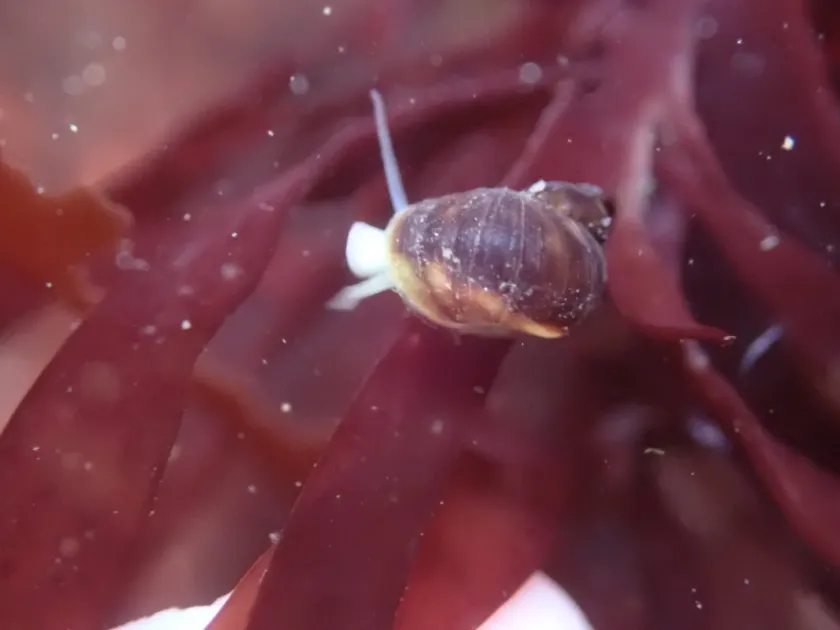
Description
How to identify
The genus Lacuna belongs to the family Littorinidae, commonly known as periwinkles. These small marine gastropods are distinguished by a specific shell morphology featuring a distinct umbilical groove, known as a lacuna.
These snails typically measure between 5 and 15 millimeters in length. Their shells vary from light tan to dark brown, often featuring spiral bands that provide excellent camouflage against rocks and seaweed.
The biological cycle of Lacuna involves a planktonic larval stage called a veliger. This stage is crucial for the dispersion of the species over large coastal areas through tidal currents.
They are primarily found in the intertidal and subtidal zones of cool-temperate waters, where they adhere to aquatic plants and rock surfaces using a strong muscular foot.
Identification in the field is usually straightforward due to the shell's shape and the characteristic presence of the umbilical lacuna, which is absent in many related genera.
What it damages
Lacuna snails feed primarily on various marine algae, including Zostera marina (eelgrass) and large brown algae. They use a specialized radula to rasp the surface tissue of these plants.
In aquaculture and marine farming environments, these snails can cause significant damage by creating holes in leaf structures, which reduces the photosynthetic area of the plants.
The feeding activity often leads to the erosion of the plant's outer layer, making it susceptible to secondary bacterial infections, decomposition, and eventual plant tissue death.
During periods of high population density, these gastropods can quickly strip entire areas of young shoots, leading to substantial yield losses in commercial seaweed farms.
The damage is particularly problematic during the early growth stages of the plants, as young tissues are softer and more easily consumed by the snails.
When it appears
The activity of Lacuna peaks during the warmer spring and summer months. During this time, water temperatures become ideal for their metabolic processes and reproductive cycles.
Spring is the primary season for egg-laying, when gelatinous egg masses are deposited on the leaves of host plants or on rocky surfaces near the intertidal zone.
After hatching, the juvenile snails begin to feed aggressively, which corresponds with the peak growth season of many marine macrophytes that they prey upon.
As water temperatures drop in the autumn, the snails often move toward deeper waters, significantly reducing their impact on the shallow-water vegetation.
Monitoring the water temperature is a key management strategy, as it helps producers predict the peak feeding periods and implement protection measures in advance.
Signs of infestation
The most visible sign of an infestation is the appearance of small, rasping marks on the leaf surfaces of seaweed or seagrass, which often progress into small circular holes.
Growers often notice the presence of the snails themselves on the underside of leaves, where they hide from potential predators and extreme weather conditions.
The detection of characteristic transparent, jelly-like egg masses on the stems or blades of the plants is a definitive indicator of a reproducing population.
Discoloration or yellowing of the leaf tissue around the feeding sites often indicates significant cellular damage caused by the snail's radula activity.
An increased presence of predator species, such as small crabs or specialized fish, around the plant beds may also serve as an indirect indicator of a high snail population.
Control measures
Manual removal of the snails and their egg masses during the early spring is one of the most effective mechanical methods for controlling their population in smaller areas.
Biological control methods involve fostering the local population of natural predators, such as small crustacean-eating fish, which can effectively limit the number of snails.
Proper site management, including site rotation or temporary harvesting of the seaweed, can prevent the buildup of large snail populations within a single farming area.
Using physical barriers or protective mesh netting can help mitigate the migration of Lacuna snails into sensitive nursery areas of the marine farm.
Regular monitoring combined with early intervention is essential to prevent significant damage, as once the population reaches a high level, control becomes much more labor-intensive.
Taxonomy
- Latin name
- Lacuna
- Order
- Molluscs
- Family
- Littorinidae
- EPPO code
- LACUSP
Discussion
No discussions yet — be the first.