
Four-spotted ground beetle
Lionychus quadrillum
Description
How to identify
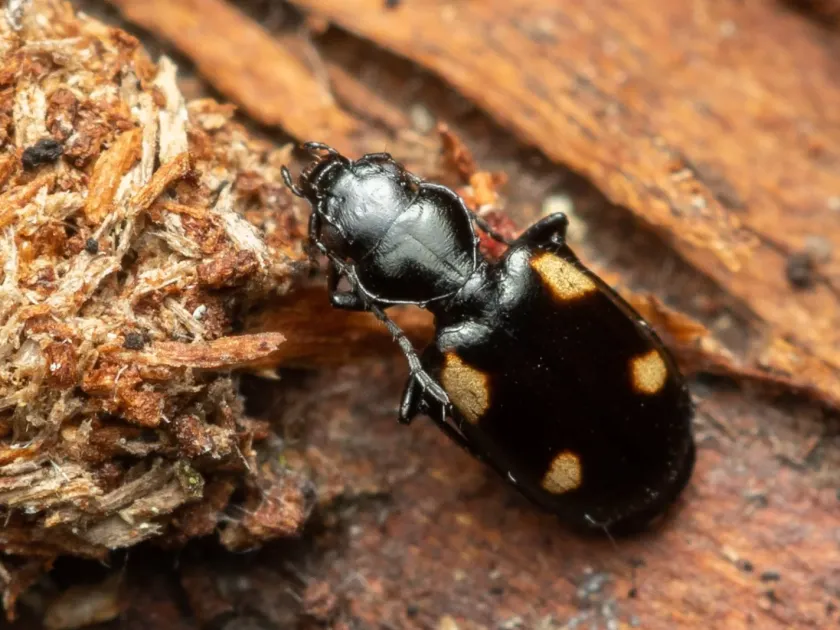
Lionychus quadrillum, commonly known as the four-spotted ground beetle, belongs to the family Carabidae within the order Coleoptera, known for its diverse species.
This beetle is relatively small, typically measuring 3–4 mm in length, with a flat body structure that is characteristic of the carabid group, allowing it to navigate soil spaces.
The defining feature of this species is its wing covers, which display four yellowish or reddish spots against a dark background, aiding in rapid identification.
It prefers moist environments and is frequently encountered near water bodies, wetlands, or in low-lying areas of fields where soil moisture remains consistently high.
The lifecycle includes complete metamorphosis, passing through egg, larval, pupal, and adult stages, with larvae spending the majority of their time in the topsoil layers.
What it damages
While many carabids act as beneficial predators, Lionychus quadrillum can occasionally transition to feeding on agricultural crops when prey density is low.
The primary damage occurs in grain crops and vegetables during the seedling stage, when the plants are most vulnerable to external environmental stress.
Adult beetles and larvae feed on the tender tissues of leaves and roots, causing mechanical injury that impairs the plant's ability to absorb nutrients and water.
Feeding often results in stunted growth and irregular development of the seedlings, which can lead to significant thinning of the plant stand if the population is high.
Economic damage is typically localized and most severe in damp parts of fields where the beetles congregate due to the favorable microclimatic conditions.
When it appears
The seasonal activity of Lionychus quadrillum is highly dependent on spring temperatures, which trigger the emergence of adults from their overwintering sites.
Peak activity occurs during the spring and early summer months, coinciding with the germination and early growth of spring-sown crops in the region.
During the warmer summer months, the life cycle progresses, with egg-laying and larval growth occurring in the moist soil strata near the root zones of the crops.
As autumn approaches, the activity declines as beetles begin searching for overwintering refuges, such as deeper soil layers or dense crop residue cover.
Environmental conditions, particularly heavy rainfall during the growing season, can influence the mortality and reproduction rates of this specific pest population.
Signs of infestation
Signs of infestation include small, irregular holes or shallow scrapings on the leaves of young seedlings, indicating the feeding activity of the beetles.
Affected plants often appear weak, stunted, or discolored, as the structural damage disrupts the normal physiological processes of the developing seedling.
Visual confirmation of the beetle involves checking the base of the stems or using small soil pits to examine the area for the presence of the adult insects.
- Stunted or weak seedling growth in moist patches.
- Mechanical damage to foliage (small holes or grazing).
- Presence of small dark beetles with four distinct spots in the soil.
If extensive damage is noted, farmers should conduct a scouting assessment to determine the density of the beetle population and assess the need for intervention.
Control measures
Integrated pest management strategies focusing on improving soil drainage are the most effective way to reduce the attractiveness of fields to this beetle.
Proper tillage practices help to disturb the soil environment, significantly reducing the survival rates of larvae and disrupting the overwintering adults.
Maintaining a clean field and removing weeds prevents the buildup of beetle populations, as weeds provide both shelter and alternative food sources.
Chemical control is rarely necessary but may be considered if populations exceed economic injury levels, using selective edge-field spraying to reduce impact.
Crop rotation and selecting optimal planting times are preventative measures that help seedlings pass the susceptible stage before high beetle activity begins.
Taxonomy
- Latin name
- Lionychus quadrillum
- Order
- Coleoptera (beetles)
- Family
- Carabidae
- EPPO code
- LIONQU
Discussion
No discussions yet — be the first.